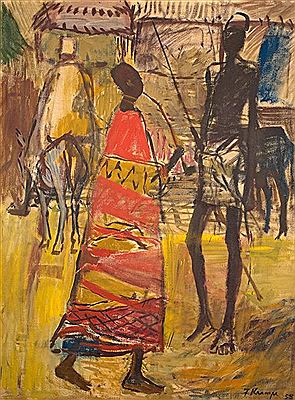
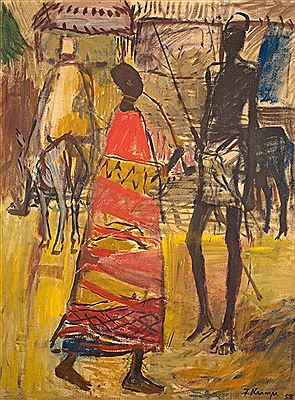
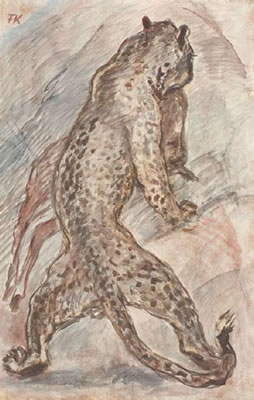
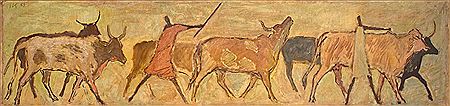
1913 Berlin, Germant - 1966 Bombay, Indian. Known for: Landscape, exoti animals and figure painting, public commission murals.
Krampe received intensive training in both Berlin and Munich. During World War II he was imprisoned in Australia and after the end of hostilities, settled in Windhoek, Namibia. He travelled widely in...
Read full biography Krampe received intensive training in both Berlin and Munich. During World War II he was imprisoned in Australia and after the end of hostilities, settled in Windhoek, Namibia. He travelled widely in Africa, the Middle East and India, where he died in an accident on the Ootaca River. In addition to...
Read full biography Krampe received intensive training in both Berlin and Munich. During World War II he was imprisoned in Australia and after the end of hostilities, settled in Windhoek, Namibia. He travelled widely in Africa, the Middle East and India, where he died in an accident on the Ootaca River. In addition to his landscapes, Krampe’s prolific studies of exotic animals and people encountered on his travels, were in great demand. He is represented in the Permanent Collection of the Iziko South African...
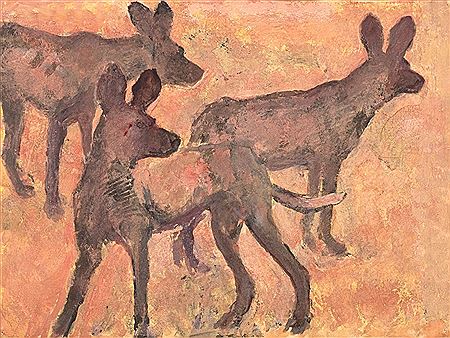
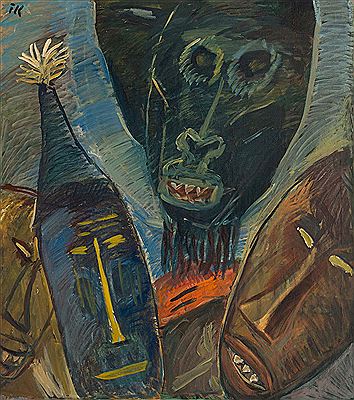
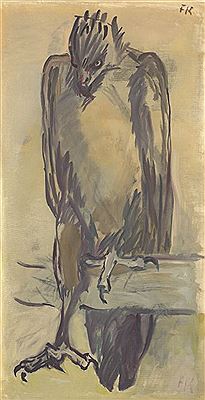
Read full biography Krampe received intensive training in both Berlin and Munich. During World War II he was imprisoned in Australia and after the end of hostilities, settled in Windhoek, Namibia. He travelled widely in Africa, the Middle East and India, where he died in an accident on the Ootaca River. In addition to his landscapes, Krampe’s prolific studies of exotic animals and people encountered on his travels, were in great demand. He is represented in the Permanent Collection of the Iziko South African National Gallery by thirteen works on paper. He is also known for his public commissions and murals.
Krampe received intensive training in both Berlin and Munich. During World War II he was imprisoned in Australia and after the end of hostilities, settled in Windhoek, Namibia. He travelled widely in Africa, the Middle East and India, where he died in an accident on the Ootaca River. In addition to his landscapes, Krampe’s prolific studies of exotic animals and people encountered on his travels, were in great demand. He is represented in the Permanent Collection of the Iziko South African National Gallery by thirteen works on paper. He is also known for his public commissions and murals.