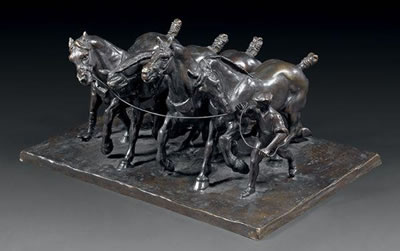
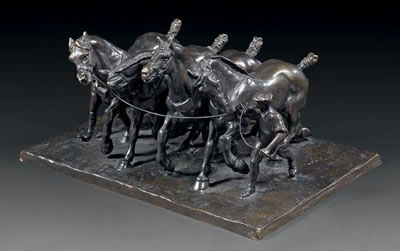
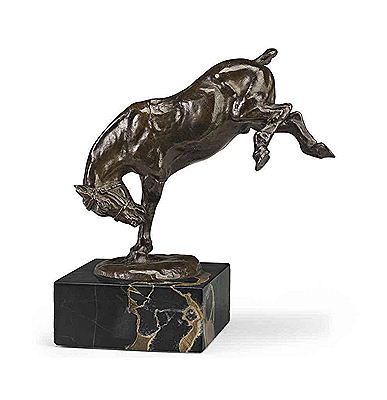
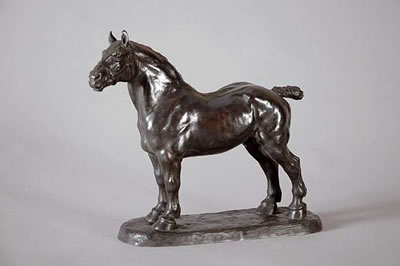
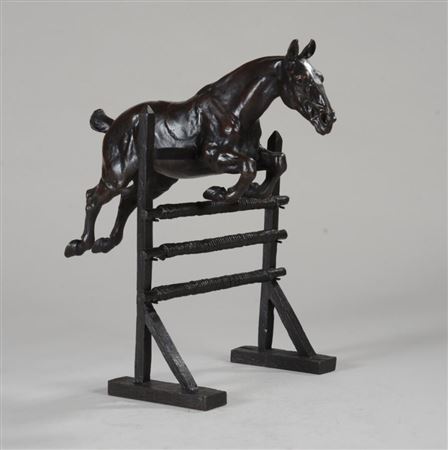
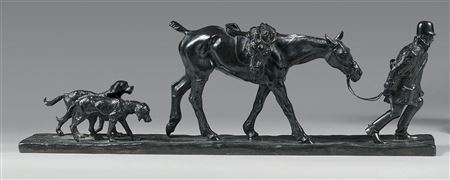
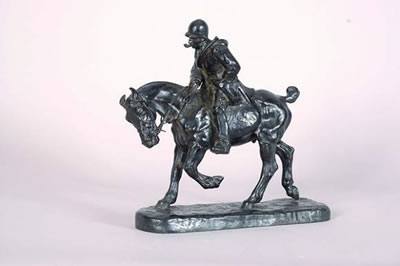
1876 - 1932/52. Known for: Horse and some dog sculpture.
Gaston D'Illiers was born at Boulogne-sur-Seine, France on 6/26/1876. He was a student of the Count of Ruille and was also a Count himself. He possessed a level of talent sufficient to have his...
Read full biography Gaston D'Illiers was born at Boulogne-sur-Seine, France on 6/26/1876. He was a student of the Count of Ruille and was also a Count himself. He possessed a level of talent sufficient to have his artwork, which consisted primarily of small models of equine bronzes including riding horses, driving...
Read full biography Gaston D'Illiers was born at Boulogne-sur-Seine, France on 6/26/1876. He was a student of the Count of Ruille and was also a Count himself. He possessed a level of talent sufficient to have his artwork, which consisted primarily of small models of equine bronzes including riding horses, driving horses, military horses, and draft horses, juried into the famous Ecole des Beaux-Arts in Paris, France in the early 1900s and he continued to exhibit in art shows until his death in 1952. He was an...
Read full biography Gaston D'Illiers was born at Boulogne-sur-Seine, France on 6/26/1876. He was a student of the Count of Ruille and was also a Count himself. He possessed a level of talent sufficient to have his artwork, which consisted primarily of small models of equine bronzes including riding horses, driving horses, military horses, and draft horses, juried into the famous Ecole des Beaux-Arts in Paris, France in the early 1900s and he continued to exhibit in art shows until his death in 1952. He was an accomplished rider and his familiarity with horses allowed him to produce anatomically correct horse sculptures. During his lifetime, his horse sculptures were often awarded as prizes at horse shows. In addition to equine art, he also produced several...
Read full biography Gaston D'Illiers was born at Boulogne-sur-Seine, France on 6/26/1876. He was a student of the Count of Ruille and was also a Count himself. He possessed a level of talent sufficient to have his artwork, which consisted primarily of small models of equine bronzes including riding horses, driving horses, military horses, and draft horses, juried into the famous Ecole des Beaux-Arts in Paris, France in the early 1900s and he continued to exhibit in art shows until his death in 1952. He was an accomplished rider and his familiarity with horses allowed him to produce anatomically correct horse sculptures. During his lifetime, his horse sculptures were often awarded as prizes at horse shows. In addition to equine art, he also produced several bronze models of dogs. Source:. Information provided by Mike Parker