Georg Judersleben (1898-1962) shows a view of the artist's garden, probably in his hometown Bad Sulza near Weimar. The vivid, impasto painting is rendered in an expressionist manner, delighting with... Read full biography
Georg Judersleben (1898-1962) shows a view of the artist's garden, probably in his hometown Bad Sulza near Weimar. The vivid, impasto painting is rendered in an expressionist manner, delighting with its cheerful, bright color scheme and dynamic brushwork. In this serene work, the forms seem to... Read full biography
Georg Judersleben (1898-1962) shows a view of the artist's garden, probably in his hometown Bad Sulza near Weimar. The vivid, impasto painting is rendered in an expressionist manner, delighting with its cheerful, bright color scheme and dynamic brushwork. In this serene work, the forms seem to dissolve in areas, yet being outlined by black lines in others. Judersleben's works show the influence of his Weimar art professors Hugo Gugg, Walther Klemm and Max Thedy and the principles of plein air... Read full biography
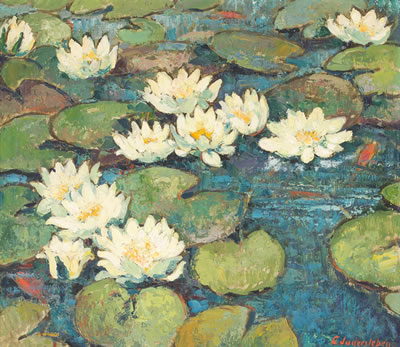
Georg Judersleben (1898-1962) shows a view of the artist's garden, probably in his hometown Bad Sulza near Weimar. The vivid, impasto painting is rendered in an expressionist manner, delighting with its cheerful, bright color scheme and dynamic brushwork. In this serene work, the forms seem to dissolve in areas, yet being outlined by black lines in others. Judersleben's works show the influence of his Weimar art professors Hugo Gugg, Walther Klemm and Max Thedy and the principles of plein air painting in the tradition of the Weimar School. Like many other German artists of his time, the painter was also inspired in his outdoor painting by the artists' colony Ahrenshoop on the Darss. A native of Bad Sulza in Weimar, Georg Judersleben... Read full biography
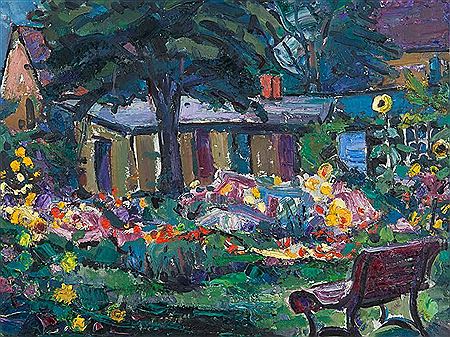
Georg Judersleben (1898-1962) shows a view of the artist's garden, probably in his hometown Bad Sulza near Weimar. The vivid, impasto painting is rendered in an expressionist manner, delighting with its cheerful, bright color scheme and dynamic brushwork. In this serene work, the forms seem to dissolve in areas, yet being outlined by black lines in others. Judersleben's works show the influence of his Weimar art professors Hugo Gugg, Walther Klemm and Max Thedy and the principles of plein air painting in the tradition of the Weimar School. Like many other German artists of his time, the painter was also inspired in his outdoor painting by the artists' colony Ahrenshoop on the Darss. A native of Bad Sulza in Weimar, Georg Judersleben studied at the University of Fine Arts in Weimar in the 1920s. He then worked as a... Read full biography
Georg Arthur Judersleben - Art Prices in Auction LotsAuction Lots