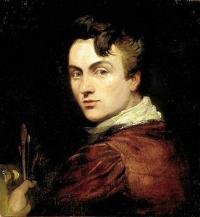
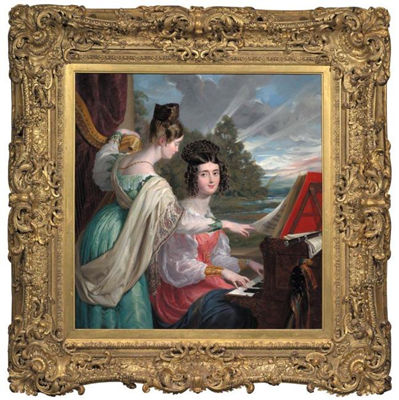
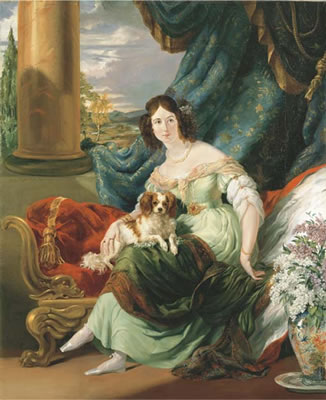
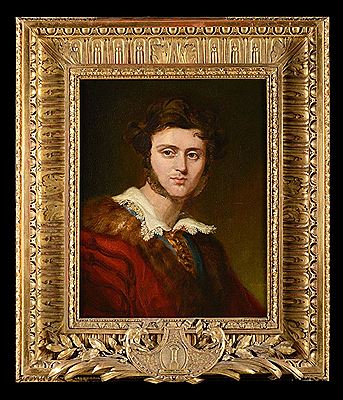
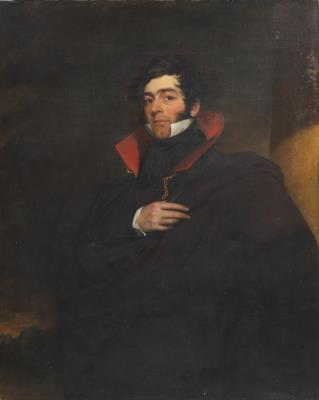
1792 LONDON - 1871. Known for: Portrait paintings.
Sir George Hayter studied at the Royal Academy schools and in 1815 was awarded 200 guineas by the British Institution, and in that year was appointed miniature painter to Princess Charlotte and the...
Read full biography Sir George Hayter studied at the Royal Academy schools and in 1815 was awarded 200 guineas by the British Institution, and in that year was appointed miniature painter to Princess Charlotte and the Prince of Saxe-Coburg. He studied in Italy 1815- 1818, and in 1825 his picture of the "Trial of Lord...
Read full biography Sir George Hayter studied at the Royal Academy schools and in 1815 was awarded 200 guineas by the British Institution, and in that year was appointed miniature painter to Princess Charlotte and the Prince of Saxe-Coburg. He studied in Italy 1815- 1818, and in 1825 his picture of the "Trial of Lord William Russell" became widely known through it being produced as an engraving. He was appointed as portrait and history painter to Queen Victoria in 1837, painting her coronation ceremony, as well as...
Read full biography Sir George Hayter studied at the Royal Academy schools and in 1815 was awarded 200 guineas by the British Institution, and in that year was appointed miniature painter to Princess Charlotte and the Prince of Saxe-Coburg. He studied in Italy 1815- 1818, and in 1825 his picture of the "Trial of Lord William Russell" became widely known through it being produced as an engraving. He was appointed as portrait and history painter to Queen Victoria in 1837, painting her coronation ceremony, as well as her state portrait, for which he was knighted in 1842. He enjoyed a lucrative practice as a fashionable portrait painter.
Sir George Hayter studied at the Royal Academy schools and in 1815 was awarded 200 guineas by the British Institution, and in that year was appointed miniature painter to Princess Charlotte and the Prince of Saxe-Coburg. He studied in Italy 1815- 1818, and in 1825 his picture of the "Trial of Lord William Russell" became widely known through it being produced as an engraving. He was appointed as portrait and history painter to Queen Victoria in 1837, painting her coronation ceremony, as well as her state portrait, for which he was knighted in 1842. He enjoyed a lucrative practice as a fashionable portrait painter.