1891 - 1967. Known for: Landscape paintings.
Gerhard Lobenberg lived from 1891 to 1967. Löbenberg studied in Konigsberg and Berlin. His first designs he found as a child, he grew up in a house in the Harz Forest. He published the first drawing...
Read full biography Gerhard Lobenberg lived from 1891 to 1967. Löbenberg studied in Konigsberg and Berlin. His first designs he found as a child, he grew up in a house in the Harz Forest. He published the first drawing as a 18-year-old in the magazine Wild und Hund. In addition to bears and wild boar especially red...
Read full biography Gerhard Lobenberg lived from 1891 to 1967. Löbenberg studied in Konigsberg and Berlin. His first designs he found as a child, he grew up in a house in the Harz Forest. He published the first drawing as a 18-year-old in the magazine Wild und Hund. In addition to bears and wild boar especially red deer were painted with fondness by him wild species. Goering made Löbenberg for speakers for hunting art and exhibitions in Reich Hunting Office. In 1938, he received an honorary professor. 2004 a major...
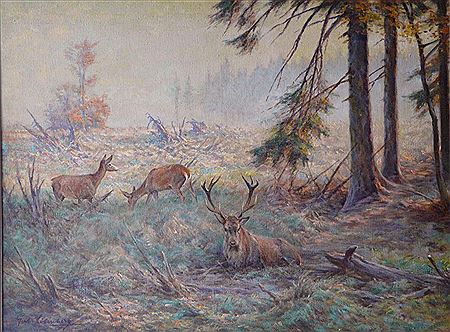
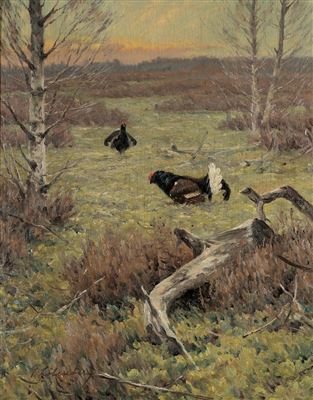
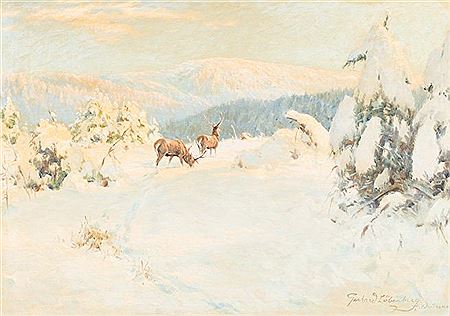
Read full biography Gerhard Lobenberg lived from 1891 to 1967. Löbenberg studied in Konigsberg and Berlin. His first designs he found as a child, he grew up in a house in the Harz Forest. He published the first drawing as a 18-year-old in the magazine Wild und Hund. In addition to bears and wild boar especially red deer were painted with fondness by him wild species. Goering made Löbenberg for speakers for hunting art and exhibitions in Reich Hunting Office. In 1938, he received an honorary professor. 2004 a major exhibition in East Prussian State Museum took place.
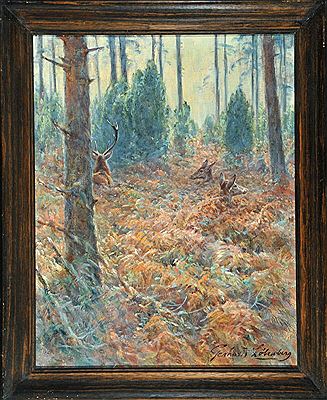
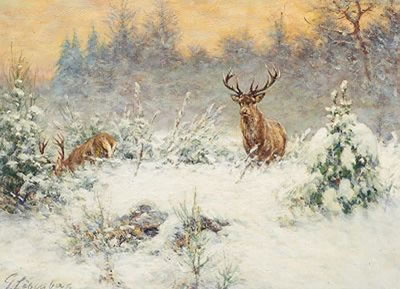
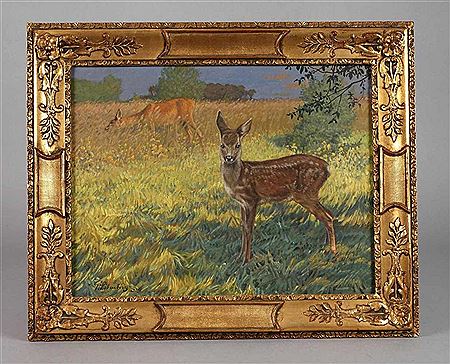
Gerhard Lobenberg lived from 1891 to 1967. Löbenberg studied in Konigsberg and Berlin. His first designs he found as a child, he grew up in a house in the Harz Forest. He published the first drawing as a 18-year-old in the magazine Wild und Hund. In addition to bears and wild boar especially red deer were painted with fondness by him wild species. Goering made Löbenberg for speakers for hunting art and exhibitions in Reich Hunting Office. In 1938, he received an honorary professor. 2004 a major exhibition in East Prussian State Museum took place.