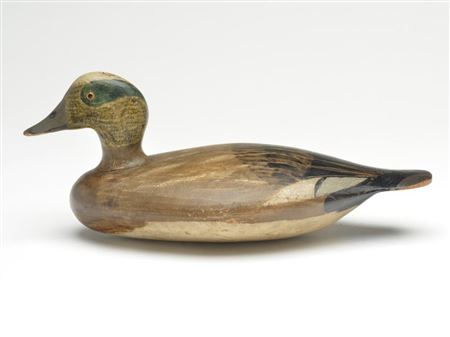
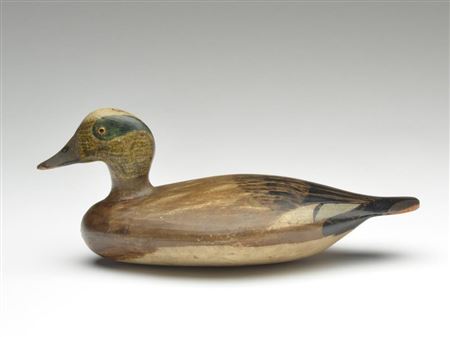
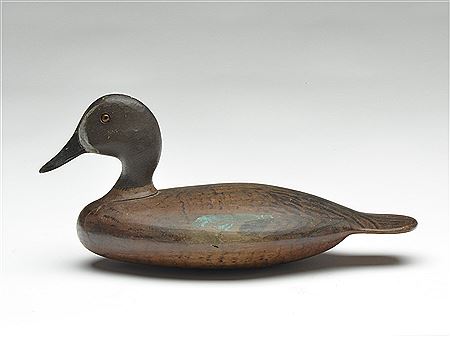
1847 - 1894. Known for: Decoy carving.
This carver supplied decoys to sportsmen visiting nearby Howland Island, the Montezuma Swamp, and the Finger Lakes. By the mid-nineteenth century, the Stevens Brothers decoys gained national acclaim...
Read full biography This carver supplied decoys to sportsmen visiting nearby Howland Island, the Montezuma Swamp, and the Finger Lakes. By the mid-nineteenth century, the Stevens Brothers decoys gained national acclaim and were shipping decoys across the country from their workshop near Weedsport along the Erie Canal....
Read full biography This carver supplied decoys to sportsmen visiting nearby Howland Island, the Montezuma Swamp, and the Finger Lakes. By the mid-nineteenth century, the Stevens Brothers decoys gained national acclaim and were shipping decoys across the country from their workshop near Weedsport along the Erie Canal. Before the discovery of this important mallard, Stevens' author and historian, Shane Newell, documented only one other early mallard drake tack-eye decoy by this maker.
This carver supplied decoys to sportsmen visiting nearby Howland Island, the Montezuma Swamp, and the Finger Lakes. By the mid-nineteenth century, the Stevens Brothers decoys gained national acclaim and were shipping decoys across the country from their workshop near Weedsport along the Erie Canal. Before the discovery of this important mallard, Stevens' author and historian, Shane Newell, documented only one other early mallard drake tack-eye decoy by this maker.
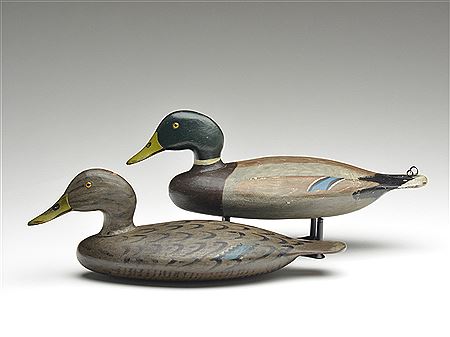
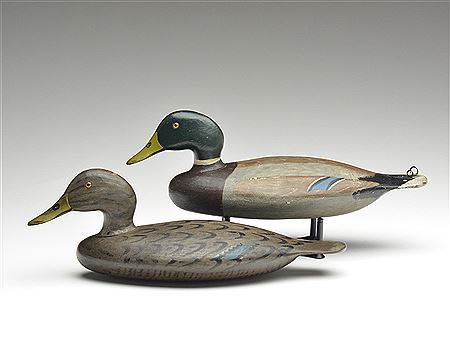
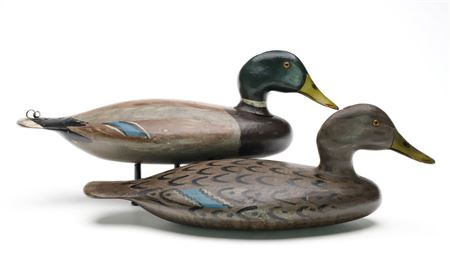
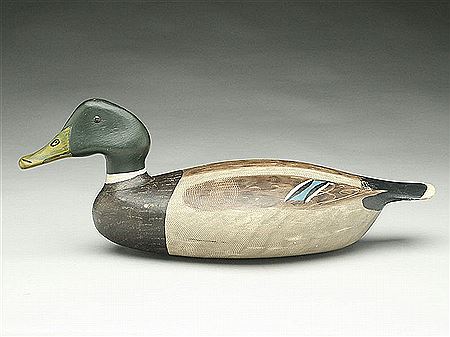
This carver supplied decoys to sportsmen visiting nearby Howland Island, the Montezuma Swamp, and the Finger Lakes. By the mid-nineteenth century, the Stevens Brothers decoys gained national acclaim and were shipping decoys across the country from their workshop near Weedsport along the Erie Canal. Before the discovery of this important mallard, Stevens' author and historian, Shane Newell, documented only one other early mallard drake tack-eye decoy by this maker.