1840 - 1913. Known for: Painting.
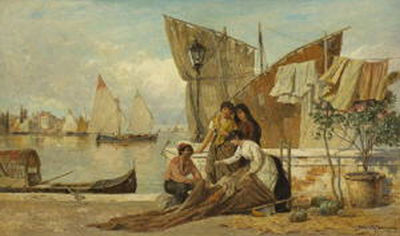
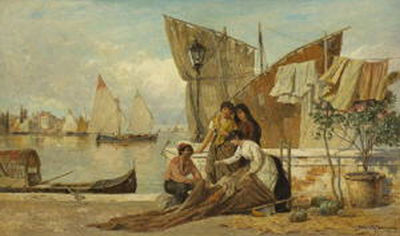
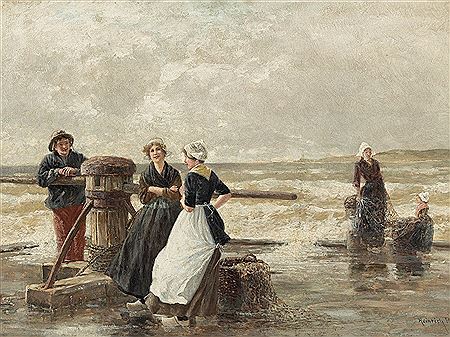
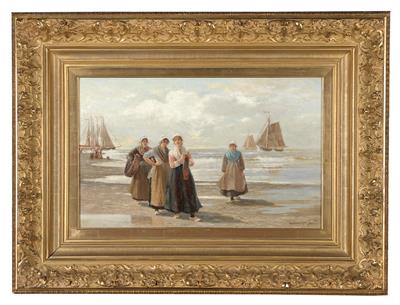
Heinrich Rasch was born in 1840. He was a German landscape, genre and marine painter from the environment of the Munich School. He was a pupil of A. Melbye, H. Gude and A. v. Ramberg. Rasch mainly...
Read full biography Heinrich Rasch was born in 1840. He was a German landscape, genre and marine painter from the environment of the Munich School. He was a pupil of A. Melbye, H. Gude and A. v. Ramberg. Rasch mainly lived and worked in Munich. His oeuvre is principally characterized by a naturalistic style of...
Read full biography Heinrich Rasch was born in 1840. He was a German landscape, genre and marine painter from the environment of the Munich School. He was a pupil of A. Melbye, H. Gude and A. v. Ramberg. Rasch mainly lived and worked in Munich. His oeuvre is principally characterized by a naturalistic style of painting. Works of the artist were collected in the following museums: Städtische Galerie Nürnberg, Kunsthalle Kiel and Universitäts-Galerie Würzburg. Heinrich Rasch passed away in Germany in 1913....
Read full biography Heinrich Rasch was born in 1840. He was a German landscape, genre and marine painter from the environment of the Munich School. He was a pupil of A. Melbye, H. Gude and A. v. Ramberg. Rasch mainly lived and worked in Munich. His oeuvre is principally characterized by a naturalistic style of painting. Works of the artist were collected in the following museums: Städtische Galerie Nürnberg, Kunsthalle Kiel and Universitäts-Galerie Würzburg. Heinrich Rasch passed away in Germany in 1913.
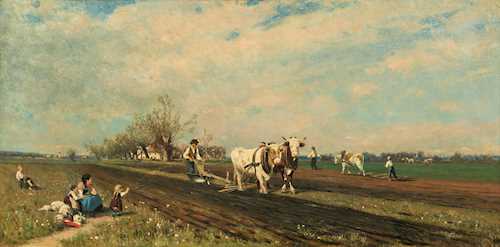
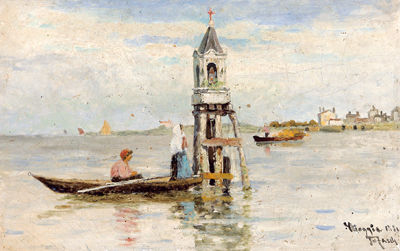
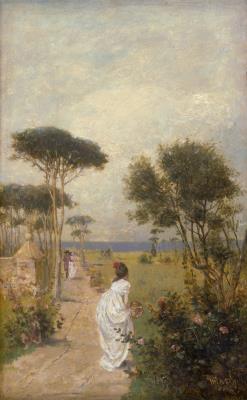
Heinrich Rasch was born in 1840. He was a German landscape, genre and marine painter from the environment of the Munich School. He was a pupil of A. Melbye, H. Gude and A. v. Ramberg. Rasch mainly lived and worked in Munich. His oeuvre is principally characterized by a naturalistic style of painting. Works of the artist were collected in the following museums: Städtische Galerie Nürnberg, Kunsthalle Kiel and Universitäts-Galerie Würzburg. Heinrich Rasch passed away in Germany in 1913.