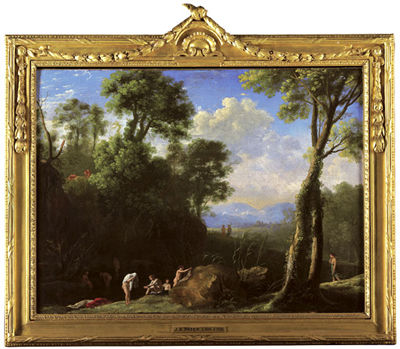
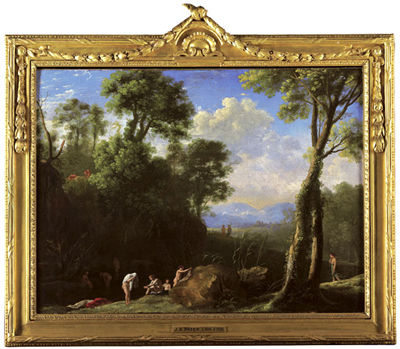
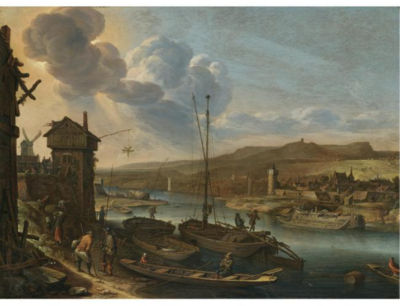
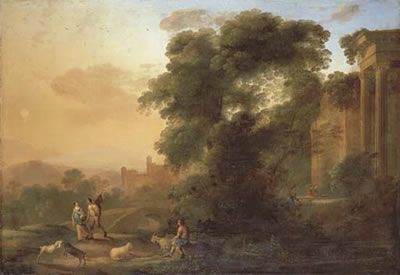
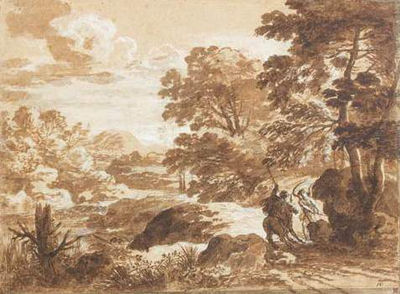
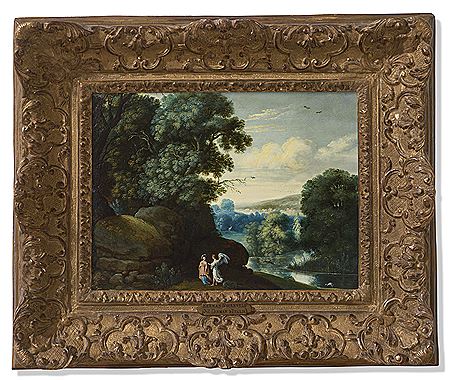
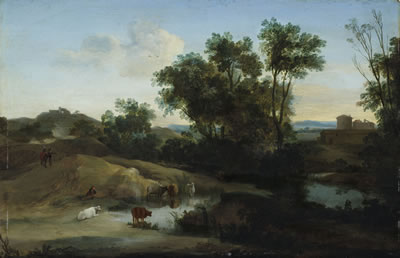
c.1600 Woerden, near Utrecht - 1655 Paris, France. Known for: Landscape, figure in landscape painting.
Having worked for some of the most influential patrons of his time-including Pope Urban VIII Barberini, Cardinal-Duc de Richelieu, and King Louis XIV-Herman van Swanevelt was a highly sought-after...
Read full biography Having worked for some of the most influential patrons of his time-including Pope Urban VIII Barberini, Cardinal-Duc de Richelieu, and King Louis XIV-Herman van Swanevelt was a highly sought-after artist. He was particularly admired for his naturalistic observation of landscape and his masterful...
Read full biography Having worked for some of the most influential patrons of his time-including Pope Urban VIII Barberini, Cardinal-Duc de Richelieu, and King Louis XIV-Herman van Swanevelt was a highly sought-after artist. He was particularly admired for his naturalistic observation of landscape and his masterful treatment of light, capturing the shifting moods of the day and atmospheric variations. His stay in Rome from around 1629 to 1641 was crucial to his development. Influenced by painters like Claude...
Read full biography Having worked for some of the most influential patrons of his time-including Pope Urban VIII Barberini, Cardinal-Duc de Richelieu, and King Louis XIV-Herman van Swanevelt was a highly sought-after artist. He was particularly admired for his naturalistic observation of landscape and his masterful treatment of light, capturing the shifting moods of the day and atmospheric variations. His stay in Rome from around 1629 to 1641 was crucial to his development. Influenced by painters like Claude Lorrain, Swanevelt refined his approach to light and composition, and began incorporating mythological themes into idyllic natural settings.
Having worked for some of the most influential patrons of his time-including Pope Urban VIII Barberini, Cardinal-Duc de Richelieu, and King Louis XIV-Herman van Swanevelt was a highly sought-after artist. He was particularly admired for his naturalistic observation of landscape and his masterful treatment of light, capturing the shifting moods of the day and atmospheric variations. His stay in Rome from around 1629 to 1641 was crucial to his development. Influenced by painters like Claude Lorrain, Swanevelt refined his approach to light and composition, and began incorporating mythological themes into idyllic natural settings.