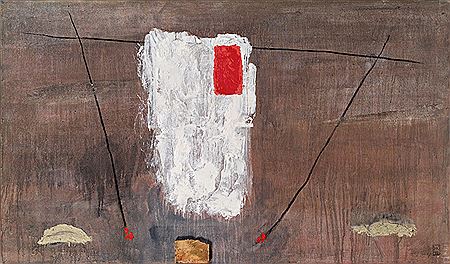
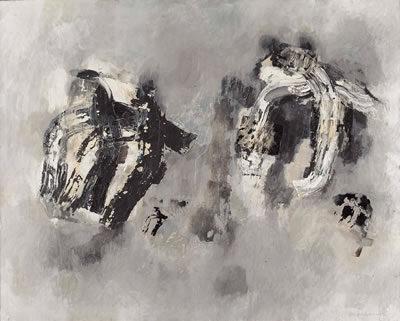
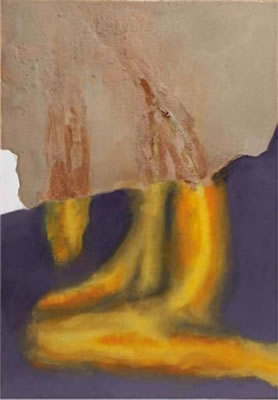
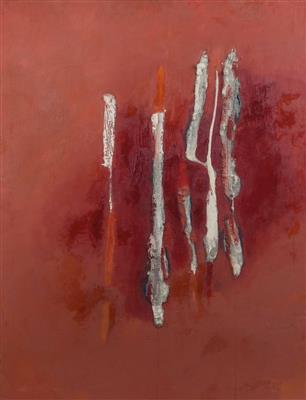
Hermann Kremsmayer was born in 1954. He prefers to work on paper in gouache and pastel, with the paper itself becoming an active pictorial ground rather than a neutral surface. In his practice, the... Read full biography
Hermann Kremsmayer was born in 1954. He prefers to work on paper in gouache and pastel, with the paper itself becoming an active pictorial ground rather than a neutral surface. In his practice, the sheet functions as a porous, breathing substrate that shapes the flow of colour. His wet-on-wet... Read full biography
Hermann Kremsmayer was born in 1954. He prefers to work on paper in gouache and pastel, with the paper itself becoming an active pictorial ground rather than a neutral surface. In his practice, the sheet functions as a porous, breathing substrate that shapes the flow of colour. His wet-on-wet technique produces the characteristic interflowing colour spaces in which contours dissolve and light seems inscribed into the material. Kremsmayer’s development was shaped by extended study stays in... Read full biography
Hermann Kremsmayer was born in 1954. He prefers to work on paper in gouache and pastel, with the paper itself becoming an active pictorial ground rather than a neutral surface. In his practice, the sheet functions as a porous, breathing substrate that shapes the flow of colour. His wet-on-wet technique produces the characteristic interflowing colour spaces in which contours dissolve and light seems inscribed into the material. Kremsmayer’s development was shaped by extended study stays in Barcelona, where he formed personal connections with Antoni Tàpies and Joan Hernández Pijuan, two central figures of the Iberian post-war avant-garde. These encounters were formative: Tàpies’ Informel and material aesthetics, elevating surface, trace and... Read full biography
Hermann Kremsmayer was born in 1954. He prefers to work on paper in gouache and pastel, with the paper itself becoming an active pictorial ground rather than a neutral surface. In his practice, the sheet functions as a porous, breathing substrate that shapes the flow of colour. His wet-on-wet technique produces the characteristic interflowing colour spaces in which contours dissolve and light seems inscribed into the material. Kremsmayer’s development was shaped by extended study stays in Barcelona, where he formed personal connections with Antoni Tàpies and Joan Hernández Pijuan, two central figures of the Iberian post-war avant-garde. These encounters were formative: Tàpies’ Informel and material aesthetics, elevating surface, trace and matter to the core pictorial message, resonate in Kremsmayer’s treatment of facture and ground. Pijuan’s meditative reduction and linearity... Read full biography
Hermann Kremsmayer - Art Prices in Auction LotsAuction Lots