c.1510 Bouvines - after 1550 Antwerp. Known for: Painting.
Herri met de Bles, a student of Joachim Patinier, was one of the leading Mannerist landscapists of his time. By handling subject matters like that of the present painting he was able to display his...
Read full biography Herri met de Bles, a student of Joachim Patinier, was one of the leading Mannerist landscapists of his time. By handling subject matters like that of the present painting he was able to display his talent for well-planned compositions populated with large numbers of figures and landscape...
Read full biography Herri met de Bles, a student of Joachim Patinier, was one of the leading Mannerist landscapists of his time. By handling subject matters like that of the present painting he was able to display his talent for well-planned compositions populated with large numbers of figures and landscape compositions partially featuring exaggerated anthropomorphic features. Further examples of this composition can be found in the Kunsthistorisches Museum, Vienna, and in the Doria Pamphilj Collection in Rome....
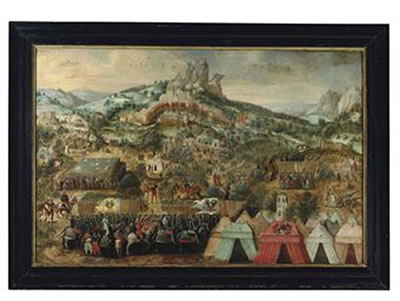
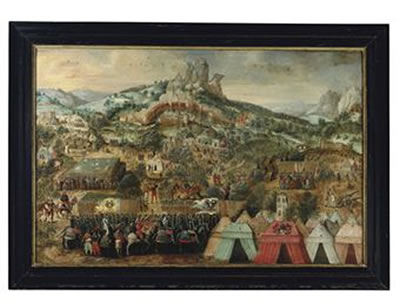
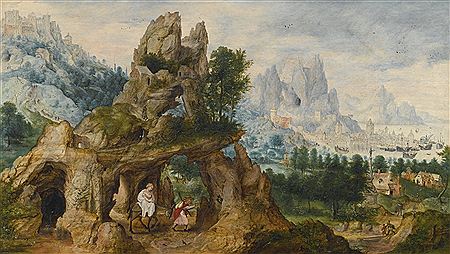
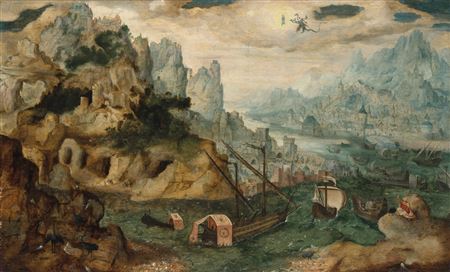
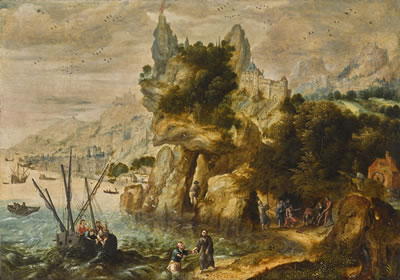
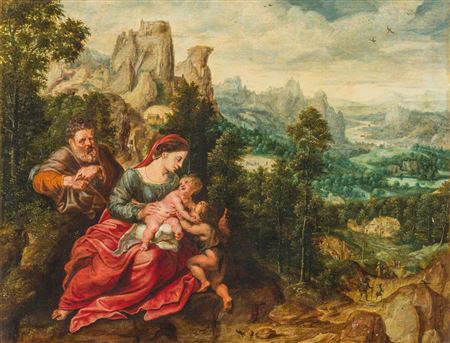
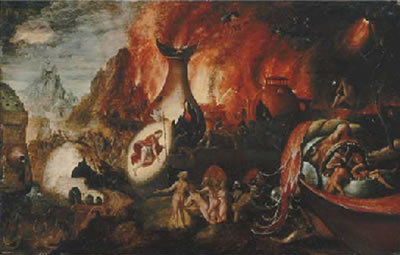
Read full biography Herri met de Bles, a student of Joachim Patinier, was one of the leading Mannerist landscapists of his time. By handling subject matters like that of the present painting he was able to display his talent for well-planned compositions populated with large numbers of figures and landscape compositions partially featuring exaggerated anthropomorphic features. Further examples of this composition can be found in the Kunsthistorisches Museum, Vienna, and in the Doria Pamphilj Collection in Rome.
Herri met de Bles, a student of Joachim Patinier, was one of the leading Mannerist landscapists of his time. By handling subject matters like that of the present painting he was able to display his talent for well-planned compositions populated with large numbers of figures and landscape compositions partially featuring exaggerated anthropomorphic features. Further examples of this composition can be found in the Kunsthistorisches Museum, Vienna, and in the Doria Pamphilj Collection in Rome.