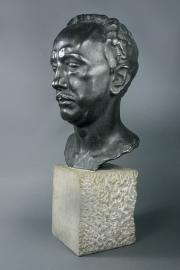
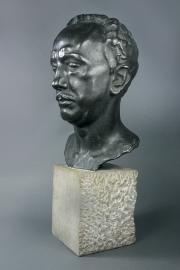
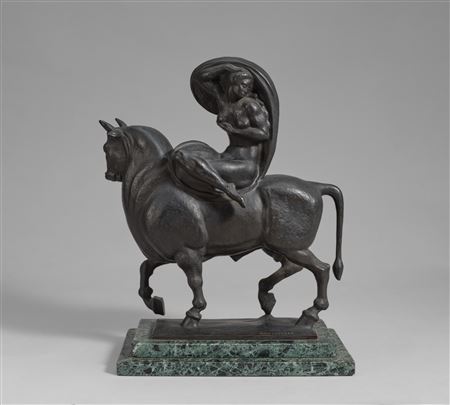
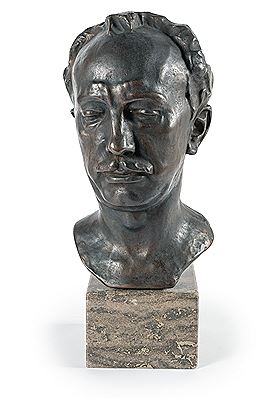
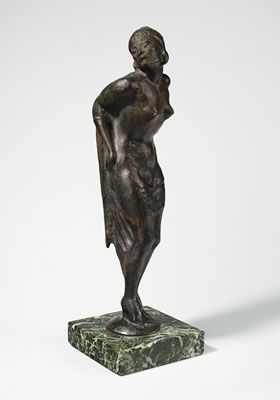
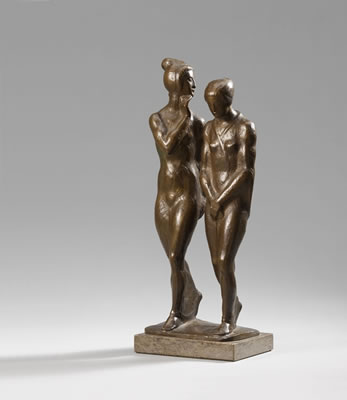
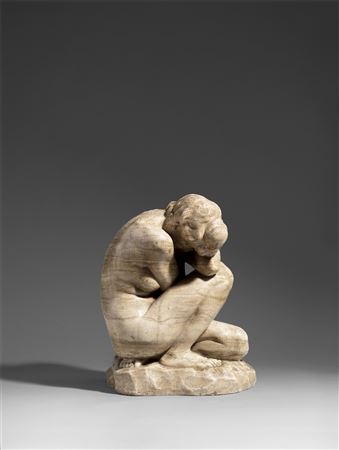
1871 Znaim - 1940 Berlin, Germany. Known for: Sculpture.
Hugo Lederer studied from 1884 until 1888 at the k. u. k. Technical College for Clay Industry in Znaim. Afterwards, he joined the art workshop of Adalbert Deutschmann in Erfurt. In 1890, he moved to...
Read full biography Hugo Lederer studied from 1884 until 1888 at the k. u. k. Technical College for Clay Industry in Znaim. Afterwards, he joined the art workshop of Adalbert Deutschmann in Erfurt. In 1890, he moved to Dresden, where he worked in the sculpting workshop of Johannes Schilling. Two years later, sculptor...
Read full biography Hugo Lederer studied from 1884 until 1888 at the k. u. k. Technical College for Clay Industry in Znaim. Afterwards, he joined the art workshop of Adalbert Deutschmann in Erfurt. In 1890, he moved to Dresden, where he worked in the sculpting workshop of Johannes Schilling. Two years later, sculptor Christian Behrens employed him in Breslau and, in the same year, he returned to Germany, to Robert Toberentz in Berlin. In 1895, Lederer began to work as a sculpting freelancer in Berlin. In 1912, he...
Read full biography Hugo Lederer studied from 1884 until 1888 at the k. u. k. Technical College for Clay Industry in Znaim. Afterwards, he joined the art workshop of Adalbert Deutschmann in Erfurt. In 1890, he moved to Dresden, where he worked in the sculpting workshop of Johannes Schilling. Two years later, sculptor Christian Behrens employed him in Breslau and, in the same year, he returned to Germany, to Robert Toberentz in Berlin. In 1895, Lederer began to work as a sculpting freelancer in Berlin. In 1912, he received a professorship for sculpting at the College of Fine Arts in Berlin. From 1920 to 1936, he taught a master’s course for sculpture. Lederer’s early work is influenced by the neo-baroque traditions of Reinhold Begas; his later works show his...
Read full biography Hugo Lederer studied from 1884 until 1888 at the k. u. k. Technical College for Clay Industry in Znaim. Afterwards, he joined the art workshop of Adalbert Deutschmann in Erfurt. In 1890, he moved to Dresden, where he worked in the sculpting workshop of Johannes Schilling. Two years later, sculptor Christian Behrens employed him in Breslau and, in the same year, he returned to Germany, to Robert Toberentz in Berlin. In 1895, Lederer began to work as a sculpting freelancer in Berlin. In 1912, he received a professorship for sculpting at the College of Fine Arts in Berlin. From 1920 to 1936, he taught a master’s course for sculpture. Lederer’s early work is influenced by the neo-baroque traditions of Reinhold Begas; his later works show his recognition of the works of Adolf von Hildebrand. (cko)