1905 - 1981. Known for: Folk art exploration, intentional primitiveness, egg-shell painting style..
Istvan Pekary, a pupil of Gyula Rudnay at the Budapest Academy of Fine Arts, was known for his conscious naiveté in his artworks, which transported viewers into a fairy world. His intentional...
Read full biography Istvan Pekary, a pupil of Gyula Rudnay at the Budapest Academy of Fine Arts, was known for his conscious naiveté in his artworks, which transported viewers into a fairy world. His intentional primitiveness stemmed from his study of folk art roots rather than mere folklore influences. Pekary's works...
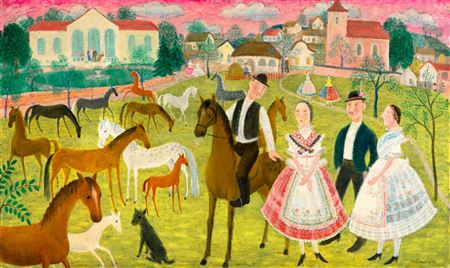
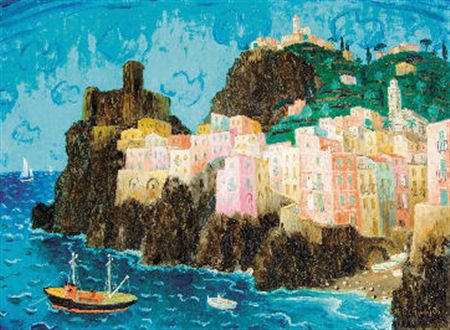
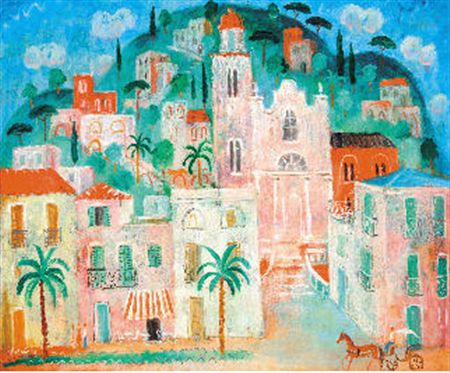
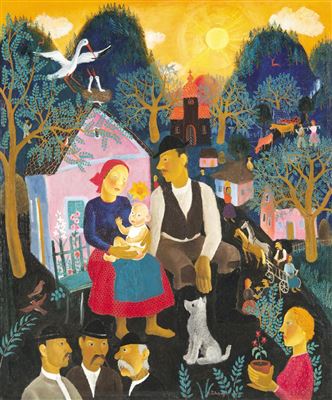
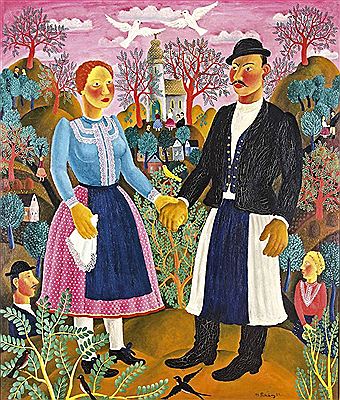
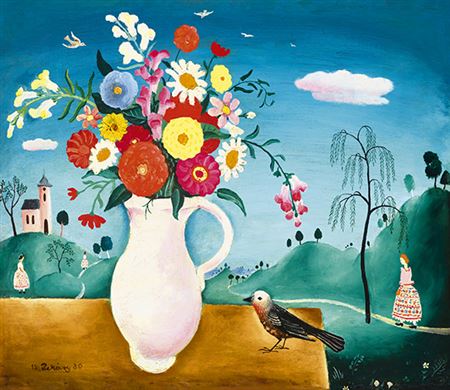
Read full biography Istvan Pekary, a pupil of Gyula Rudnay at the Budapest Academy of Fine Arts, was known for his conscious naiveté in his artworks, which transported viewers into a fairy world. His intentional primitiveness stemmed from his study of folk art roots rather than mere folklore influences. Pekary's works were characterized by charming accidental moments, "clumsy" forms, and a crude use of colors typical of egg-shell painting.
Istvan Pekary, a pupil of Gyula Rudnay at the Budapest Academy of Fine Arts, was known for his conscious naiveté in his artworks, which transported viewers into a fairy world. His intentional primitiveness stemmed from his study of folk art roots rather than mere folklore influences. Pekary's works were characterized by charming accidental moments, "clumsy" forms, and a crude use of colors typical of egg-shell painting.
Istvan Pekary, a pupil of Gyula Rudnay at the Budapest Academy of Fine Arts, was known for his conscious naiveté in his artworks, which transported viewers into a fairy world. His intentional primitiveness stemmed from his study of folk art roots rather than mere folklore influences. Pekary's works were characterized by charming accidental moments, "clumsy" forms, and a crude use of colors typical of egg-shell painting.