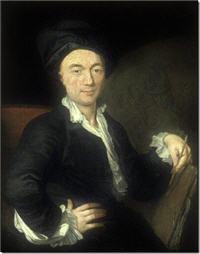
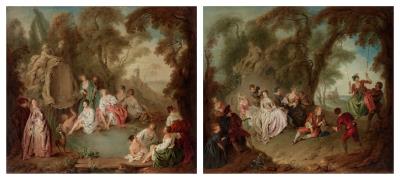
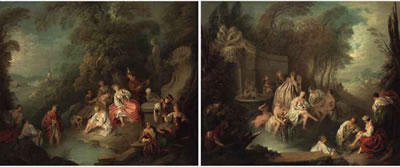
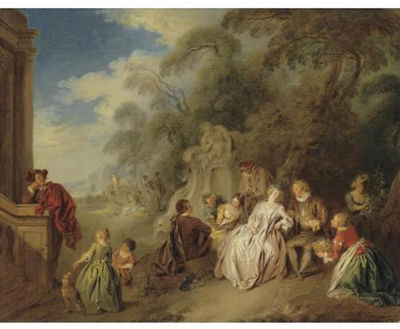
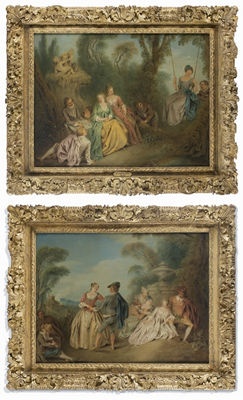
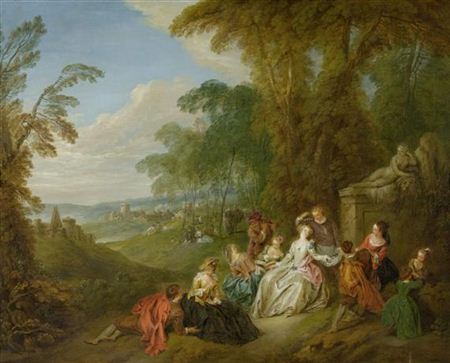
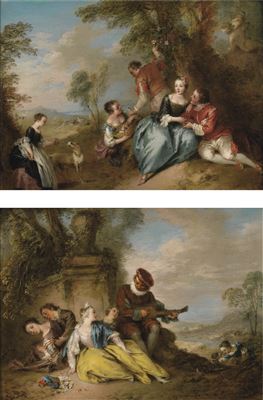
A French Rococo painter known particularly for his depictions of female figures and peasant festivities, Jean-Baptiste Pater was much influenced by another French painter, Jean-Antoine Watteau. Pater... Read full biography
A French Rococo painter known particularly for his depictions of female figures and peasant festivities, Jean-Baptiste Pater was much influenced by another French painter, Jean-Antoine Watteau. Pater first studied with an artist in his hometown of Valenciennes and also with his own father, who was... Read full biography
A French Rococo painter known particularly for his depictions of female figures and peasant festivities, Jean-Baptiste Pater was much influenced by another French painter, Jean-Antoine Watteau. Pater first studied with an artist in his hometown of Valenciennes and also with his own father, who was a sculptor. Then he worked with Watteau in Paris, but left him after several years because of what was perceived as Watteau's bad temper. Pater returned to Valenciennes, but in 1718 was back in Paris,... Read full biography
A French Rococo painter known particularly for his depictions of female figures and peasant festivities, Jean-Baptiste Pater was much influenced by another French painter, Jean-Antoine Watteau. Pater first studied with an artist in his hometown of Valenciennes and also with his own father, who was a sculptor. Then he worked with Watteau in Paris, but left him after several years because of what was perceived as Watteau's bad temper. Pater returned to Valenciennes, but in 1718 was back in Paris, where he reconciled with Watteau and had commissions. It was written that "Watteau gave the last days of his life to Pater and worked with him" (Getty), and Pater later said that this period with Watteau was the most influential period of his... Read full biography
A French Rococo painter known particularly for his depictions of female figures and peasant festivities, Jean-Baptiste Pater was much influenced by another French painter, Jean-Antoine Watteau. Pater first studied with an artist in his hometown of Valenciennes and also with his own father, who was a sculptor. Then he worked with Watteau in Paris, but left him after several years because of what was perceived as Watteau's bad temper. Pater returned to Valenciennes, but in 1718 was back in Paris, where he reconciled with Watteau and had commissions. It was written that "Watteau gave the last days of his life to Pater and worked with him" (Getty), and Pater later said that this period with Watteau was the most influential period of his artistic development. In 1728, Pater was elected to the Académie Royale. Indicative of his being rec... Read full biography
Jean-Baptiste Pater - Art Prices in Auction LotsAuction Lots