1922 Aix en Provence, France - 1995. Known for: Large concrete geometric shaped sculptures, ceramic murals.
The sculptor from Provence is known for his large sculptures in concrete. Organic shapes reminiscent of stone and rock formations. The sculptures have a robust ceramic-like surface and are assembled...
Read full biography The sculptor from Provence is known for his large sculptures in concrete. Organic shapes reminiscent of stone and rock formations. The sculptures have a robust ceramic-like surface and are assembled in smaller blocks or parts. In 1957, Jean Amado developed what he called Cerastone, a mixture of...
Read full biography The sculptor from Provence is known for his large sculptures in concrete. Organic shapes reminiscent of stone and rock formations. The sculptures have a robust ceramic-like surface and are assembled in smaller blocks or parts. In 1957, Jean Amado developed what he called Cerastone, a mixture of basalt sand and molten cement. The concrete takes on an ochre-coloured tone and when oxides are used, it acquires color shading. In the same year Amado had an exhibition at Galleri Haaken in Oslo, the...
Read full biography The sculptor from Provence is known for his large sculptures in concrete. Organic shapes reminiscent of stone and rock formations. The sculptures have a robust ceramic-like surface and are assembled in smaller blocks or parts. In 1957, Jean Amado developed what he called Cerastone, a mixture of basalt sand and molten cement. The concrete takes on an ochre-coloured tone and when oxides are used, it acquires color shading. In the same year Amado had an exhibition at Galleri Haaken in Oslo, the National Museum acquired the sculpture Qu'est ce qu'il traine (1969) for the collection.
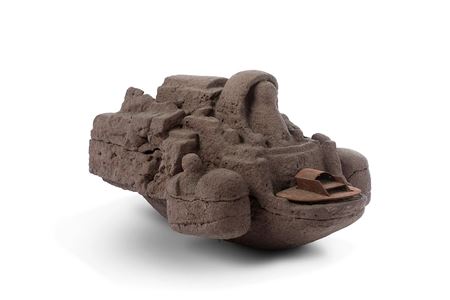
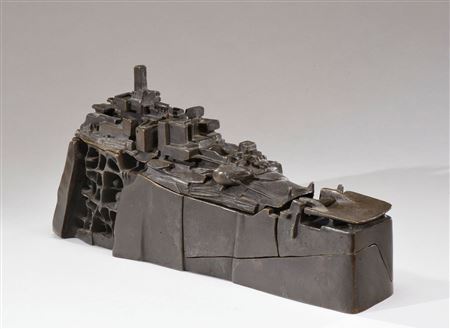
The sculptor from Provence is known for his large sculptures in concrete. Organic shapes reminiscent of stone and rock formations. The sculptures have a robust ceramic-like surface and are assembled in smaller blocks or parts. In 1957, Jean Amado developed what he called Cerastone, a mixture of basalt sand and molten cement. The concrete takes on an ochre-coloured tone and when oxides are used, it acquires color shading. In the same year Amado had an exhibition at Galleri Haaken in Oslo, the National Museum acquired the sculpture Qu'est ce qu'il traine (1969) for the collection.