1817 - 1887. Known for: Portrait, religious paintings.
Lazerges arrived in Algiers in 1830 and made his first artistic studies in Paris in 1838. He studied in the workshop of François BOUCHOT until 1843. His state of health brings him back to Algiers in...
Read full biography Lazerges arrived in Algiers in 1830 and made his first artistic studies in Paris in 1838. He studied in the workshop of François BOUCHOT until 1843. His state of health brings him back to Algiers in 1861. In his work "The form and the ideal in Art" Algiers 1882, he presents North Africa, like the...
Read full biography Lazerges arrived in Algiers in 1830 and made his first artistic studies in Paris in 1838. He studied in the workshop of François BOUCHOT until 1843. His state of health brings him back to Algiers in 1861. In his work "The form and the ideal in Art" Algiers 1882, he presents North Africa, like the genius where the modern Art will come to draw its inspirations. Taking up the ideas of Delacroix and Fromentin, he affirms that: "Ancient Rome did not have more beautiful types to show to the artists...
Read full biography Lazerges arrived in Algiers in 1830 and made his first artistic studies in Paris in 1838. He studied in the workshop of François BOUCHOT until 1843. His state of health brings him back to Algiers in 1861. In his work "The form and the ideal in Art" Algiers 1882, he presents North Africa, like the genius where the modern Art will come to draw its inspirations. Taking up the ideas of Delacroix and Fromentin, he affirms that: "Ancient Rome did not have more beautiful types to show to the artists of its time than the water carriers in Algiers.
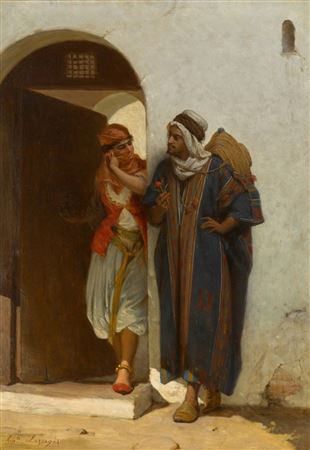
Lazerges arrived in Algiers in 1830 and made his first artistic studies in Paris in 1838. He studied in the workshop of François BOUCHOT until 1843. His state of health brings him back to Algiers in 1861. In his work "The form and the ideal in Art" Algiers 1882, he presents North Africa, like the genius where the modern Art will come to draw its inspirations. Taking up the ideas of Delacroix and Fromentin, he affirms that: "Ancient Rome did not have more beautiful types to show to the artists of its time than the water carriers in Algiers.