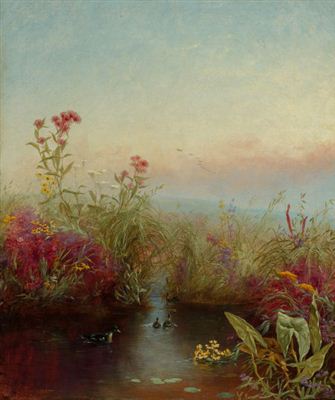
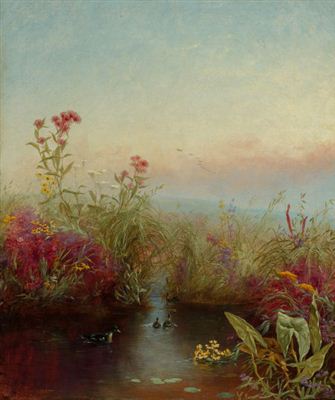
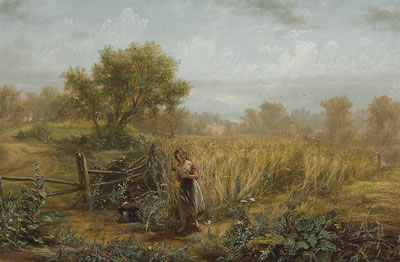
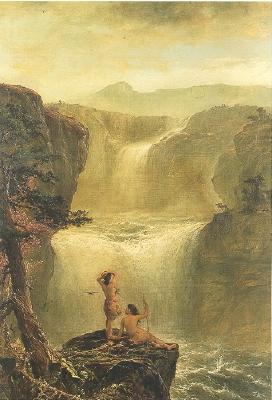
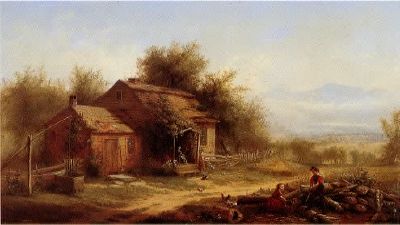
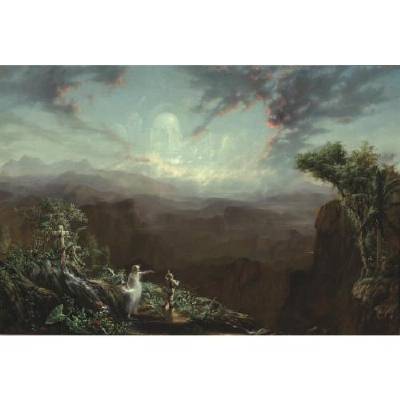
Born in Middleboro, Massachusetts, Jerome Thompson became a painter of luminous landscapes, often allegorical with rural figures in the foreground. His father was Cephas Thompson, distinguished... Read full biography
Born in Middleboro, Massachusetts, Jerome Thompson became a painter of luminous landscapes, often allegorical with rural figures in the foreground. His father was Cephas Thompson, distinguished portrait painter, who refused to give Jerome art lessons and even destroyed his early paintings because... Read full biography
Born in Middleboro, Massachusetts, Jerome Thompson became a painter of luminous landscapes, often allegorical with rural figures in the foreground. His father was Cephas Thompson, distinguished portrait painter, who refused to give Jerome art lessons and even destroyed his early paintings because he wanted him to be a farmer. As a youth, Jerome moved with his sister to Barnstable, Massachusetts and earned money as a sign and portrait painter. He painted Daniel Webster, and Abraham Quary, the... Read full biography
Born in Middleboro, Massachusetts, Jerome Thompson became a painter of luminous landscapes, often allegorical with rural figures in the foreground. His father was Cephas Thompson, distinguished portrait painter, who refused to give Jerome art lessons and even destroyed his early paintings because he wanted him to be a farmer. As a youth, Jerome moved with his sister to Barnstable, Massachusetts and earned money as a sign and portrait painter. He painted Daniel Webster, and Abraham Quary, the last surviving member of the Nantucket Indian tribe. In 1835, he opened a portrait studio in New York City, but a landscape, A Pic Nick, Camden, Maine, that he entered in the 1850 National Academy exhibit, changed the direction of his painting because... Read full biography
Born in Middleboro, Massachusetts, Jerome Thompson became a painter of luminous landscapes, often allegorical with rural figures in the foreground. His father was Cephas Thompson, distinguished portrait painter, who refused to give Jerome art lessons and even destroyed his early paintings because he wanted him to be a farmer. As a youth, Jerome moved with his sister to Barnstable, Massachusetts and earned money as a sign and portrait painter. He painted Daniel Webster, and Abraham Quary, the last surviving member of the Nantucket Indian tribe. In 1835, he opened a portrait studio in New York City, but a landscape, A Pic Nick, Camden, Maine, that he entered in the 1850 National Academy exhibit, changed the direction of his painting because it got so much positive reaction. In 1852, he went to England for several years of independent study... Read full biography
Jerome B Thompson - Art Prices in Auction LotsAuction Lots