1844 - 1890. Known for: Painting.
Trained at the School of Fine Arts with the Romantic painter José Serra y Porson, José Juliana furthered his training in Naples, where he joined the Neapolitan school of painting, and in Rome, the...
Read full biography Trained at the School of Fine Arts with the Romantic painter José Serra y Porson, José Juliana furthered his training in Naples, where he joined the Neapolitan school of painting, and in Rome, the latter being the city where he produced the present work. In 1866 he took part in the Fine Arts...
Read full biography Trained at the School of Fine Arts with the Romantic painter José Serra y Porson, José Juliana furthered his training in Naples, where he joined the Neapolitan school of painting, and in Rome, the latter being the city where he produced the present work. In 1866 he took part in the Fine Arts Exhibition in Barcelona and the National Exhibition of Fine Arts in Madrid with works on genre themes, winning the third medal in the Spanish capital. Currently represented in the Museo Nacional del Prado...
Read full biography Trained at the School of Fine Arts with the Romantic painter José Serra y Porson, José Juliana furthered his training in Naples, where he joined the Neapolitan school of painting, and in Rome, the latter being the city where he produced the present work. In 1866 he took part in the Fine Arts Exhibition in Barcelona and the National Exhibition of Fine Arts in Madrid with works on genre themes, winning the third medal in the Spanish capital. Currently represented in the Museo Nacional del Prado and in various private collections, José Juliana usually depicts in his works outdoor scenes, of a costumbrista nature, with women going about their daily chores. On this occasion the artist depicts an outdoor scene set in a rural market where a group...
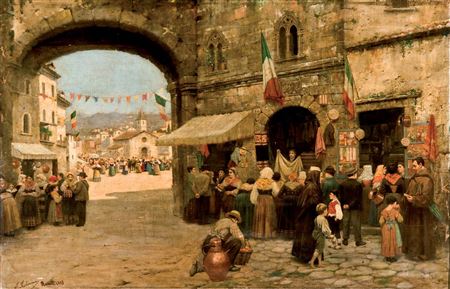
Read full biography Trained at the School of Fine Arts with the Romantic painter José Serra y Porson, José Juliana furthered his training in Naples, where he joined the Neapolitan school of painting, and in Rome, the latter being the city where he produced the present work. In 1866 he took part in the Fine Arts Exhibition in Barcelona and the National Exhibition of Fine Arts in Madrid with works on genre themes, winning the third medal in the Spanish capital. Currently represented in the Museo Nacional del Prado and in various private collections, José Juliana usually depicts in his works outdoor scenes, of a costumbrista nature, with women going about their daily chores. On this occasion the artist depicts an outdoor scene set in a rural market where a group of women buy partridges and rabbits from a humble vendor whose stall is reduced to a stone counter.