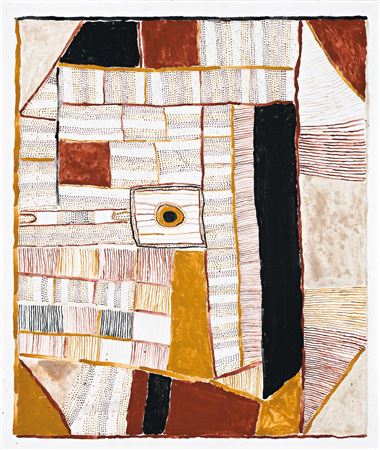
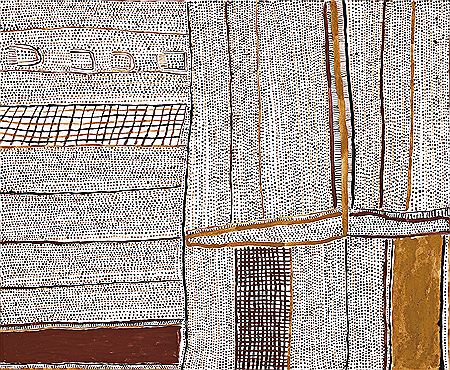
Kitty Kantilla made her most audacious paintings on canvas, enabling her to work on a larger scale than previously, on either white or black grounds. Her first canvases echo her work in the bark... Read full biography
Kitty Kantilla made her most audacious paintings on canvas, enabling her to work on a larger scale than previously, on either white or black grounds. Her first canvases echo her work in the bark medium composed of multiple dots, solid blocks of intense colour and small motifs on black backgrounds... Read full biography
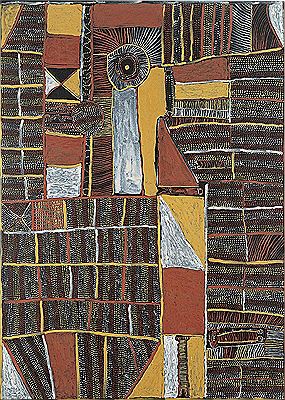
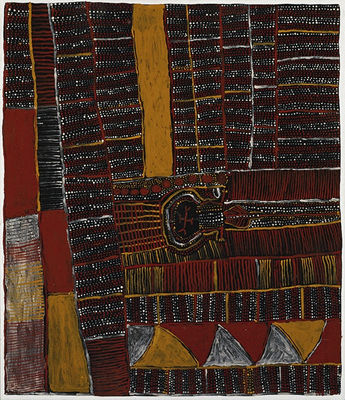
Kitty Kantilla made her most audacious paintings on canvas, enabling her to work on a larger scale than previously, on either white or black grounds. Her first canvases echo her work in the bark medium composed of multiple dots, solid blocks of intense colour and small motifs on black backgrounds that echo those found in designs on Pukumani tutini, tunga and markings used on the face, torso and limbs to disguise relatives from the mapurtiti (spirits of the deceased). The year 1997 was a... Read full biography
Kitty Kantilla made her most audacious paintings on canvas, enabling her to work on a larger scale than previously, on either white or black grounds. Her first canvases echo her work in the bark medium composed of multiple dots, solid blocks of intense colour and small motifs on black backgrounds that echo those found in designs on Pukumani tutini, tunga and markings used on the face, torso and limbs to disguise relatives from the mapurtiti (spirits of the deceased). The year 1997 was a watershed in Kantilla’s practice. Following her visionary etchings, the artist was introduced to painting on a white ground virtually by accident when, due to the absence of a support primed with black paint, she was prompted to work upon white. Like the... Read full biography
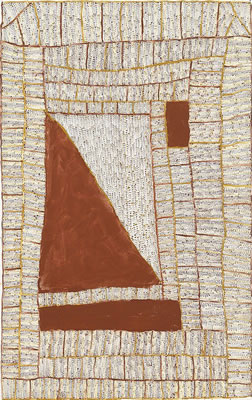
Kitty Kantilla made her most audacious paintings on canvas, enabling her to work on a larger scale than previously, on either white or black grounds. Her first canvases echo her work in the bark medium composed of multiple dots, solid blocks of intense colour and small motifs on black backgrounds that echo those found in designs on Pukumani tutini, tunga and markings used on the face, torso and limbs to disguise relatives from the mapurtiti (spirits of the deceased). The year 1997 was a watershed in Kantilla’s practice. Following her visionary etchings, the artist was introduced to painting on a white ground virtually by accident when, due to the absence of a support primed with black paint, she was prompted to work upon white. Like the print medium, the white canvas broke the direct link between Tiwi ritual mark making and contemporary art. Kantilla’s radical use of... Read full biography
Kitty Kantilla - Art Prices in Auction LotsAuction Lots