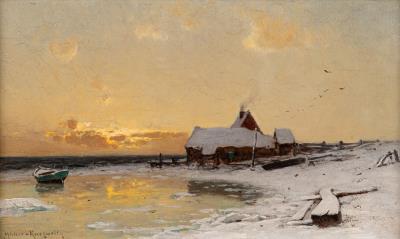
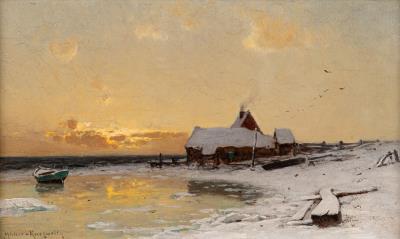
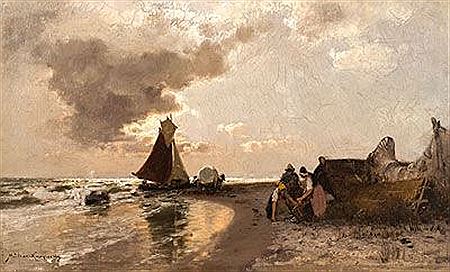
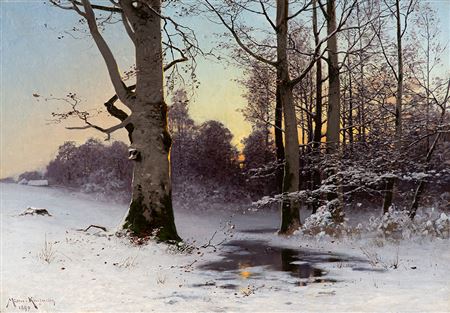
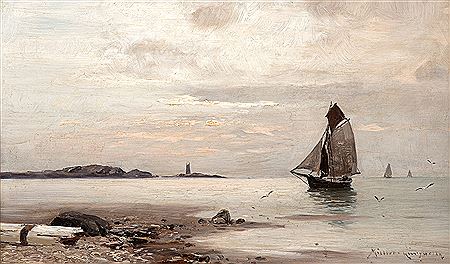
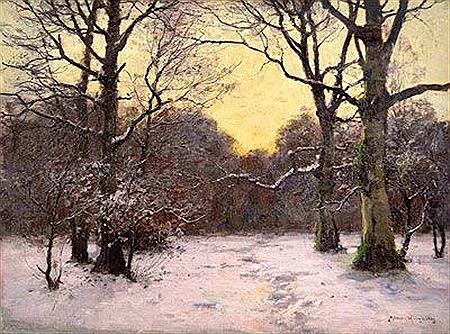
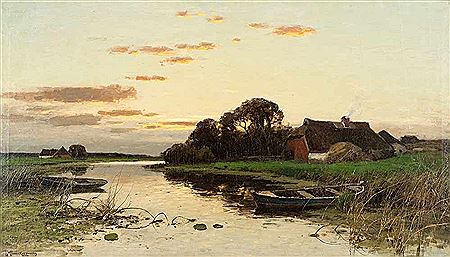
1855 Chemnitz - 1914. Known for: Painting.
Konrad Alexander Müller-Kurzwelly lived from 1855 to 1914. Born in Chemnitz, Konrad Alexander Müller-Kurzwelly studied philosophy, history and art history at the University of Jena. In 1881, he...
Read full biography Konrad Alexander Müller-Kurzwelly lived from 1855 to 1914. Born in Chemnitz, Konrad Alexander Müller-Kurzwelly studied philosophy, history and art history at the University of Jena. In 1881, he received a doctorate of philosophy. From 1881 to 1885, he studied landscape painting under the guidance...
Read full biography Konrad Alexander Müller-Kurzwelly lived from 1855 to 1914. Born in Chemnitz, Konrad Alexander Müller-Kurzwelly studied philosophy, history and art history at the University of Jena. In 1881, he received a doctorate of philosophy. From 1881 to 1885, he studied landscape painting under the guidance of Hans Gude at the Berlin Academy. He was connected with the artists' colonies on Rügen, Hiddensee, Ahrenshoop and Ekensund. In 1883, the painter joined the ‘Verein Berliner Künstler’. In 1892, he...
Read full biography Konrad Alexander Müller-Kurzwelly lived from 1855 to 1914. Born in Chemnitz, Konrad Alexander Müller-Kurzwelly studied philosophy, history and art history at the University of Jena. In 1881, he received a doctorate of philosophy. From 1881 to 1885, he studied landscape painting under the guidance of Hans Gude at the Berlin Academy. He was connected with the artists' colonies on Rügen, Hiddensee, Ahrenshoop and Ekensund. In 1883, the painter joined the ‘Verein Berliner Künstler’. In 1892, he founded the artist’s group ‘Vereinigung der XI’ along with Walter Leistikow, Ludwig von Hofmann and further artists. The group was a forerunner of the Berlin Secession, which later included Max Liebermann and Arnold Böcklin. (cko)...
Read full biography Konrad Alexander Müller-Kurzwelly lived from 1855 to 1914. Born in Chemnitz, Konrad Alexander Müller-Kurzwelly studied philosophy, history and art history at the University of Jena. In 1881, he received a doctorate of philosophy. From 1881 to 1885, he studied landscape painting under the guidance of Hans Gude at the Berlin Academy. He was connected with the artists' colonies on Rügen, Hiddensee, Ahrenshoop and Ekensund. In 1883, the painter joined the ‘Verein Berliner Künstler’. In 1892, he founded the artist’s group ‘Vereinigung der XI’ along with Walter Leistikow, Ludwig von Hofmann and further artists. The group was a forerunner of the Berlin Secession, which later included Max Liebermann and Arnold Böcklin. (cko)