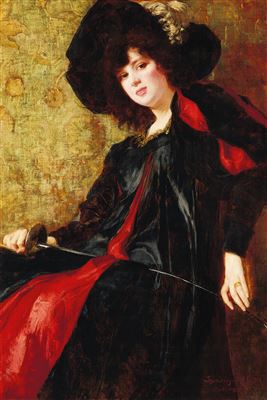
1858 - 1943. Known for: Painting; nude.
Kornel Spanyik is confronted on our canvas with the perilous exercise of the female nude. This Hungarian painter with local academic training, who exhibited in Paris at the turn of the 19th and 20th...
Read full biography Kornel Spanyik is confronted on our canvas with the perilous exercise of the female nude. This Hungarian painter with local academic training, who exhibited in Paris at the turn of the 19th and 20th centuries, thus measures himself against the great painting of the old masters, revealing to us the...
Read full biography Kornel Spanyik is confronted on our canvas with the perilous exercise of the female nude. This Hungarian painter with local academic training, who exhibited in Paris at the turn of the 19th and 20th centuries, thus measures himself against the great painting of the old masters, revealing to us the contours of his modern Venus. The influences seem numerous and transversal, as the composition reminds us of both Titian and Cabanel; and the rendering, virtuoso certainly, but also particularly...
Read full biography Kornel Spanyik is confronted on our canvas with the perilous exercise of the female nude. This Hungarian painter with local academic training, who exhibited in Paris at the turn of the 19th and 20th centuries, thus measures himself against the great painting of the old masters, revealing to us the contours of his modern Venus. The influences seem numerous and transversal, as the composition reminds us of both Titian and Cabanel; and the rendering, virtuoso certainly, but also particularly carnal, is not without evoking the scandals caused by Manet and Courbet in their time.
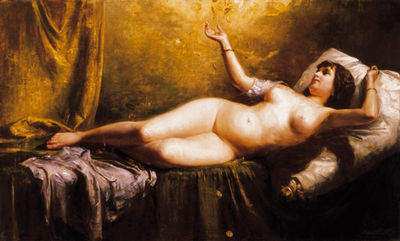
Kornel Spanyik is confronted on our canvas with the perilous exercise of the female nude. This Hungarian painter with local academic training, who exhibited in Paris at the turn of the 19th and 20th centuries, thus measures himself against the great painting of the old masters, revealing to us the contours of his modern Venus. The influences seem numerous and transversal, as the composition reminds us of both Titian and Cabanel; and the rendering, virtuoso certainly, but also particularly carnal, is not without evoking the scandals caused by Manet and Courbet in their time.