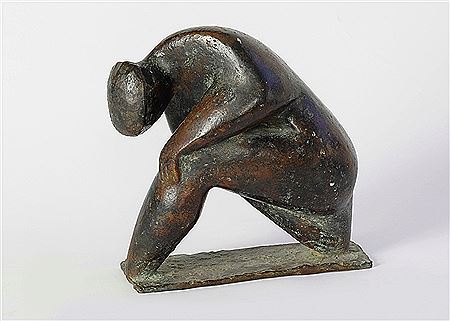
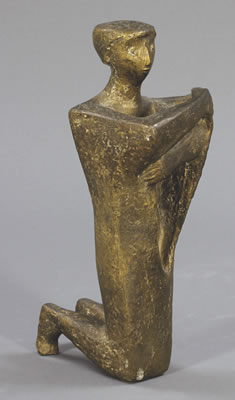
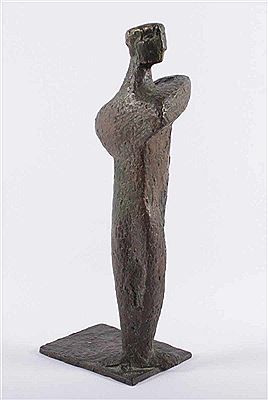
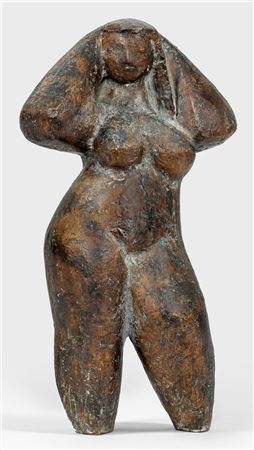
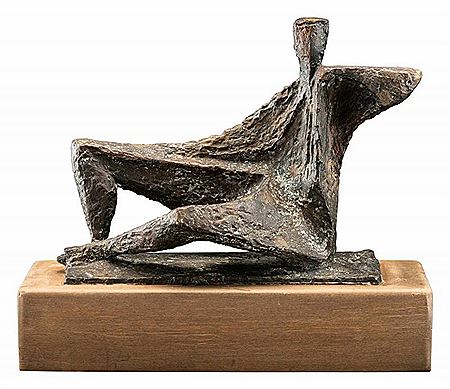
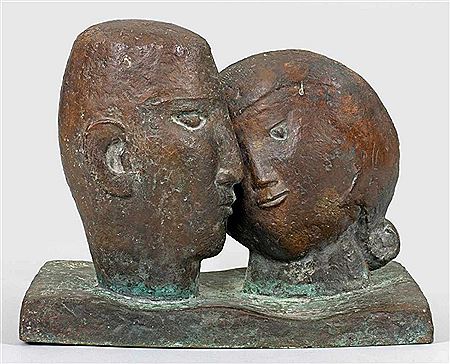
1905 - 2000. Known for: Painting.
Kurt Lehmann studied from 1924 to 1929 at the State Art Academy in Kassel, in Alfred Vocke's class. The sculptor's first exhibition at the Kunstverein in Kassel followed in 1929, and in 1930 he...
Read full biography Kurt Lehmann studied from 1924 to 1929 at the State Art Academy in Kassel, in Alfred Vocke's class. The sculptor's first exhibition at the Kunstverein in Kassel followed in 1929, and in 1930 he received a state scholarship at the Villa Massimo in Rome. In the early 1930s the artist stayed in...
Read full biography Kurt Lehmann studied from 1924 to 1929 at the State Art Academy in Kassel, in Alfred Vocke's class. The sculptor's first exhibition at the Kunstverein in Kassel followed in 1929, and in 1930 he received a state scholarship at the Villa Massimo in Rome. In the early 1930s the artist stayed in Berlin, where he was in contact with Werner Gilles, Gerhard Marcks, Gustav Seitz and Hermann Blumenthal and took part in the exhibitions of the Berlin Secession and the German Association of Artists. In the...
Read full biography Kurt Lehmann studied from 1924 to 1929 at the State Art Academy in Kassel, in Alfred Vocke's class. The sculptor's first exhibition at the Kunstverein in Kassel followed in 1929, and in 1930 he received a state scholarship at the Villa Massimo in Rome. In the early 1930s the artist stayed in Berlin, where he was in contact with Werner Gilles, Gerhard Marcks, Gustav Seitz and Hermann Blumenthal and took part in the exhibitions of the Berlin Secession and the German Association of Artists. In the post-war years, Lehmann took over a professorship at the Technical University of Hanover in 1949 (until 1969), where he held the chair for modeling. The award-winning artist received numerous commissions for the artistic design of public buildings...
Read full biography Kurt Lehmann studied from 1924 to 1929 at the State Art Academy in Kassel, in Alfred Vocke's class. The sculptor's first exhibition at the Kunstverein in Kassel followed in 1929, and in 1930 he received a state scholarship at the Villa Massimo in Rome. In the early 1930s the artist stayed in Berlin, where he was in contact with Werner Gilles, Gerhard Marcks, Gustav Seitz and Hermann Blumenthal and took part in the exhibitions of the Berlin Secession and the German Association of Artists. In the post-war years, Lehmann took over a professorship at the Technical University of Hanover in 1949 (until 1969), where he held the chair for modeling. The award-winning artist received numerous commissions for the artistic design of public buildings and squares, among other things, his works found their way into the cityscape of Hanover.