Luca Carlevaris (1665-1731), painter, etcher and architect from Udine, moved to Venice in 1679, where he lived in the palace of his aristocratic patron Zenobio (hence he was also called Luca da... Read full biography
Luca Carlevaris (1665-1731), painter, etcher and architect from Udine, moved to Venice in 1679, where he lived in the palace of his aristocratic patron Zenobio (hence he was also called Luca da Ca'Zenobio). His mathematical and technical understanding was underlined by numerous jobs as building... Read full biography
Luca Carlevaris (1665-1731), painter, etcher and architect from Udine, moved to Venice in 1679, where he lived in the palace of his aristocratic patron Zenobio (hence he was also called Luca da Ca'Zenobio). His mathematical and technical understanding was underlined by numerous jobs as building surveyor in Conegliano, Udine and Venice. ?Between 1685 and 1690 Luca Carlevaris probably stayed in Rome, where he might have been taught vedute painting by Gaspare van Wittel (Vanvitelli). Carlevaris... Read full biography
Luca Carlevaris (1665-1731), painter, etcher and architect from Udine, moved to Venice in 1679, where he lived in the palace of his aristocratic patron Zenobio (hence he was also called Luca da Ca'Zenobio). His mathematical and technical understanding was underlined by numerous jobs as building surveyor in Conegliano, Udine and Venice. ?Between 1685 and 1690 Luca Carlevaris probably stayed in Rome, where he might have been taught vedute painting by Gaspare van Wittel (Vanvitelli). Carlevaris increasingly focused on this genre and reached great fame towards the end of the 17th century. ?. His earliest verifiable work was a sequence of vedute entitled Le Fabriche e Vedute di Venezia" with over a hundred etchings of the most famous Venetian... Read full biography
Luca Carlevaris (1665-1731), painter, etcher and architect from Udine, moved to Venice in 1679, where he lived in the palace of his aristocratic patron Zenobio (hence he was also called Luca da Ca'Zenobio). His mathematical and technical understanding was underlined by numerous jobs as building surveyor in Conegliano, Udine and Venice. ?Between 1685 and 1690 Luca Carlevaris probably stayed in Rome, where he might have been taught vedute painting by Gaspare van Wittel (Vanvitelli). Carlevaris increasingly focused on this genre and reached great fame towards the end of the 17th century. ?. His earliest verifiable work was a sequence of vedute entitled Le Fabriche e Vedute di Venezia" with over a hundred etchings of the most famous Venetian buildings and sights, published in 1703.?. Luca Carlevaris' great merit was the integration of new technical means of percept... Read full biography
Luca (Carlevarijs) Carlevaris - Art Prices in Auction LotsAuction Lots
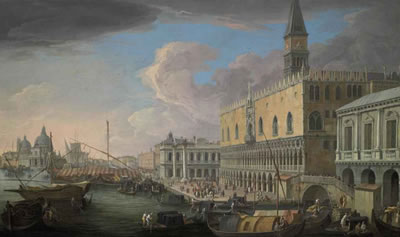
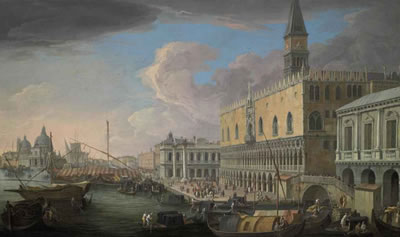
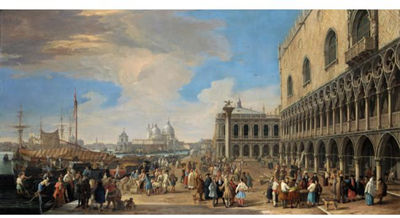
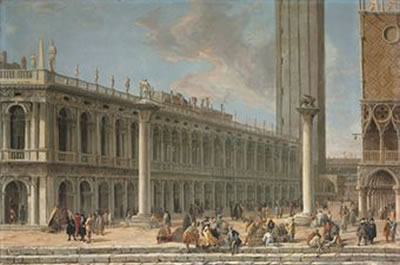
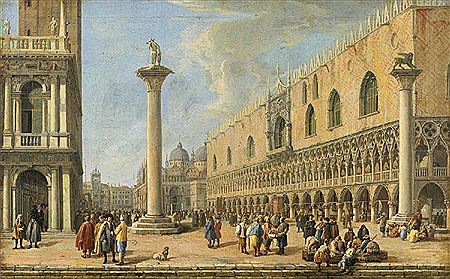
View of the Piazzetta of Saint Mark, Venice, looking north-west, with the Columns of Saint Mark and Saint Theodore, the Libreria, the Ducal Palace, the Logetta and the Campanile, and a glimpse of the Procuratie Vecchie beyond