1842 Vienna, Austria - 1918 Munich, Germany. Known for: Still-life painting and sculpture, especially hunting still lifes and decorative commissions.
Ludwig Eibl was born in 1842 in Vienna and became an Austrian still-life painter and sculptor active in Munich, where he was associated with the circle around Wilhelm Leibl. Eibl painted still...
Read full biography Ludwig Eibl was born in 1842 in Vienna and became an Austrian still-life painter and sculptor active in Munich, where he was associated with the circle around Wilhelm Leibl. Eibl painted still lifes—especially hunting still lifes featuring wildfowl, vegetables, and fruit—as well as hunting scenes...
Read full biography Ludwig Eibl was born in 1842 in Vienna and became an Austrian still-life painter and sculptor active in Munich, where he was associated with the circle around Wilhelm Leibl. Eibl painted still lifes—especially hunting still lifes featuring wildfowl, vegetables, and fruit—as well as hunting scenes and individual portraits. Ludwig Eibl also collaborated with Anton Fink and Josef Schmitzberger on the ceiling medallions for the hunting room at Herrenchiemsee Palace, a significant commission that...
Read full biography Ludwig Eibl was born in 1842 in Vienna and became an Austrian still-life painter and sculptor active in Munich, where he was associated with the circle around Wilhelm Leibl. Eibl painted still lifes—especially hunting still lifes featuring wildfowl, vegetables, and fruit—as well as hunting scenes and individual portraits. Ludwig Eibl also collaborated with Anton Fink and Josef Schmitzberger on the ceiling medallions for the hunting room at Herrenchiemsee Palace, a significant commission that reflects his skill in both painting and decorative work. Ludwig Eibl died in 1918 in Munich.
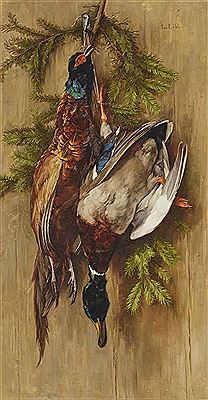
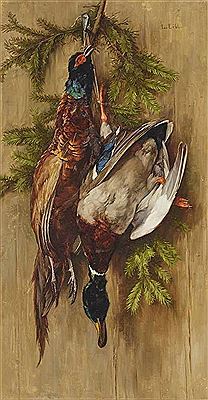
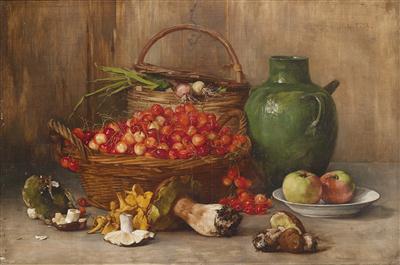
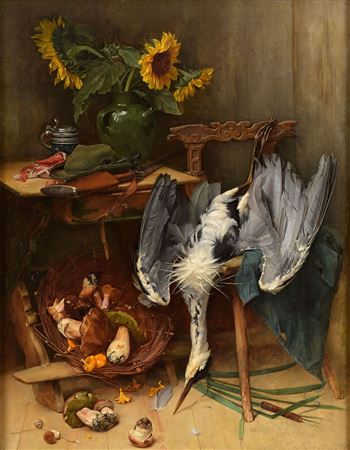
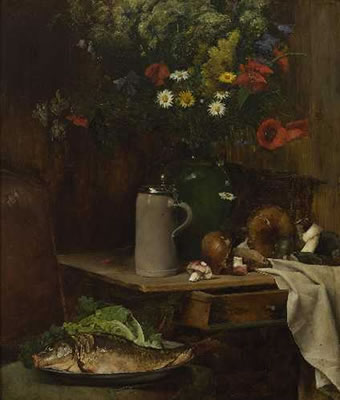
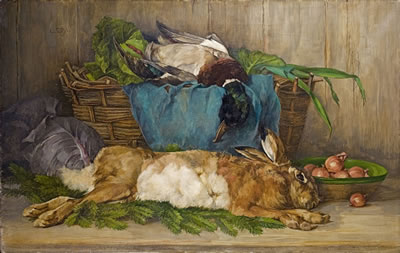
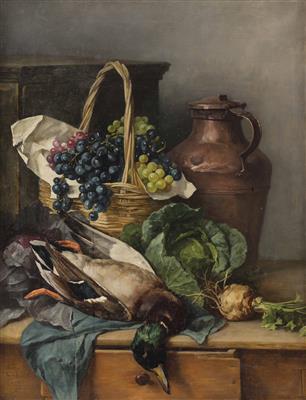
Ludwig Eibl was born in 1842 in Vienna and became an Austrian still-life painter and sculptor active in Munich, where he was associated with the circle around Wilhelm Leibl. Eibl painted still lifes—especially hunting still lifes featuring wildfowl, vegetables, and fruit—as well as hunting scenes and individual portraits. Ludwig Eibl also collaborated with Anton Fink and Josef Schmitzberger on the ceiling medallions for the hunting room at Herrenchiemsee Palace, a significant commission that reflects his skill in both painting and decorative work. Ludwig Eibl died in 1918 in Munich.