Max Kaus was born in Berlin on March 11, 1981. He attended the School for Crafts and the Applied and Decorative Arts in Berlin-Charlottenburg. In 1913 he moved into his first studio, and a travel... Read full biography
Max Kaus was born in Berlin on March 11, 1981. He attended the School for Crafts and the Applied and Decorative Arts in Berlin-Charlottenburg. In 1913 he moved into his first studio, and a travel grant brought him to Paris in 1914. At the onset of World War I, however, he was forced to return home,... Read full biography
Max Kaus was born in Berlin on March 11, 1981. He attended the School for Crafts and the Applied and Decorative Arts in Berlin-Charlottenburg. In 1913 he moved into his first studio, and a travel grant brought him to Paris in 1914. At the onset of World War I, however, he was forced to return home, where he volunteered as an ambulance driver and medical orderly in 1916; fortuitously, it was this volunteering that brought him in contact with several inspirational artists, including Erich Heckel,... Read full biography
Max Kaus was born in Berlin on March 11, 1981. He attended the School for Crafts and the Applied and Decorative Arts in Berlin-Charlottenburg. In 1913 he moved into his first studio, and a travel grant brought him to Paris in 1914. At the onset of World War I, however, he was forced to return home, where he volunteered as an ambulance driver and medical orderly in 1916; fortuitously, it was this volunteering that brought him in contact with several inspirational artists, including Erich Heckel, Anton Kerschbaumer, and Otto Herbig. It was at this time he began to focus on printmaking, namely lithography and woodcuts. After the war he supported himself by accepting commissions for decorative painting. Kaus's first one-man show was at the... Read full biography
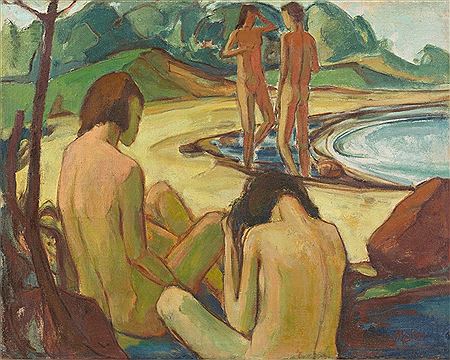
Max Kaus was born in Berlin on March 11, 1981. He attended the School for Crafts and the Applied and Decorative Arts in Berlin-Charlottenburg. In 1913 he moved into his first studio, and a travel grant brought him to Paris in 1914. At the onset of World War I, however, he was forced to return home, where he volunteered as an ambulance driver and medical orderly in 1916; fortuitously, it was this volunteering that brought him in contact with several inspirational artists, including Erich Heckel, Anton Kerschbaumer, and Otto Herbig. It was at this time he began to focus on printmaking, namely lithography and woodcuts. After the war he supported himself by accepting commissions for decorative painting. Kaus's first one-man show was at the Ferdinand Möller Gallery in 1919; after meeting Otto Mueller and Karl Schmidt-Rottluff at the "Free Secession" in 1920, he became a part of s... Read full biography