Mick Kubarkku spent his life on small outstations close to waterholes and billabongs, moving camp seasonally to hunt. By the late 1970s, Kubarkku had established his own outstation at Yikarrakkal on... Read full biography
Mick Kubarkku spent his life on small outstations close to waterholes and billabongs, moving camp seasonally to hunt. By the late 1970s, Kubarkku had established his own outstation at Yikarrakkal on the Mann River. It was during this period in late 1970s and through the 1980s that Kubarkku achieved... Read full biography
Mick Kubarkku spent his life on small outstations close to waterholes and billabongs, moving camp seasonally to hunt. By the late 1970s, Kubarkku had established his own outstation at Yikarrakkal on the Mann River. It was during this period in late 1970s and through the 1980s that Kubarkku achieved some national prominence for his distinctive figurative images often of namanjwarre, the estuarine crocodile. By then he had established his signature style, with dotting to decorate borders or... Read full biography
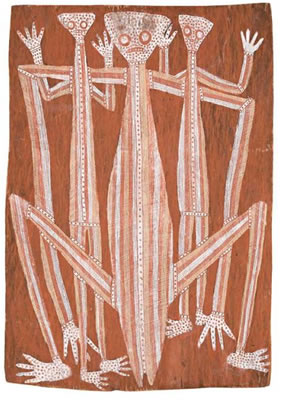
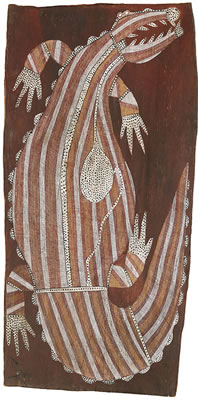
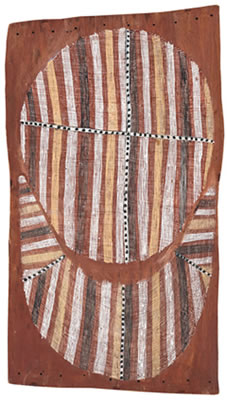
Mick Kubarkku spent his life on small outstations close to waterholes and billabongs, moving camp seasonally to hunt. By the late 1970s, Kubarkku had established his own outstation at Yikarrakkal on the Mann River. It was during this period in late 1970s and through the 1980s that Kubarkku achieved some national prominence for his distinctive figurative images often of namanjwarre, the estuarine crocodile. By then he had established his signature style, with dotting to decorate borders or sections of a figure's anatomy along with internal crosshatching of alternating parallel bands of red, yellow and white ochre. This patterning was also shared with artist David Milaybuma (deceased), one of the artists he worked with at Maningrida in the... Read full biography
Mick Kubarkku spent his life on small outstations close to waterholes and billabongs, moving camp seasonally to hunt. By the late 1970s, Kubarkku had established his own outstation at Yikarrakkal on the Mann River. It was during this period in late 1970s and through the 1980s that Kubarkku achieved some national prominence for his distinctive figurative images often of namanjwarre, the estuarine crocodile. By then he had established his signature style, with dotting to decorate borders or sections of a figure's anatomy along with internal crosshatching of alternating parallel bands of red, yellow and white ochre. This patterning was also shared with artist David Milaybuma (deceased), one of the artists he worked with at Maningrida in the early 1960s. By then the use of crosshatching was widely adopted by eastern and many western Kunwinjku artists, wi... Read full biography
Mick Kubarkku - Art Prices in Auction LotsAuction Lots