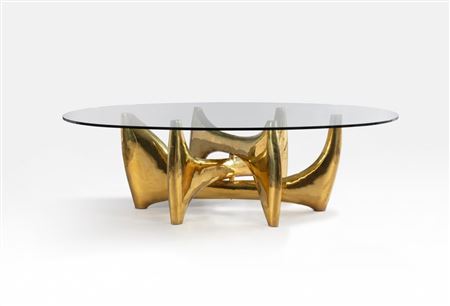
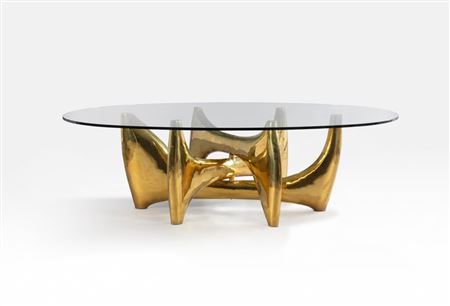
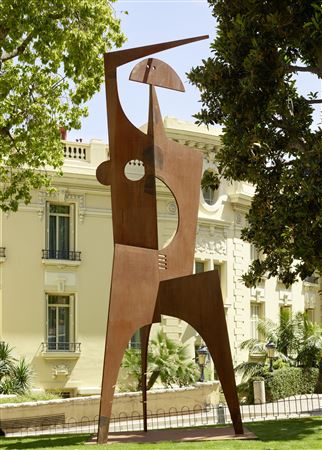
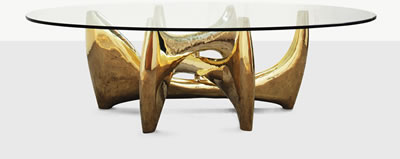
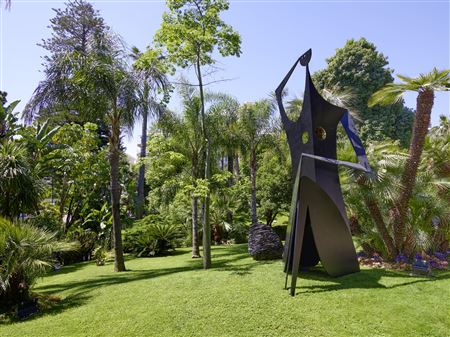
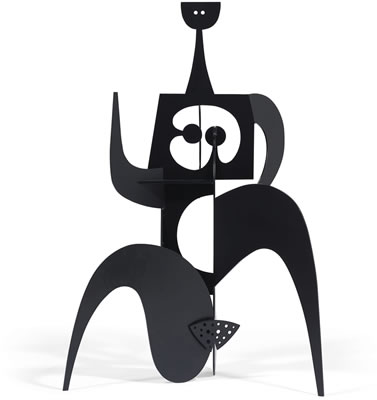
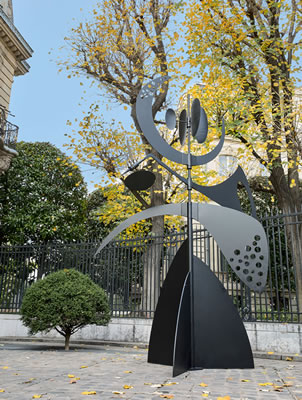
The French modernist sculptor, Philippe Hiquily, worked for a full decade creating abstract figurative sculpture before turning his attention in 1960 to making furniture from his favorite sculptural... Read full biography
The French modernist sculptor, Philippe Hiquily, worked for a full decade creating abstract figurative sculpture before turning his attention in 1960 to making furniture from his favorite sculptural material: metal. Interestingly, the shift followed closely on the heels of a major honor which... Read full biography
The French modernist sculptor, Philippe Hiquily, worked for a full decade creating abstract figurative sculpture before turning his attention in 1960 to making furniture from his favorite sculptural material: metal. Interestingly, the shift followed closely on the heels of a major honor which cemented his artistic prominence: in 1959 he won the prestigious Critic's Prize for sculpture at the Paris Biennial. ?. Although in the abstract, the concept of designing chairs and desks and tables would... Read full biography
The French modernist sculptor, Philippe Hiquily, worked for a full decade creating abstract figurative sculpture before turning his attention in 1960 to making furniture from his favorite sculptural material: metal. Interestingly, the shift followed closely on the heels of a major honor which cemented his artistic prominence: in 1959 he won the prestigious Critic's Prize for sculpture at the Paris Biennial. ?. Although in the abstract, the concept of designing chairs and desks and tables would appear to be a radical departure from the creation of non-utilitarian sculpture, it was not--in Hiquily's case. His furniture is an extension of his work in sculpture. In fact, Hiquily's choice to create furniture in an ambitious way ended up... Read full biography
The French modernist sculptor, Philippe Hiquily, worked for a full decade creating abstract figurative sculpture before turning his attention in 1960 to making furniture from his favorite sculptural material: metal. Interestingly, the shift followed closely on the heels of a major honor which cemented his artistic prominence: in 1959 he won the prestigious Critic's Prize for sculpture at the Paris Biennial. ?. Although in the abstract, the concept of designing chairs and desks and tables would appear to be a radical departure from the creation of non-utilitarian sculpture, it was not--in Hiquily's case. His furniture is an extension of his work in sculpture. In fact, Hiquily's choice to create furniture in an ambitious way ended up informing his later, even more technically challenging sculptural efforts. His seats and surfaces, where he intends for people to share food and... Read full biography
Philippe Hiquily - Art Prices in Auction LotsAuction Lots