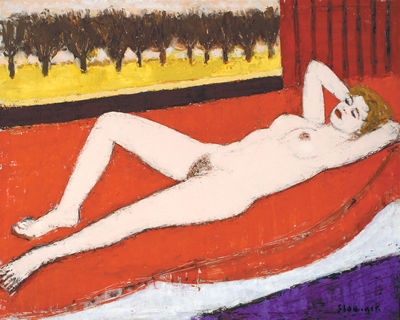
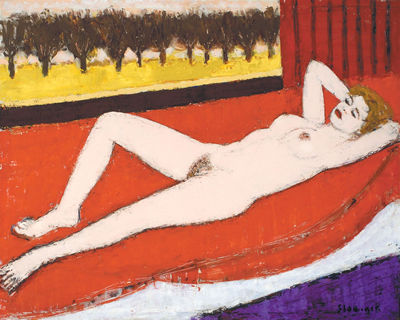
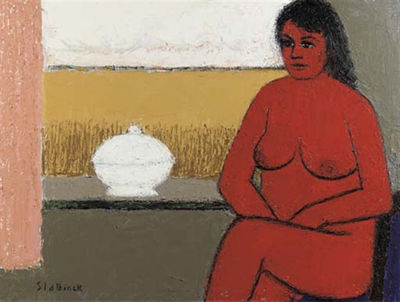
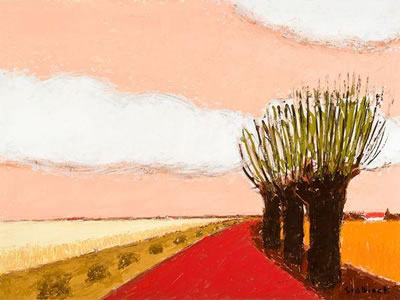
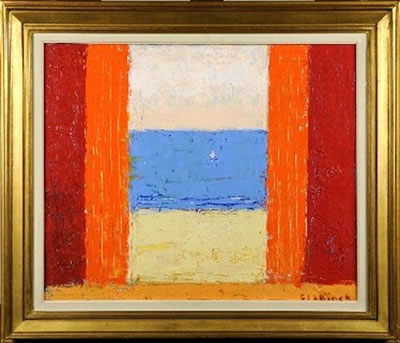
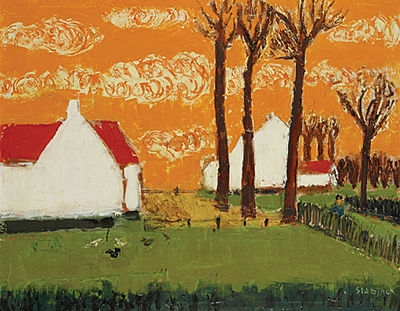
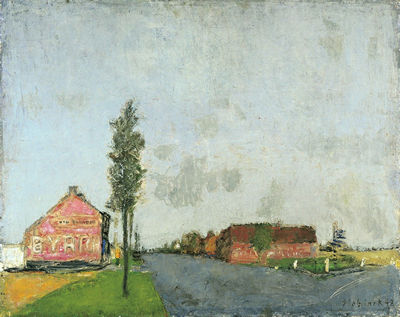
1914 - 1991. Known for: Painting; landscape, still life, portrait.
Born in 1914, Rik Slabbinck trained at the Academy of Bruges, Saint-Luc in Ghent. He first worked in the dark atmosphere of Constant Permeke, but around 1950, his palette lightened. He painted mainly...
Read full biography Born in 1914, Rik Slabbinck trained at the Academy of Bruges, Saint-Luc in Ghent. He first worked in the dark atmosphere of Constant Permeke, but around 1950, his palette lightened. He painted mainly landscapes, still lifes, nudes and portraits. Slabbinck was in the Second Prix de Rome in 1940 and...
Read full biography Born in 1914, Rik Slabbinck trained at the Academy of Bruges, Saint-Luc in Ghent. He first worked in the dark atmosphere of Constant Permeke, but around 1950, his palette lightened. He painted mainly landscapes, still lifes, nudes and portraits. Slabbinck was in the Second Prix de Rome in 1940 and 1943. In 1945, he was co-founder of the "Young Belgian painting." From 1963 to 1979 he taught at the Higher Institute of Antwerp. He also worked in the museums of Antwerp, Brussels, Ghent, Bruges,...
Read full biography Born in 1914, Rik Slabbinck trained at the Academy of Bruges, Saint-Luc in Ghent. He first worked in the dark atmosphere of Constant Permeke, but around 1950, his palette lightened. He painted mainly landscapes, still lifes, nudes and portraits. Slabbinck was in the Second Prix de Rome in 1940 and 1943. In 1945, he was co-founder of the "Young Belgian painting." From 1963 to 1979 he taught at the Higher Institute of Antwerp. He also worked in the museums of Antwerp, Brussels, Ghent, Bruges, Liège and Deurle.
Born in 1914, Rik Slabbinck trained at the Academy of Bruges, Saint-Luc in Ghent. He first worked in the dark atmosphere of Constant Permeke, but around 1950, his palette lightened. He painted mainly landscapes, still lifes, nudes and portraits. Slabbinck was in the Second Prix de Rome in 1940 and 1943. In 1945, he was co-founder of the "Young Belgian painting." From 1963 to 1979 he taught at the Higher Institute of Antwerp. He also worked in the museums of Antwerp, Brussels, Ghent, Bruges, Liège and Deurle.