1883 Budapest, Hungary - 1960 Budapest, Hungary. Known for: Still life painting.
Romek Árpád (Budapest 1883 - Budapest 1960). Romek Árpád was a Hungarian born still life painter who worked in a naturalistic representational style in oil. Born in Budapest, he studied at the...
Read full biography Romek Árpád (Budapest 1883 - Budapest 1960). Romek Árpád was a Hungarian born still life painter who worked in a naturalistic representational style in oil. Born in Budapest, he studied at the Academy of Fine Arts (of Budapest) under Ede Ballo and Laszlo Hegedus. After school he was awarded a...
Read full biography Romek Árpád (Budapest 1883 - Budapest 1960). Romek Árpád was a Hungarian born still life painter who worked in a naturalistic representational style in oil. Born in Budapest, he studied at the Academy of Fine Arts (of Budapest) under Ede Ballo and Laszlo Hegedus. After school he was awarded a scholarship to study at Szolnok. His work is usually characterized as realistic and contains kitchenware, fruit, glasses, and books on table tops. Information courtesy of Bill Indursky...
Read full biography Romek Árpád (Budapest 1883 - Budapest 1960). Romek Árpád was a Hungarian born still life painter who worked in a naturalistic representational style in oil. Born in Budapest, he studied at the Academy of Fine Arts (of Budapest) under Ede Ballo and Laszlo Hegedus. After school he was awarded a scholarship to study at Szolnok. His work is usually characterized as realistic and contains kitchenware, fruit, glasses, and books on table tops. Information courtesy of Bill Indursky
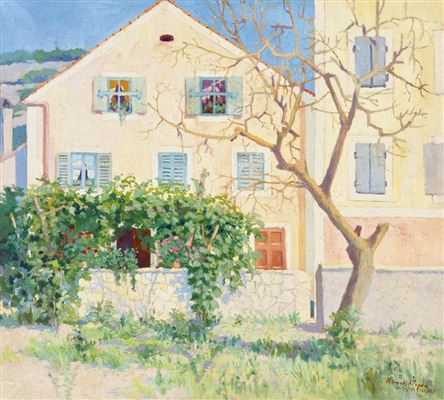
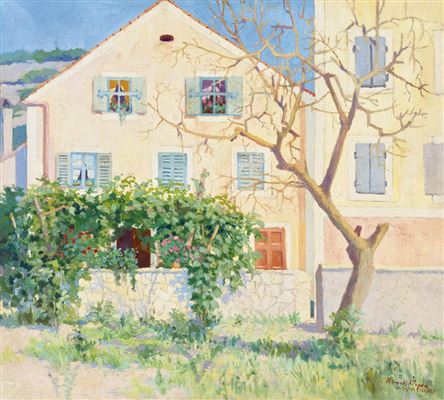
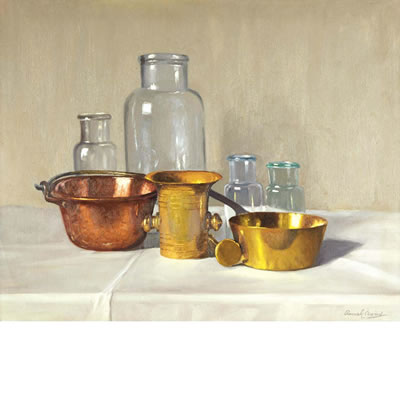
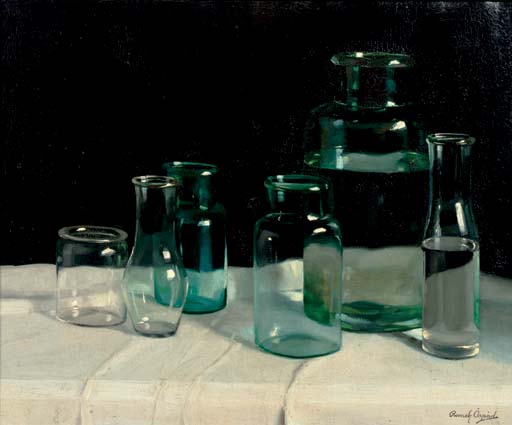
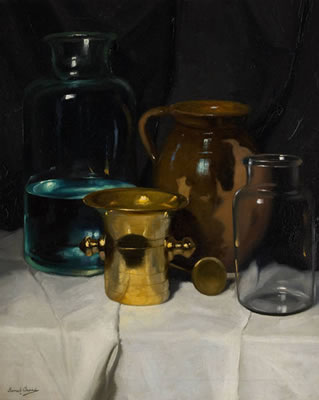
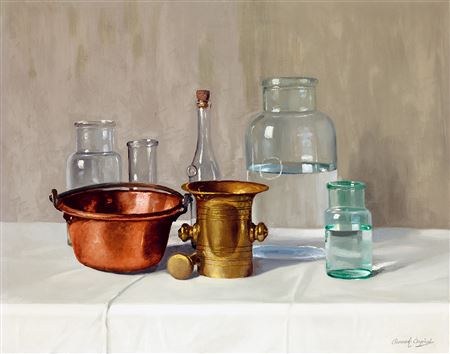
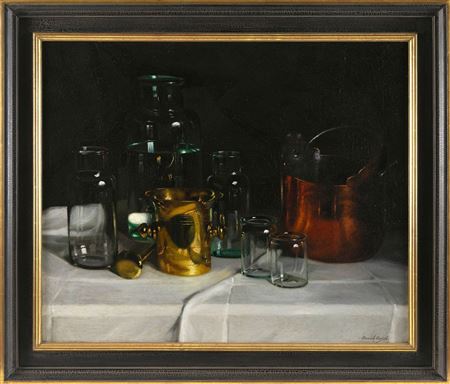
Romek Árpád (Budapest 1883 - Budapest 1960). Romek Árpád was a Hungarian born still life painter who worked in a naturalistic representational style in oil. Born in Budapest, he studied at the Academy of Fine Arts (of Budapest) under Ede Ballo and Laszlo Hegedus. After school he was awarded a scholarship to study at Szolnok. His work is usually characterized as realistic and contains kitchenware, fruit, glasses, and books on table tops. Information courtesy of Bill Indursky