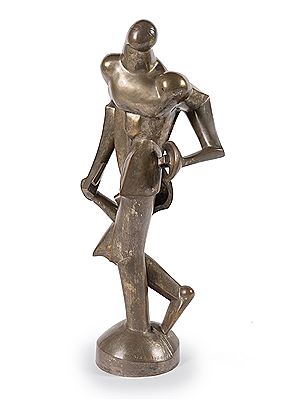
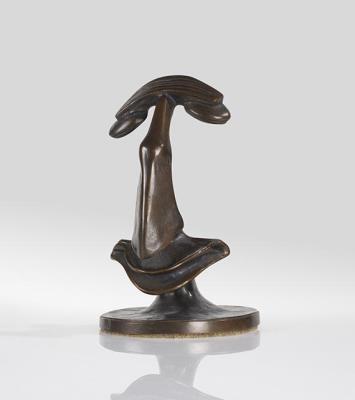
Rudolf Belling held an apprenticeship as a locksmith and initially worked as a moulder and modeller in a company for decorative metalwork such as small sculptures and frames in the Art Nouveau style.... Read full biography
Rudolf Belling held an apprenticeship as a locksmith and initially worked as a moulder and modeller in a company for decorative metalwork such as small sculptures and frames in the Art Nouveau style. He was therefore thoroughly familiar with all metalworking techniques, such as casting, etching,... Read full biography
Rudolf Belling held an apprenticeship as a locksmith and initially worked as a moulder and modeller in a company for decorative metalwork such as small sculptures and frames in the Art Nouveau style. He was therefore thoroughly familiar with all metalworking techniques, such as casting, etching, engraving, fine polishing and assembly. In 1908 Belling went into business for himself with his colleague Emil Kaselow and founded a studio for small-scale sculpture, decoration and applied arts. This... Read full biography
Rudolf Belling held an apprenticeship as a locksmith and initially worked as a moulder and modeller in a company for decorative metalwork such as small sculptures and frames in the Art Nouveau style. He was therefore thoroughly familiar with all metalworking techniques, such as casting, etching, engraving, fine polishing and assembly. In 1908 Belling went into business for himself with his colleague Emil Kaselow and founded a studio for small-scale sculpture, decoration and applied arts. This was followed by a close collaboration with Max Reinhardt's theater stage, for which Belling designed and carried out numerous large-format three-dimensional stage designs. In 1911, Professor Peter Breuer became aware of Belling and accepted him as a... Read full biography
Rudolf Belling held an apprenticeship as a locksmith and initially worked as a moulder and modeller in a company for decorative metalwork such as small sculptures and frames in the Art Nouveau style. He was therefore thoroughly familiar with all metalworking techniques, such as casting, etching, engraving, fine polishing and assembly. In 1908 Belling went into business for himself with his colleague Emil Kaselow and founded a studio for small-scale sculpture, decoration and applied arts. This was followed by a close collaboration with Max Reinhardt's theater stage, for which Belling designed and carried out numerous large-format three-dimensional stage designs. In 1911, Professor Peter Breuer became aware of Belling and accepted him as a master class student at the Berlin-Charlottenburg Art Academy, where he was given his own student studio, which he was allowed to use until 19221.... Read full biography
Rudolf Belling - Art Prices in Auction LotsAuction Lots