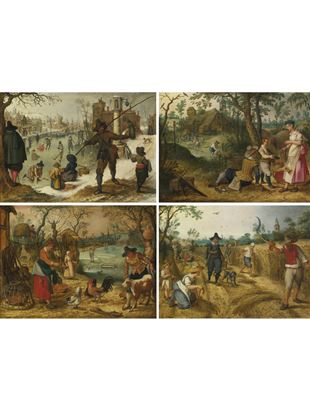
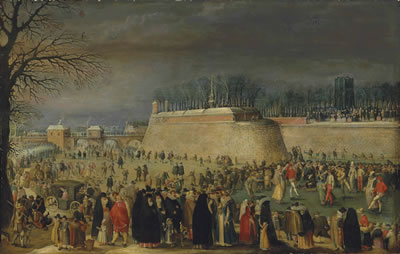
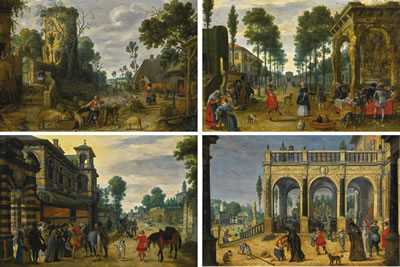
1573 Antwerp - 1647. Known for: Landscapes, genre scenes battles and scenes of village.
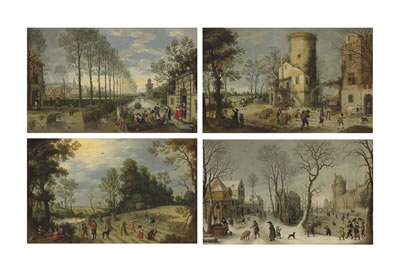
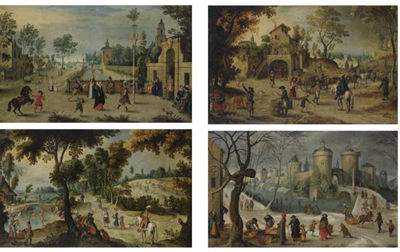
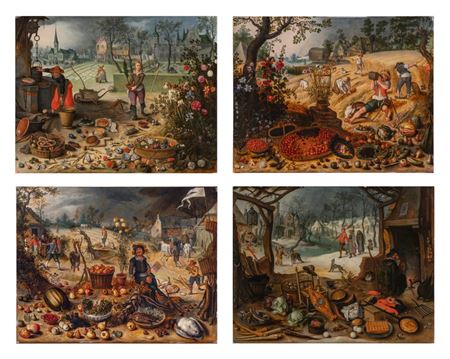
With his landscapes, hunting scenes, allegorical paintings and depictions of the seasons, Sebastian Vrancx played an important role in the Antwerp art scene of the early 17th century. He was accepted...
Read full biography With his landscapes, hunting scenes, allegorical paintings and depictions of the seasons, Sebastian Vrancx played an important role in the Antwerp art scene of the early 17th century. He was accepted as a member of the Guild of Saint Luke in 1600/1601, shortly after his return from Italy, and he...
Read full biography With his landscapes, hunting scenes, allegorical paintings and depictions of the seasons, Sebastian Vrancx played an important role in the Antwerp art scene of the early 17th century. He was accepted as a member of the Guild of Saint Luke in 1600/1601, shortly after his return from Italy, and he had contact with both the Brueghel-circle and Joos de Momper, in whose landscapes he would occasionally paint the figures. Works like the scene of elegant company in a park can generally be ascribed to...
Read full biography With his landscapes, hunting scenes, allegorical paintings and depictions of the seasons, Sebastian Vrancx played an important role in the Antwerp art scene of the early 17th century. He was accepted as a member of the Guild of Saint Luke in 1600/1601, shortly after his return from Italy, and he had contact with both the Brueghel-circle and Joos de Momper, in whose landscapes he would occasionally paint the figures. Works like the scene of elegant company in a park can generally be ascribed to his earlier phase, as he was later to devote himself primarily to the depiction of cavalry battles. The figure's clothing allows the work to be dated to around 1605-1610.
With his landscapes, hunting scenes, allegorical paintings and depictions of the seasons, Sebastian Vrancx played an important role in the Antwerp art scene of the early 17th century. He was accepted as a member of the Guild of Saint Luke in 1600/1601, shortly after his return from Italy, and he had contact with both the Brueghel-circle and Joos de Momper, in whose landscapes he would occasionally paint the figures. Works like the scene of elegant company in a park can generally be ascribed to his earlier phase, as he was later to devote himself primarily to the depiction of cavalry battles. The figure's clothing allows the work to be dated to around 1605-1610.