1914 West Africa - 2000 Madison, Wisconsin. Known for: Naive collage, assemblage, outsider art.
Simon Sparrow believed his images came from God, and before he started to paint, he would let his mind go blank so the spirit could enter. He described this process as "sweeter than anything on earth...
Read full biography Simon Sparrow believed his images came from God, and before he started to paint, he would let his mind go blank so the spirit could enter. He described this process as "sweeter than anything on earth . I feel like I'm climbing." . He did not paint representational portraits, but used a variety of...
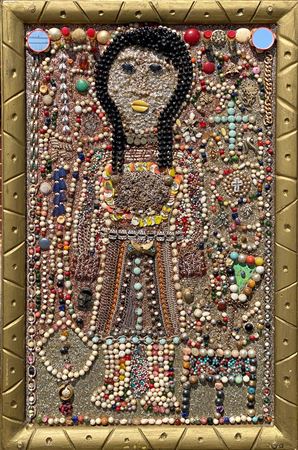
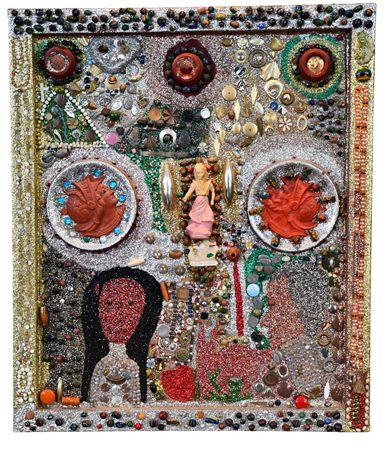
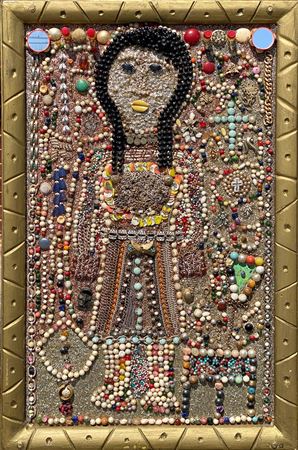
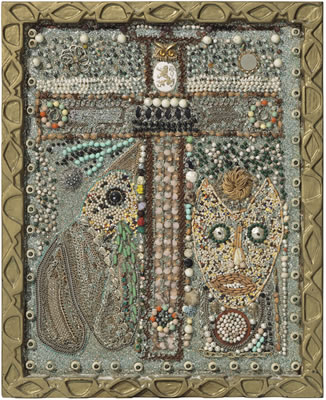
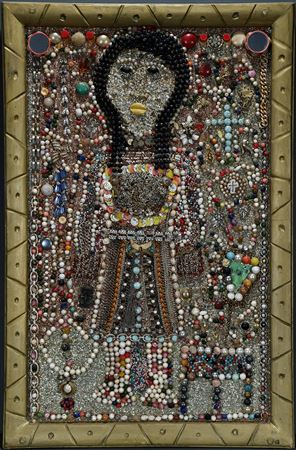
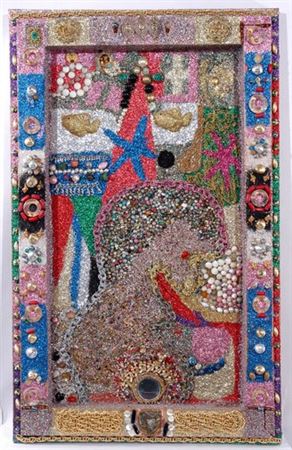
Read full biography Simon Sparrow believed his images came from God, and before he started to paint, he would let his mind go blank so the spirit could enter. He described this process as "sweeter than anything on earth . I feel like I'm climbing." . He did not paint representational portraits, but used a variety of found objects instead to create glittering images of people's souls. He related his method to West African traditions, in which the gods have "inner eyes" to see much more than just physical...
Read full biography Simon Sparrow believed his images came from God, and before he started to paint, he would let his mind go blank so the spirit could enter. He described this process as "sweeter than anything on earth . I feel like I'm climbing." . He did not paint representational portraits, but used a variety of found objects instead to create glittering images of people's souls. He related his method to West African traditions, in which the gods have "inner eyes" to see much more than just physical appearance. ("Paul Schmeizer examines the mystery art and ministry of Simon Sparrow," Raw Vision, No. 34). Source:. Luce Foundation Center
Simon Sparrow believed his images came from God, and before he started to paint, he would let his mind go blank so the spirit could enter. He described this process as "sweeter than anything on earth . I feel like I'm climbing." . He did not paint representational portraits, but used a variety of found objects instead to create glittering images of people's souls. He related his method to West African traditions, in which the gods have "inner eyes" to see much more than just physical appearance. ("Paul Schmeizer examines the mystery art and ministry of Simon Sparrow," Raw Vision, No. 34). Source:. Luce Foundation Center