1918 - 1990. Known for: Painting.
Lee Su-eok was born in Jeongpyeong, South Hamgyong Province, and graduated from Hamhung Agricultural School. In 1939, he moved to Japan and majored in Western painting at the Teikoku School of Fine...
Read full biography Lee Su-eok was born in Jeongpyeong, South Hamgyong Province, and graduated from Hamhung Agricultural School. In 1939, he moved to Japan and majored in Western painting at the Teikoku School of Fine Arts in Tokyo. During the Korean War, Su-eok came down to South Korea and worked as a war artist,...
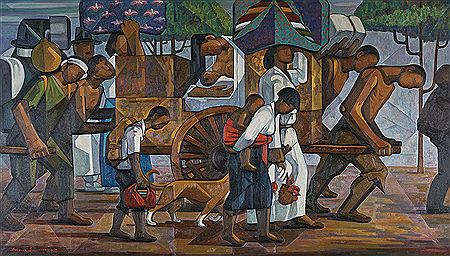
Read full biography Lee Su-eok was born in Jeongpyeong, South Hamgyong Province, and graduated from Hamhung Agricultural School. In 1939, he moved to Japan and majored in Western painting at the Teikoku School of Fine Arts in Tokyo. During the Korean War, Su-eok came down to South Korea and worked as a war artist, producing numerous documentary paintings. Although his style was realistic prior to the war, after the armistice, he moved away from representational painting. Through formal changes and compositions,...
Read full biography Lee Su-eok was born in Jeongpyeong, South Hamgyong Province, and graduated from Hamhung Agricultural School. In 1939, he moved to Japan and majored in Western painting at the Teikoku School of Fine Arts in Tokyo. During the Korean War, Su-eok came down to South Korea and worked as a war artist, producing numerous documentary paintings. Although his style was realistic prior to the war, after the armistice, he moved away from representational painting. Through formal changes and compositions, Su-eok produced completely abstract works in the 1960s, including series such as *History* and *Traces*. In his later years, Su-eok focused on Korean history and cultural heritage.
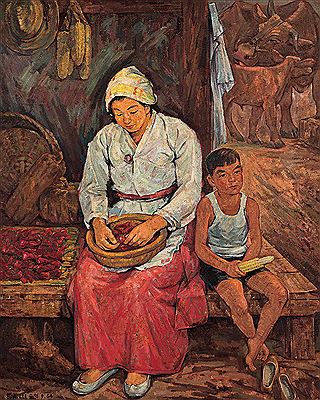
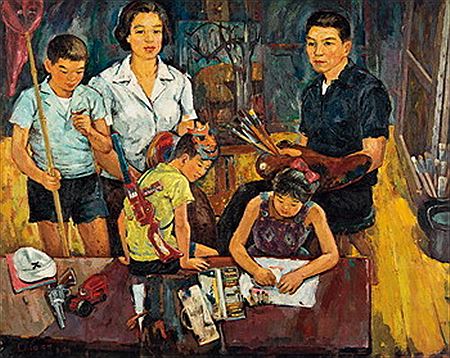
Lee Su-eok was born in Jeongpyeong, South Hamgyong Province, and graduated from Hamhung Agricultural School. In 1939, he moved to Japan and majored in Western painting at the Teikoku School of Fine Arts in Tokyo. During the Korean War, Su-eok came down to South Korea and worked as a war artist, producing numerous documentary paintings. Although his style was realistic prior to the war, after the armistice, he moved away from representational painting. Through formal changes and compositions, Su-eok produced completely abstract works in the 1960s, including series such as *History* and *Traces*. In his later years, Su-eok focused on Korean history and cultural heritage.