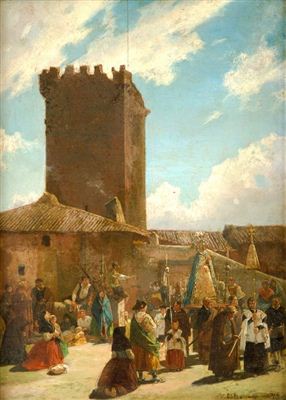
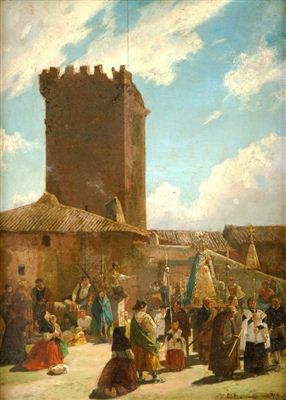
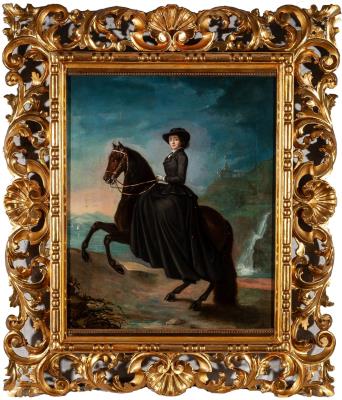
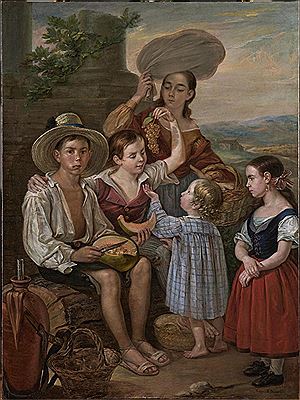
1834 Sevilla, Spain - 1870 Madrid, Spain. Known for: Costumbrista painting, scenes of Spanish types, costumes, and customs.
Valeriano Domínguez Bécquer, son of the costumbrista painter José, was orphaned at a young age and raised by his maternal uncles alongside his brother Gustavo Adolfo. He was guided in painting by his...
Read full biography Valeriano Domínguez Bécquer, son of the costumbrista painter José, was orphaned at a young age and raised by his maternal uncles alongside his brother Gustavo Adolfo. He was guided in painting by his uncle Joaquín, a painter of customs and a professor at the School of Fine Arts in Seville....
Read full biography Valeriano Domínguez Bécquer, son of the costumbrista painter José, was orphaned at a young age and raised by his maternal uncles alongside his brother Gustavo Adolfo. He was guided in painting by his uncle Joaquín, a painter of customs and a professor at the School of Fine Arts in Seville. Valeriano settled in Madrid in 1862 and later traveled through various regions of Spain to study and capture Spanish types, costumes, and customs in his artwork. He sustained himself through collaborations as...
Read full biography Valeriano Domínguez Bécquer, son of the costumbrista painter José, was orphaned at a young age and raised by his maternal uncles alongside his brother Gustavo Adolfo. He was guided in painting by his uncle Joaquín, a painter of customs and a professor at the School of Fine Arts in Seville. Valeriano settled in Madrid in 1862 and later traveled through various regions of Spain to study and capture Spanish types, costumes, and customs in his artwork. He sustained himself through collaborations as a draftsman and writer for publications such as "El Museo Universal," "El Arte en España," and "La Ilustración Española y Americana."
Valeriano Domínguez Bécquer, son of the costumbrista painter José, was orphaned at a young age and raised by his maternal uncles alongside his brother Gustavo Adolfo. He was guided in painting by his uncle Joaquín, a painter of customs and a professor at the School of Fine Arts in Seville. Valeriano settled in Madrid in 1862 and later traveled through various regions of Spain to study and capture Spanish types, costumes, and customs in his artwork. He sustained himself through collaborations as a draftsman and writer for publications such as "El Museo Universal," "El Arte en España," and "La Ilustración Española y Americana."