1865 Orsova - 1929 Munich. Known for: Painting.
Viktor Schramm was born in 1865 in Orsova. He received his training at the Munich Academy and made a name for himself as a history painter in particular at the turn of the century. His paintings...
Read full biography Viktor Schramm was born in 1865 in Orsova. He received his training at the Munich Academy and made a name for himself as a history painter in particular at the turn of the century. His paintings offer an intimate and staged glimpse into the everyday life of the upper middle class. Schramm's works...
Read full biography Viktor Schramm was born in 1865 in Orsova. He received his training at the Munich Academy and made a name for himself as a history painter in particular at the turn of the century. His paintings offer an intimate and staged glimpse into the everyday life of the upper middle class. Schramm's works are characterized by a special devotion and sensitivity to materiality and décor, and so in our elegant interior he not only stages the intimacy of the presented moment, but also creates a detailed...
Read full biography Viktor Schramm was born in 1865 in Orsova. He received his training at the Munich Academy and made a name for himself as a history painter in particular at the turn of the century. His paintings offer an intimate and staged glimpse into the everyday life of the upper middle class. Schramm's works are characterized by a special devotion and sensitivity to materiality and décor, and so in our elegant interior he not only stages the intimacy of the presented moment, but also creates a detailed description of the bourgeois salon, which is characterized by its inimitable haptic Presence distinguishes itself.
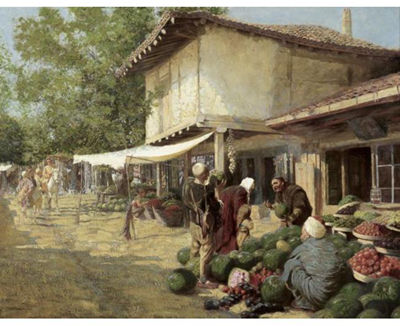
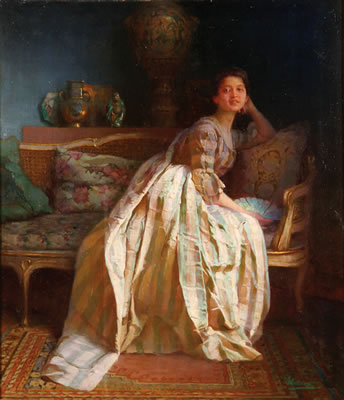
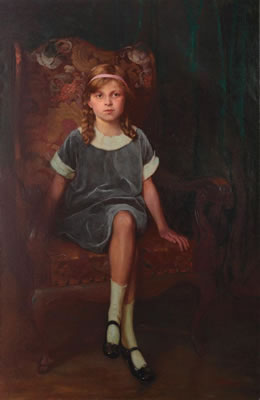
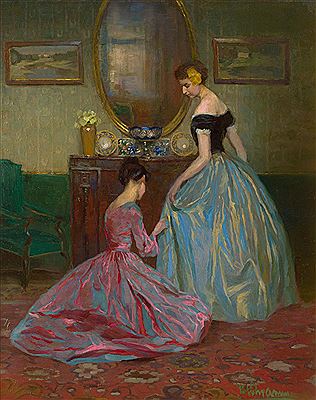
Viktor Schramm was born in 1865 in Orsova. He received his training at the Munich Academy and made a name for himself as a history painter in particular at the turn of the century. His paintings offer an intimate and staged glimpse into the everyday life of the upper middle class. Schramm's works are characterized by a special devotion and sensitivity to materiality and décor, and so in our elegant interior he not only stages the intimacy of the presented moment, but also creates a detailed description of the bourgeois salon, which is characterized by its inimitable haptic Presence distinguishes itself.