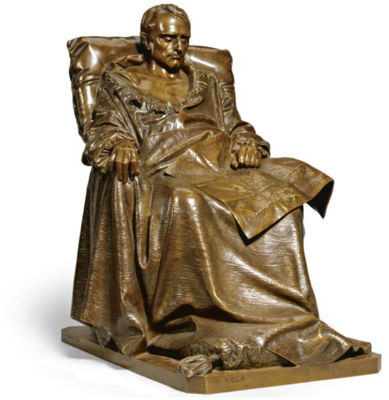
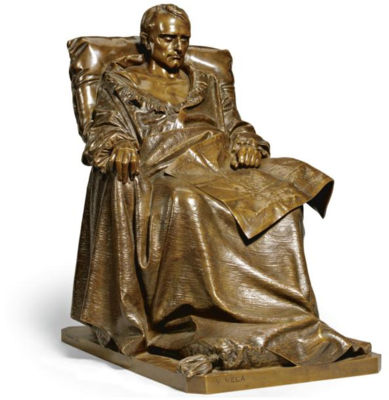
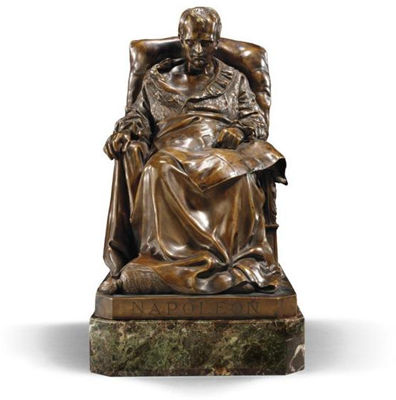
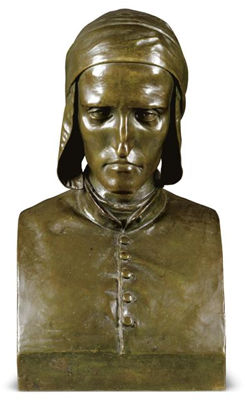
1820 - 1891. Known for: Sculpture.
Vincenzo Vela moved to Milan in 1832 and attended the Brera Academy. He worked in the guild of stonemasons of the Cathedral. Between 1844 and 1846 he began to have the first private commissions...
Read full biography Vincenzo Vela moved to Milan in 1832 and attended the Brera Academy. He worked in the guild of stonemasons of the Cathedral. Between 1844 and 1846 he began to have the first private commissions including the monument to the bishop Luvini allowing him to reach a great success within dell'ambiento...
Read full biography Vincenzo Vela moved to Milan in 1832 and attended the Brera Academy. He worked in the guild of stonemasons of the Cathedral. Between 1844 and 1846 he began to have the first private commissions including the monument to the bishop Luvini allowing him to reach a great success within dell'ambiento Milanese art. In 1847 he traveled to Rome where he was able to study the works of Michelangelo and Bernini, who will greatly influence his art. There he conceived and executed one of his most famous...
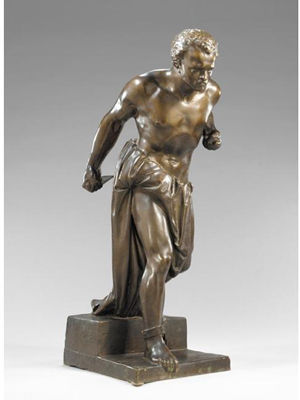
Read full biography Vincenzo Vela moved to Milan in 1832 and attended the Brera Academy. He worked in the guild of stonemasons of the Cathedral. Between 1844 and 1846 he began to have the first private commissions including the monument to the bishop Luvini allowing him to reach a great success within dell'ambiento Milanese art. In 1847 he traveled to Rome where he was able to study the works of Michelangelo and Bernini, who will greatly influence his art. There he conceived and executed one of his most famous masterpieces, Spartacus, the Museo Vela Ligornetto, and exhibited it at Brera in 1851. He participated in numerous exhibitions such as the Paris International.
Vincenzo Vela moved to Milan in 1832 and attended the Brera Academy. He worked in the guild of stonemasons of the Cathedral. Between 1844 and 1846 he began to have the first private commissions including the monument to the bishop Luvini allowing him to reach a great success within dell'ambiento Milanese art. In 1847 he traveled to Rome where he was able to study the works of Michelangelo and Bernini, who will greatly influence his art. There he conceived and executed one of his most famous masterpieces, Spartacus, the Museo Vela Ligornetto, and exhibited it at Brera in 1851. He participated in numerous exhibitions such as the Paris International.