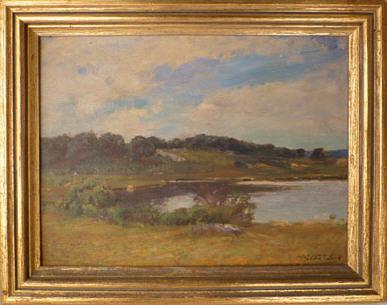
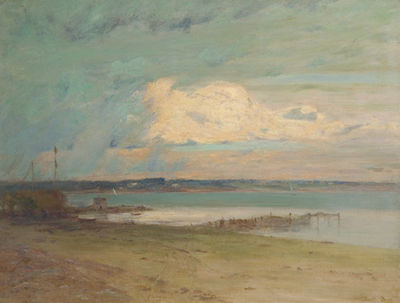
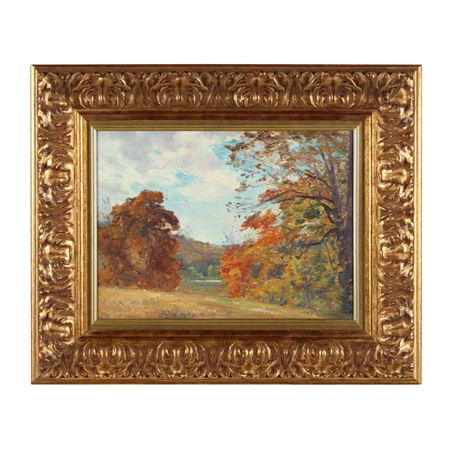
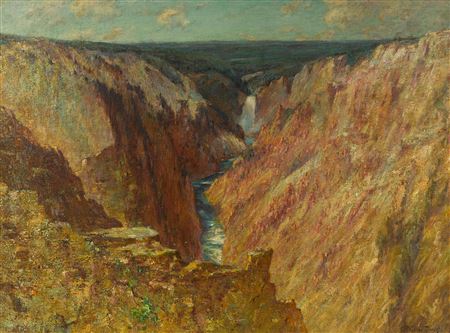
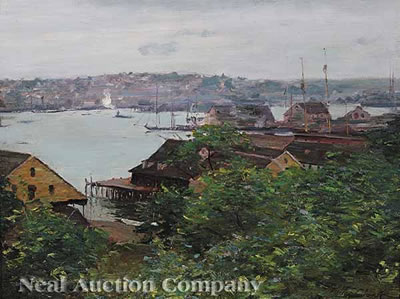
Before settling into a career as an Impressionist* landscape painter, Walter Clark was a sculptor of portrait busts, and among his subjects were terra-cotta* depictions of American Indians. He... Read full biography
Before settling into a career as an Impressionist* landscape painter, Walter Clark was a sculptor of portrait busts, and among his subjects were terra-cotta* depictions of American Indians. He studied engineering at the Massachusetts Institute of Technology, traveled in Europe, India, China, and... Read full biography
Before settling into a career as an Impressionist* landscape painter, Walter Clark was a sculptor of portrait busts, and among his subjects were terra-cotta* depictions of American Indians. He studied engineering at the Massachusetts Institute of Technology, traveled in Europe, India, China, and Japan, and then spent time in Wyoming as a sheep herder. He returned to New York to study art at the National Academy of Design^ with Lemuel Wilmarth and for five years with Jonathan Scott Hartley. In... Read full biography
Before settling into a career as an Impressionist* landscape painter, Walter Clark was a sculptor of portrait busts, and among his subjects were terra-cotta* depictions of American Indians. He studied engineering at the Massachusetts Institute of Technology, traveled in Europe, India, China, and Japan, and then spent time in Wyoming as a sheep herder. He returned to New York to study art at the National Academy of Design^ with Lemuel Wilmarth and for five years with Jonathan Scott Hartley. In 1880, he came much under the influence of George Inness Sr., because of having a studio next to Inness. Beginning 1883, Clark was exhibiting landscapes at the National Academy of Design, and increasingly, he was turning from Tonalism* to... Read full biography
Before settling into a career as an Impressionist* landscape painter, Walter Clark was a sculptor of portrait busts, and among his subjects were terra-cotta* depictions of American Indians. He studied engineering at the Massachusetts Institute of Technology, traveled in Europe, India, China, and Japan, and then spent time in Wyoming as a sheep herder. He returned to New York to study art at the National Academy of Design^ with Lemuel Wilmarth and for five years with Jonathan Scott Hartley. In 1880, he came much under the influence of George Inness Sr., because of having a studio next to Inness. Beginning 1883, Clark was exhibiting landscapes at the National Academy of Design, and increasingly, he was turning from Tonalism* to Impressionism, influenced not only by Inness but by his friends John Twachtman, Edward Potthast, and Joseph DeCamp. During t... Read full biography
Walter Clark - Art Prices in Auction LotsAuction Lots