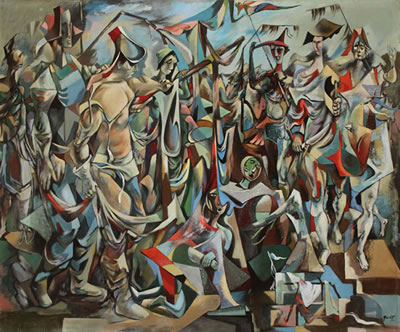
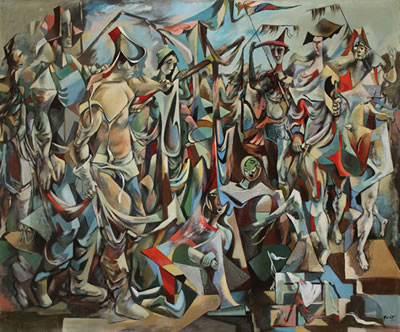
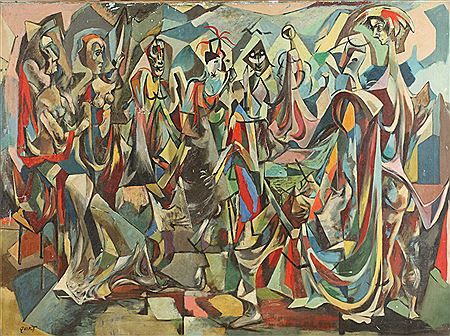
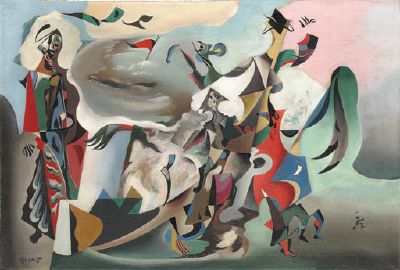
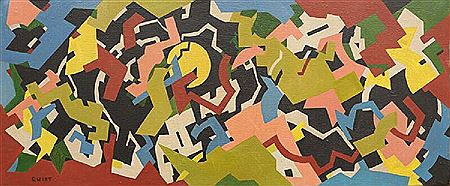
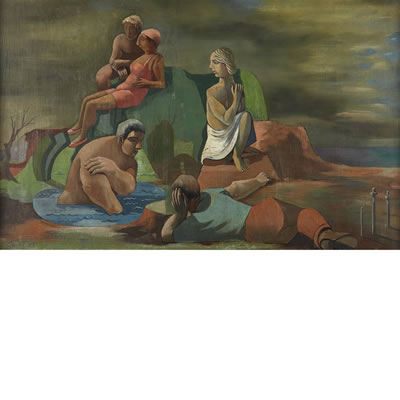
Social Realist, Walter Quirt's earliest works were largely political--motivated by Marxian values. Active during the 1930s, his Surrealist paintings were full of social content which encouraged... Read full biography
Social Realist, Walter Quirt's earliest works were largely political--motivated by Marxian values. Active during the 1930s, his Surrealist paintings were full of social content which encouraged radical social change. In the late 1930s, he became disenchanted with radically left ideas. Later he... Read full biography
Social Realist, Walter Quirt's earliest works were largely political--motivated by Marxian values. Active during the 1930s, his Surrealist paintings were full of social content which encouraged radical social change. In the late 1930s, he became disenchanted with radically left ideas. Later he began to experiment with new styles of painting, including figuration, fantasy and abstraction, but always contained his social and personal beliefs. In 1937 he spoke at the Museum of Modern Art Symposium... Read full biography
Social Realist, Walter Quirt's earliest works were largely political--motivated by Marxian values. Active during the 1930s, his Surrealist paintings were full of social content which encouraged radical social change. In the late 1930s, he became disenchanted with radically left ideas. Later he began to experiment with new styles of painting, including figuration, fantasy and abstraction, but always contained his social and personal beliefs. In 1937 he spoke at the Museum of Modern Art Symposium "Surrealism and Its Political Significance." He also wrote an essay "Wake Over Surrealism: With Due Respect to the Corpse" (c.1940, Pinacotheca Gallery, NYC), which contained his criticism of Dali and other Surrealists whose work he felt had... Read full biography
Social Realist, Walter Quirt's earliest works were largely political--motivated by Marxian values. Active during the 1930s, his Surrealist paintings were full of social content which encouraged radical social change. In the late 1930s, he became disenchanted with radically left ideas. Later he began to experiment with new styles of painting, including figuration, fantasy and abstraction, but always contained his social and personal beliefs. In 1937 he spoke at the Museum of Modern Art Symposium "Surrealism and Its Political Significance." He also wrote an essay "Wake Over Surrealism: With Due Respect to the Corpse" (c.1940, Pinacotheca Gallery, NYC), which contained his criticism of Dali and other Surrealists whose work he felt had degenerated into negativism and decadence. Source:. http://www.mrs.umn.edu/ethan/Walter1.cgi. Peter Falk, "Who Was Who in American... Read full biography
Walter W Quirt - Art Prices in Auction LotsAuction Lots