1822 Berlin - 1899 Berlin. Known for: Genre painting.
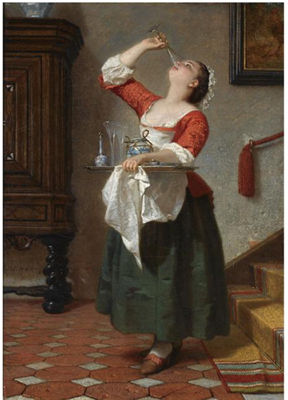
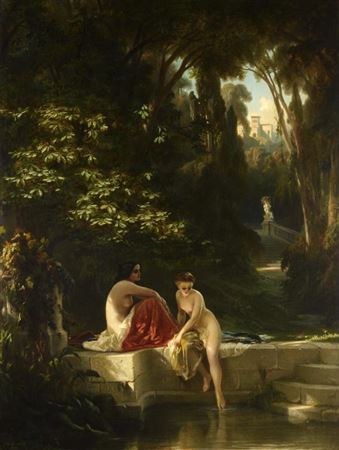
Wilhelm Amberg was one of the most popular genre painters in Berlin during the 1860s and 70s. His motifs are all variations on the theme of love - at times witty and risqué, at times poetic and...
Read full biography Wilhelm Amberg was one of the most popular genre painters in Berlin during the 1860s and 70s. His motifs are all variations on the theme of love - at times witty and risqué, at times poetic and idyllic, but all primarily accentuating the soft sentimentality of women's hearts. Wilhelm Amberg was...
Read full biography Wilhelm Amberg was one of the most popular genre painters in Berlin during the 1860s and 70s. His motifs are all variations on the theme of love - at times witty and risqué, at times poetic and idyllic, but all primarily accentuating the soft sentimentality of women's hearts. Wilhelm Amberg was pupil of Karl Begas. Amberg moved to Paris in 1844 and was taught under Léon Coignet before traveling to Italy, where he spent most of his stay in Rome and Venice. He became a member of the Berlin...
Read full biography Wilhelm Amberg was one of the most popular genre painters in Berlin during the 1860s and 70s. His motifs are all variations on the theme of love - at times witty and risqué, at times poetic and idyllic, but all primarily accentuating the soft sentimentality of women's hearts. Wilhelm Amberg was pupil of Karl Begas. Amberg moved to Paris in 1844 and was taught under Léon Coignet before traveling to Italy, where he spent most of his stay in Rome and Venice. He became a member of the Berlin Academy in 1869 and later a member of its senate.
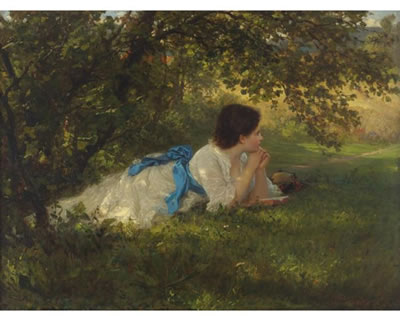
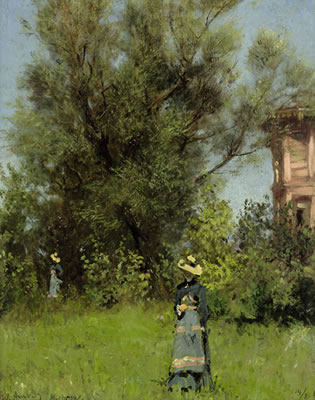
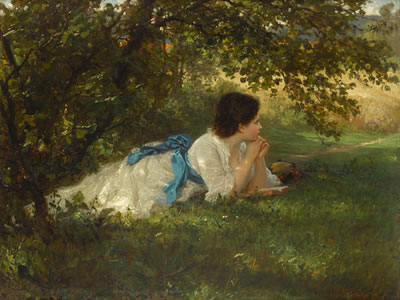
Wilhelm Amberg was one of the most popular genre painters in Berlin during the 1860s and 70s. His motifs are all variations on the theme of love - at times witty and risqué, at times poetic and idyllic, but all primarily accentuating the soft sentimentality of women's hearts. Wilhelm Amberg was pupil of Karl Begas. Amberg moved to Paris in 1844 and was taught under Léon Coignet before traveling to Italy, where he spent most of his stay in Rome and Venice. He became a member of the Berlin Academy in 1869 and later a member of its senate.