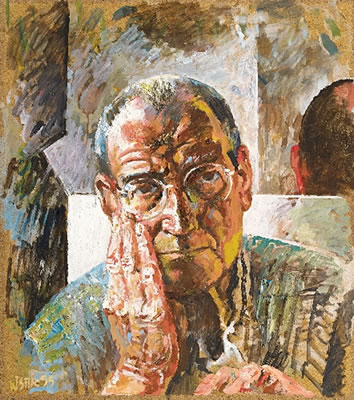
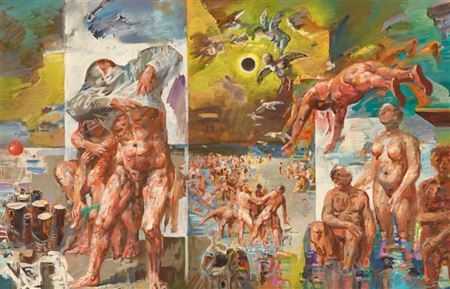
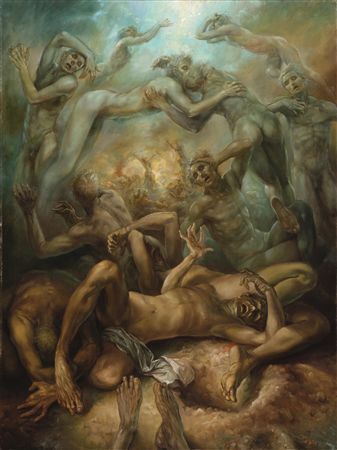
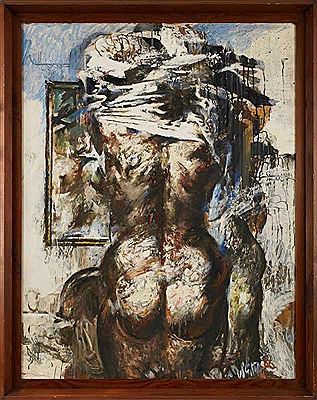
1921 Kratzau/Czechoslovakia - 2013. Known for: Painting.
Willi Sitte began his artistic education at the Meisterschule für Monumentalmalerei in Kronenburg. He served in the Second World War and after desertion joined Italian partisan forces. He settled in...
Read full biography Willi Sitte began his artistic education at the Meisterschule für Monumentalmalerei in Kronenburg. He served in the Second World War and after desertion joined Italian partisan forces. He settled in Halle (Saale) after the end of the war. He taught at the Burg Giebichenstein between 1951 and 1986....
Read full biography Willi Sitte began his artistic education at the Meisterschule für Monumentalmalerei in Kronenburg. He served in the Second World War and after desertion joined Italian partisan forces. He settled in Halle (Saale) after the end of the war. He taught at the Burg Giebichenstein between 1951 and 1986. He was the president of the Verband Bildender Künstler of the GDR and delegate of the People's Parliament since 1976. Among his main works are the body of works 'Lidice und Massaker' (1955-60), as...
Read full biography Willi Sitte began his artistic education at the Meisterschule für Monumentalmalerei in Kronenburg. He served in the Second World War and after desertion joined Italian partisan forces. He settled in Halle (Saale) after the end of the war. He taught at the Burg Giebichenstein between 1951 and 1986. He was the president of the Verband Bildender Künstler of the GDR and delegate of the People's Parliament since 1976. Among his main works are the body of works 'Lidice und Massaker' (1955-60), as well as the paintings 'Arbeitertriptychon' (1960) and 'Jeder Mensch hat das Recht auf Leben und Freiheit' (1973/74). Sitte received international recognition with the participation at the documenta in 1977. Works of his can be found in the...
Read full biography Willi Sitte began his artistic education at the Meisterschule für Monumentalmalerei in Kronenburg. He served in the Second World War and after desertion joined Italian partisan forces. He settled in Halle (Saale) after the end of the war. He taught at the Burg Giebichenstein between 1951 and 1986. He was the president of the Verband Bildender Künstler of the GDR and delegate of the People's Parliament since 1976. Among his main works are the body of works 'Lidice und Massaker' (1955-60), as well as the paintings 'Arbeitertriptychon' (1960) and 'Jeder Mensch hat das Recht auf Leben und Freiheit' (1973/74). Sitte received international recognition with the participation at the documenta in 1977. Works of his can be found in the Willi-Sitte-Galerie in Merseburg. (tm)