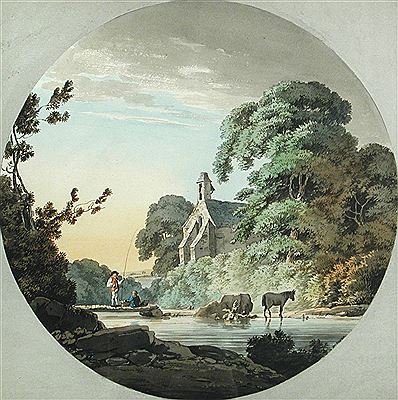
Payne was an English painter and drawing-master who may have been brought up in Derbyshire. In 1776 he exhibited an untitled landscape at the Society of Artists, and in 1786 he showed five views of... Read full biography
Payne was an English painter and drawing-master who may have been brought up in Derbyshire. In 1776 he exhibited an untitled landscape at the Society of Artists, and in 1786 he showed five views of Plymouth at the Royal Academy. By that time he was employed as a civil engineer at the government... Read full biography
Payne was an English painter and drawing-master who may have been brought up in Derbyshire. In 1776 he exhibited an untitled landscape at the Society of Artists, and in 1786 he showed five views of Plymouth at the Royal Academy. By that time he was employed as a civil engineer at the government dockyard at Plymouth. In 1790 he moved to London, where he established himself as a professional artist. Between 1809 and 1812 he was an associate and exhibitor with the Society of Painters in... Read full biography
Payne was an English painter and drawing-master who may have been brought up in Derbyshire. In 1776 he exhibited an untitled landscape at the Society of Artists, and in 1786 he showed five views of Plymouth at the Royal Academy. By that time he was employed as a civil engineer at the government dockyard at Plymouth. In 1790 he moved to London, where he established himself as a professional artist. Between 1809 and 1812 he was an associate and exhibitor with the Society of Painters in Water-Colours. He also exhibited at the British Institution between 1809 and 1830. Although Payne was not responsible for the more painterly use of watercolour that superseded the 'tinted drawing' technique of topographical watercolours of the mid-18th... Read full biography
Payne was an English painter and drawing-master who may have been brought up in Derbyshire. In 1776 he exhibited an untitled landscape at the Society of Artists, and in 1786 he showed five views of Plymouth at the Royal Academy. By that time he was employed as a civil engineer at the government dockyard at Plymouth. In 1790 he moved to London, where he established himself as a professional artist. Between 1809 and 1812 he was an associate and exhibitor with the Society of Painters in Water-Colours. He also exhibited at the British Institution between 1809 and 1830. Although Payne was not responsible for the more painterly use of watercolour that superseded the 'tinted drawing' technique of topographical watercolours of the mid-18th century, he was quick to adopt it. He abandoned the use of prominent pen outlines, which characterized the 'tinte... Read full biography
William Payne - Art Prices in Auction LotsAuction Lots