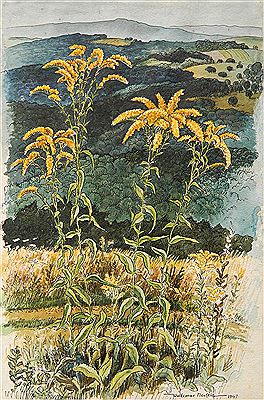
Woldemar Neufeld was born on November 10, 1909 in Waldheim, a village of German speaking Mennonites in the south of Russia. Although his earliest artistic efforts often centered on imitating the... Read full biography
Woldemar Neufeld was born on November 10, 1909 in Waldheim, a village of German speaking Mennonites in the south of Russia. Although his earliest artistic efforts often centered on imitating the bridge building designs of his engineer father, or the farm implement machinery produced by his... Read full biography
Woldemar Neufeld was born on November 10, 1909 in Waldheim, a village of German speaking Mennonites in the south of Russia. Although his earliest artistic efforts often centered on imitating the bridge building designs of his engineer father, or the farm implement machinery produced by his industrialist grandfather, he also studied in the use of oils and watercolors when he was a teenager. Following the trauma of his father's political execution in 1920, and his mother's marriage to a leading... Read full biography
Woldemar Neufeld was born on November 10, 1909 in Waldheim, a village of German speaking Mennonites in the south of Russia. Although his earliest artistic efforts often centered on imitating the bridge building designs of his engineer father, or the farm implement machinery produced by his industrialist grandfather, he also studied in the use of oils and watercolors when he was a teenager. Following the trauma of his father's political execution in 1920, and his mother's marriage to a leading Mennonite bishop and man of letters, Woldemar fled with his new enlarged family from Russia to Canada. He arrived in Waterloo as a boy of fifteen, just after Christmas Day in 1924, and began a relationship with Waterloo and the surrounding cities,... Read full biography
Woldemar Neufeld was born on November 10, 1909 in Waldheim, a village of German speaking Mennonites in the south of Russia. Although his earliest artistic efforts often centered on imitating the bridge building designs of his engineer father, or the farm implement machinery produced by his industrialist grandfather, he also studied in the use of oils and watercolors when he was a teenager. Following the trauma of his father's political execution in 1920, and his mother's marriage to a leading Mennonite bishop and man of letters, Woldemar fled with his new enlarged family from Russia to Canada. He arrived in Waterloo as a boy of fifteen, just after Christmas Day in 1924, and began a relationship with Waterloo and the surrounding cities, towns and countryside that he has woven into his artistic career for more than 60 years. From 1927 to 1930 Neufeld studied at Waterloo College Sch... Read full biography
Woldemar Neufeld - Art Prices in Auction LotsAuction Lots