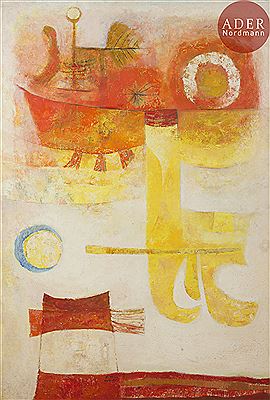
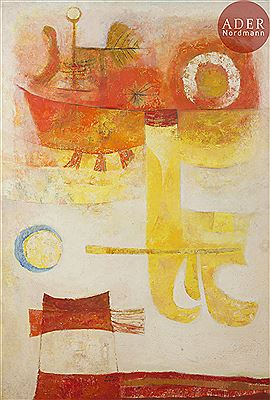
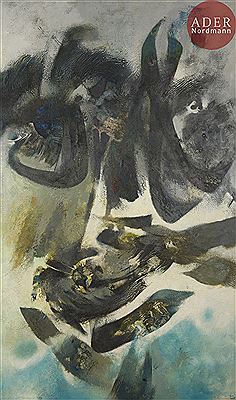
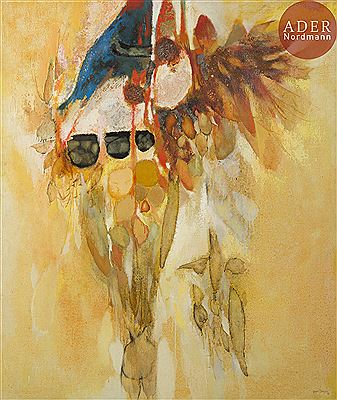
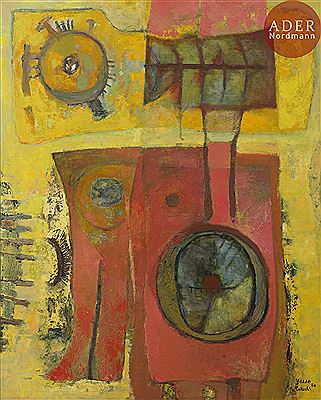
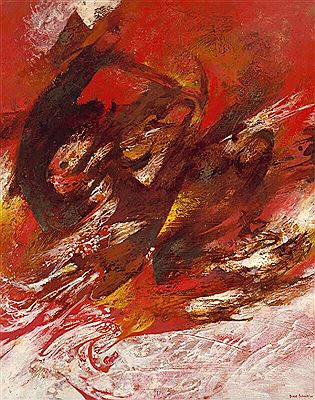
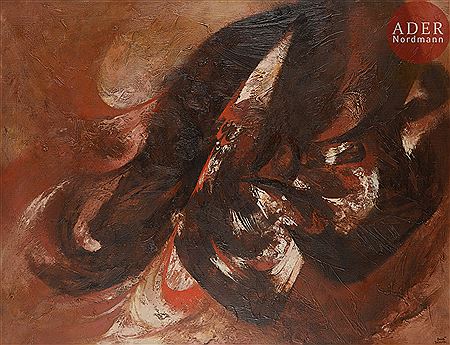
1921 - 2009 Paris, France. Known for: Surrealism, informal art.
Yasse Tabuchi, born in 1921 in Japan, began his art studies in Tokyo in 1946 and later moved to Paris in 1951, where he remained until his death in 2009. He was influenced by European avant-garde art...
Read full biography Yasse Tabuchi, born in 1921 in Japan, began his art studies in Tokyo in 1946 and later moved to Paris in 1951, where he remained until his death in 2009. He was influenced by European avant-garde art and associated with artists like Jorn, Appel, Alechinsky, and Corneille. Tabuchi's early works...
Read full biography Yasse Tabuchi, born in 1921 in Japan, began his art studies in Tokyo in 1946 and later moved to Paris in 1951, where he remained until his death in 2009. He was influenced by European avant-garde art and associated with artists like Jorn, Appel, Alechinsky, and Corneille. Tabuchi's early works reflected surrealism, but he transitioned to informal art, which became his main period. In 1956, he exhibited works at Lucien Durand that combined lines and shapes in dynamic yet stable compositions....
Read full biography Yasse Tabuchi, born in 1921 in Japan, began his art studies in Tokyo in 1946 and later moved to Paris in 1951, where he remained until his death in 2009. He was influenced by European avant-garde art and associated with artists like Jorn, Appel, Alechinsky, and Corneille. Tabuchi's early works reflected surrealism, but he transitioned to informal art, which became his main period. In 1956, he exhibited works at Lucien Durand that combined lines and shapes in dynamic yet stable compositions. Today, Tabuchi is recognized as one of Japan's significant artists post-World War II, with his works housed in prestigious museums worldwide.
Yasse Tabuchi, born in 1921 in Japan, began his art studies in Tokyo in 1946 and later moved to Paris in 1951, where he remained until his death in 2009. He was influenced by European avant-garde art and associated with artists like Jorn, Appel, Alechinsky, and Corneille. Tabuchi's early works reflected surrealism, but he transitioned to informal art, which became his main period. In 1956, he exhibited works at Lucien Durand that combined lines and shapes in dynamic yet stable compositions. Today, Tabuchi is recognized as one of Japan's significant artists post-World War II, with his works housed in prestigious museums worldwide.