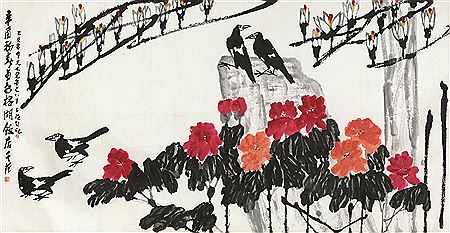
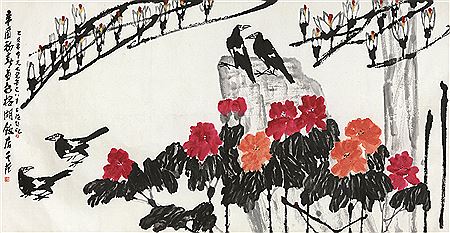
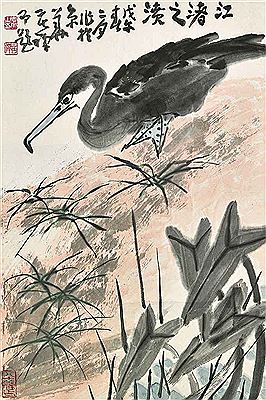
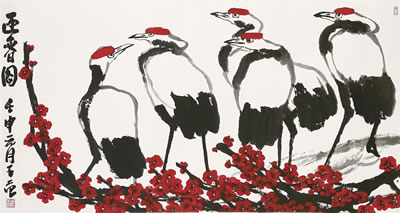
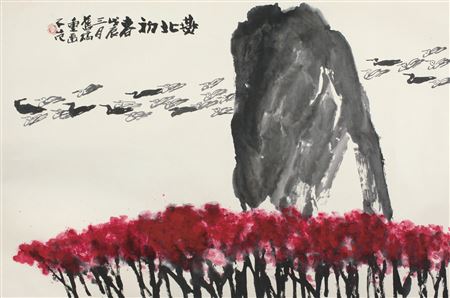
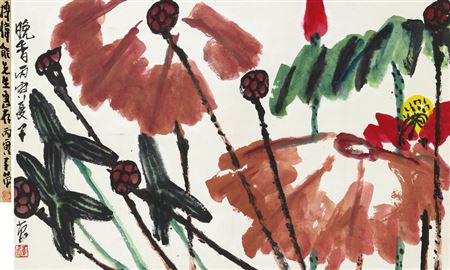
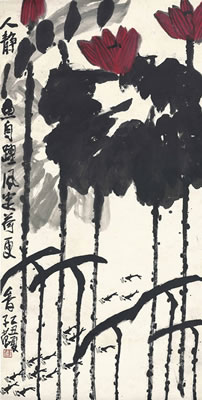
1915 Laiyang County, Shandong - 2011. Known for: Chinese flower and bird painting.
Cui Zifan lived from 1915 to 2011. Zifan was one of the leading modern masters of the Chinese Expressionist school of ink painting. He was born in Shandong Province to a family of farmers, but as a...
Read full biography Cui Zifan lived from 1915 to 2011. Zifan was one of the leading modern masters of the Chinese Expressionist school of ink painting. He was born in Shandong Province to a family of farmers, but as a child he was drawn to calligraphy and painting. Although his family was so impoverished that they...
Read full biography Cui Zifan lived from 1915 to 2011. Zifan was one of the leading modern masters of the Chinese Expressionist school of ink painting. He was born in Shandong Province to a family of farmers, but as a child he was drawn to calligraphy and painting. Although his family was so impoverished that they could not afford art materials, he practiced on slate with chalk. In 1940, he was studying at Yan'an and by 1956 he was General Secretary of the Academy of Painting in Beijing where Qi Baishi was...
Read full biography Cui Zifan lived from 1915 to 2011. Zifan was one of the leading modern masters of the Chinese Expressionist school of ink painting. He was born in Shandong Province to a family of farmers, but as a child he was drawn to calligraphy and painting. Although his family was so impoverished that they could not afford art materials, he practiced on slate with chalk. In 1940, he was studying at Yan'an and by 1956 he was General Secretary of the Academy of Painting in Beijing where Qi Baishi was honorary president.
Cui Zifan lived from 1915 to 2011. Zifan was one of the leading modern masters of the Chinese Expressionist school of ink painting. He was born in Shandong Province to a family of farmers, but as a child he was drawn to calligraphy and painting. Although his family was so impoverished that they could not afford art materials, he practiced on slate with chalk. In 1940, he was studying at Yan'an and by 1956 he was General Secretary of the Academy of Painting in Beijing where Qi Baishi was honorary president.