Page loaded successfully. Showing biography for Abdur Rahman Chughtai.
Abdur Rahman Chughtai BIOGRAPHY
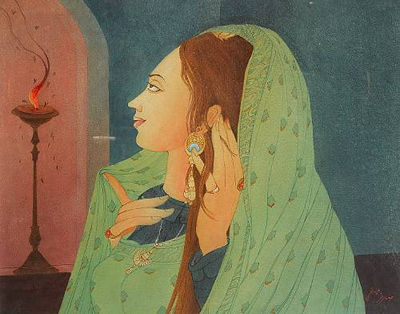
1894 Lahore, Punjab Province, Pakistan - 1975. Known for: Figural painting, female figures.
Abdur Rahman Chughtai is remembered today as possibly the most distinguished Pakistani artist of the 20th century. His work draws from a shared South Asian cultural heritage, and he was one of the... Read full biography
Abdur Rahman Chughtai is remembered today as possibly the most distinguished Pakistani artist of the 20th century. His work draws from a shared South Asian cultural heritage, and he was one of the few Pakistani artists to be recognized in India before and after the 1947 partition. Chughtai began... Read full biography
Abdur Rahman Chughtai is remembered today as possibly the most distinguished Pakistani artist of the 20th century. His work draws from a shared South Asian cultural heritage, and he was one of the few Pakistani artists to be recognized in India before and after the 1947 partition. Chughtai began his training at the Mayo School of Art in Lahore in 1911, where he was taught by Samarendranath Gupta, himself a pupil of Abanindranath Tagore. The influence of the Bengal School is visible in... Read full biography
Abdur Rahman Chughtai is remembered today as possibly the most distinguished Pakistani artist of the 20th century. His work draws from a shared South Asian cultural heritage, and he was one of the few Pakistani artists to be recognized in India before and after the 1947 partition. Chughtai began his training at the Mayo School of Art in Lahore in 1911, where he was taught by Samarendranath Gupta, himself a pupil of Abanindranath Tagore. The influence of the Bengal School is visible in Chughtai's early work, but what distinguishes Chughtai is his exceptional skill as a draughtsman. Many of his paintings were large-format—exuberant, expansive works rendered in soft, meditative colors and bold, flowing lines. Even his smaller paintings and... Read full biography
Abdur Rahman Chughtai is remembered today as possibly the most distinguished Pakistani artist of the 20th century. His work draws from a shared South Asian cultural heritage, and he was one of the few Pakistani artists to be recognized in India before and after the 1947 partition. Chughtai began his training at the Mayo School of Art in Lahore in 1911, where he was taught by Samarendranath Gupta, himself a pupil of Abanindranath Tagore. The influence of the Bengal School is visible in Chughtai's early work, but what distinguishes Chughtai is his exceptional skill as a draughtsman. Many of his paintings were large-format—exuberant, expansive works rendered in soft, meditative colors and bold, flowing lines. Even his smaller paintings and drawings seem somehow to contain the same freeness. Chughtai's work typically portrayed Hindu deities and famousChristie's Mumbai... Read full biography
Artist Biography
Biography page for Abdur Rahman Chughtai ((1894 - 1975)), known for Figural painting, female figures. Showing 3 biographical entries and 0 sample artworks.
Abdur Rahman Chughtai - Artist Info
About Abdur Rahman Chughtai
Biography from the Archives of askART
 Abdur Rahman Chughtai is remembered today as possibly the most distinguished Pakistani artist of the 20th century. His work draws from a shared South Asian cultural heritage, and he was one of the few Pakistani artists to be recognized in India before and after the 1947 partition. Chughtai began his training at the Mayo School of Art in Lahore in 1911, where he was taught by Samarendranath Gupta, himself a pupil of Abanindranath Tagore. The influence of the Bengal School is visible in Chughtai's early work, but what distinguishes Chughtai is his exceptional skill as a draughtsman. Many of his paintings were large-format—exuberant, expansive works rendered in soft, meditative colors and bold, flowing lines. Even his smaller paintings and drawings seem somehow to contain the same freeness.
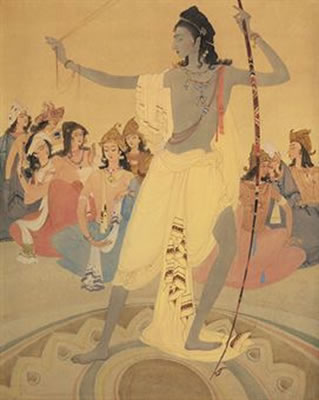
Chughtai's work typically portrayed Hindu deities and famous personalities from Islamic and Hindu dynasties—Mughal and Rajuput princes. He depicted gods and courtesans with equal affection. In the mid-1940s, he became obsessed with the idea that he was directly descended from Ahmed Mimar Lahori, the Moghul Emperor Shah Jahan's chief architect, believed to be the inspiration behind the Taj Mahal. As specific as the traditions are from which he drew his subject matter, his appeal has proven truly international. As Principal S. Kashmira Singh writes in the introduction to one of his monographs, "For his characteristic style, perfect technique and universal appeal he has been described as the artist of all Nations."Biography from Covington Fine Arts Gallery, Inc.
Abdur Rahman Chughtai is remembered today as the most distinguished Pakistani artist of the twentieth century although much of his work reflects a common South Asian cultural heritage. Chughtai was born in Lahore (in present-day Punjab Province, Pakistan) when it was still a part of British colonial India. He was fifty years old when the independent nation of Pakistan was created. The artist's paintings and etchings thus speak to his multiple identities, loyalties, and experiences during the historic period which saw the collapse of British power in South Asia, the 1947 partition of India into separate Muslim and Hindu states, and the first three decades of Pakistani nationhood.
Chughtai was a Muslim of Persian descent and chose early on in his career to present themes that reflected this ancestry. Although he painted Hindu and Buddhist subjects, it was Islamic history—especially that of the South Asian Mughal dynasty (1526-1858)—and popular Punjabi tales that inspired many of his works. Chughtai was also drawn to the various themes explored in Persian and Urdu poetry. (The Persianized Urdu language, which is also spoken in India, is the official language of Pakistan). Many of the artist's paintings explore the emotions of love and romantic yearning, themes common to both the Hindu and Muslim literary traditions, which presented romantic love as a metaphor for spiritual devotion.
Chughtai was known for his highly refined and idealized figural imagery, his keen sense of color and his expert linework, all of which are apparent in the watercolors and etchings on view in this exhibition. Several of these works also reveal Chughtai's delight in the female form. Some of the artist's many representations of women are visualizations of romantic emotions and would have been recognized as such by literate viewers. Others, including the more eroticized images, are especially revealing of the idealizing vision for which Chughtai was acclaimed.
Submitted June 2007 by Wayne Kielsmeier, whose source is www.asianart.orgBiography from Christie's New York, Rockefeller Center
Abdur Rahman Chughtai was born in 1894 Lahore, Punjab Province, Pakistan. Abdur Rahman Chughtai began his training at the Mayo School of Art in Lahore in 1911, where he was taught by Samanendranath Gupta, a disciple of Abanindranath Tagore.
He was deeply influenced by aspects of the Bengal School of art, which is particularly evident in his wash technique. However, during the following decade, Chughtai developed a distinct style that rivaled the Bengal School, and emerged as one of the leading practitioners across the subcontinent, with particular patronage in Hyderabad. His works illustrate a fusion of influences including Mughal miniature painting, Islamic calligraphy and Art Nouveau, but remain grounded in various mythological traditions of the Subcontinent, and particularly the ideas of Urdu writers and poets like Mirza Ghalib.
Chughtai is known for his delicate renditions of female figures, usually depicted in elaborate clothing and ornamentation. With close attention to Mughal aesthetics, the unique style Chughtai developed has been called ‘Persian-Mughal mannerism’ (I. ul Hassan, Painting in Pakistan, Lahore, 1991, p. 37) and seems to also bear the influence of the Pre-Raphaelite paintings the artist encountered during his travels in Europe.
“[Chughtai] retains the distinctive mood and posture of the Persian tradition but gives his paintings a special quality of his own in lovely color combination, in delicious lines that seem to be less lines of painting than of some inaudible poetry made visible, in folds of drapery that are never mere coverings to or discoverings of the human body, in the decorative backgrounds that call the imagination away from the tyranny of the actual, into free citizenship of the realm of romance.” (J. Bautze, Interaction of Cultures: Indian and Western Painting, 1780-1910, Virginia, 1998, p. 137)