Page loaded successfully. Showing biography for Abraham Manievich.
Abraham Manievich BIOGRAPHY
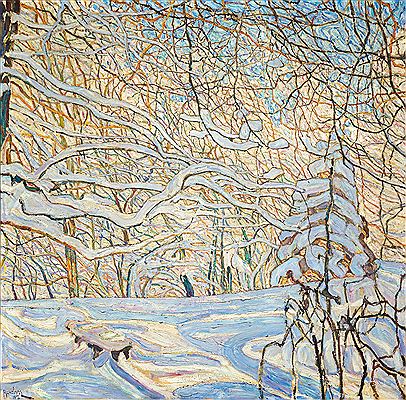
1881/83 Russia - 1942 Bronx, New York. Known for: Village scenes, mod-Fauve still life painting.
Abraham A. Manievich was known as a Post-Impressionist landscape painter. His subjects were Ukrainian and Lithuanian village and country scenes, and street scenes of Moscow, Kiev, and Petrograd. He... Read full biography
Abraham A. Manievich was known as a Post-Impressionist landscape painter. His subjects were Ukrainian and Lithuanian village and country scenes, and street scenes of Moscow, Kiev, and Petrograd. He painted in a bold Fauvist style, and exhibited with the important French Fauvists. He received... Read full biography
Abraham A. Manievich was known as a Post-Impressionist landscape painter. His subjects were Ukrainian and Lithuanian village and country scenes, and street scenes of Moscow, Kiev, and Petrograd. He painted in a bold Fauvist style, and exhibited with the important French Fauvists. He received critical acclaim for his first solo exhibition at the famed Durand-Ruel Gallery in Paris,1913. He was born 1881 in Russia, and died 1942 in the Bronx, New York. He emigrated to the United States in 1922,... Read full biography
Abraham A. Manievich was known as a Post-Impressionist landscape painter. His subjects were Ukrainian and Lithuanian village and country scenes, and street scenes of Moscow, Kiev, and Petrograd. He painted in a bold Fauvist style, and exhibited with the important French Fauvists. He received critical acclaim for his first solo exhibition at the famed Durand-Ruel Gallery in Paris,1913. He was born 1881 in Russia, and died 1942 in the Bronx, New York. He emigrated to the United States in 1922, settling in the Bronx. He painted regional scenes in Pittsburgh, villages along the Hudson River and in Connecticut, and winter scenes in Canada. His exhibitions were praised for their lyrical yet vigorous brushwork and expressive use of color. He... Read full biography
Abraham A. Manievich was known as a Post-Impressionist landscape painter. His subjects were Ukrainian and Lithuanian village and country scenes, and street scenes of Moscow, Kiev, and Petrograd. He painted in a bold Fauvist style, and exhibited with the important French Fauvists. He received critical acclaim for his first solo exhibition at the famed Durand-Ruel Gallery in Paris,1913. He was born 1881 in Russia, and died 1942 in the Bronx, New York. He emigrated to the United States in 1922, settling in the Bronx. He painted regional scenes in Pittsburgh, villages along the Hudson River and in Connecticut, and winter scenes in Canada. His exhibitions were praised for their lyrical yet vigorous brushwork and expressive use of color. He exhibited at the Brooklyn Museum, 1923; Babcock Gallery NYC, 1924 (solo); Peabody Institute, Baltimore, 1924 (solo); BAC (Copley Society),... Read full biography
Artist Biography
Biography page for Abraham Manievich ((1881/83 - 1942)), known for Village scenes, mod-Fauve still life painting. Showing 1 biographical entries and 0 sample artworks.
Abraham Manievich - Artist Info
About Abraham Manievich
Name variants
Abraham Manevich, Abraham Manjewitsch
Biography from the Archives of askART
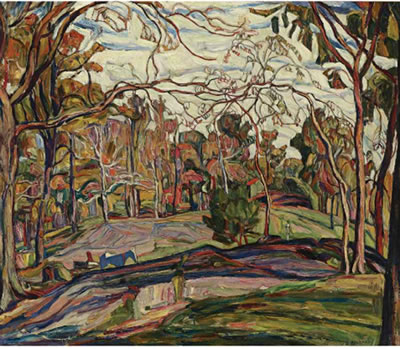 Abraham A. Manievich was known as a Post-Impressionist landscape painter. His subjects were Ukrainian and Lithuanian village and country scenes, and street scenes of Moscow, Kiev, and Petrograd. He painted in a bold Fauvist style, and exhibited with the important French Fauvists. He received critical acclaim for his first solo exhibition at the famed Durand-Ruel Gallery in Paris,1913.
He was born 1881 in Russia, and died 1942 in the Bronx, New York. He emigrated to the United States in 1922, settling in the Bronx. He painted regional scenes in Pittsburgh, villages along the Hudson River and in Connecticut, and winter scenes in Canada. His exhibitions were praised for their lyrical yet vigorous brushwork and expressive use of color.
He exhibited at the Brooklyn Museum, 1923; Babcock Gallery NYC, 1924 (solo); Peabody Institute, Baltimore, 1924 (solo); BAC (Copley Society), 1925 (solo); Art Institute of Chicago, 1925; Carnegie Inst., 1925; and many more until the the 1960's. His works are in the collections of: the Jewish Museum, NYC; Brooklyn Museum; Miami MoMA; Russian Museum, Leningrad; Jewish National Museum, Jerusalem; and the Harod Museum, Israel.
Information submitted as a bulletin by: Bob Higgins