Page loaded successfully. Showing biography for Ada Chaffee.
Ada Chaffee BIOGRAPHY
1883 Kalamazoo, Michigan - 1955 Provincetown, Massachusetts. Known for: Color woodcut, still-life painting.
Although she focused on printmaking during much of career as an artist, Ada Gilmore Chaffee was also a painter. Gilmore was born in Kalamazoo, Michigan in 1883. Before reaching the age of twelve, she... Read full biography
Although she focused on printmaking during much of career as an artist, Ada Gilmore Chaffee was also a painter. Gilmore was born in Kalamazoo, Michigan in 1883. Before reaching the age of twelve, she and her three siblings became orphans. The four children moved to Ireland where they were raised by... Read full biography
Although she focused on printmaking during much of career as an artist, Ada Gilmore Chaffee was also a painter. Gilmore was born in Kalamazoo, Michigan in 1883. Before reaching the age of twelve, she and her three siblings became orphans. The four children moved to Ireland where they were raised by their aunt in Belfast. She first attended the Belfast School of Design, and later studied at the Art Institute of Chicago. She received instruction from Robert Henri, a painter and printmaker known... Read full biography
Although she focused on printmaking during much of career as an artist, Ada Gilmore Chaffee was also a painter. Gilmore was born in Kalamazoo, Michigan in 1883. Before reaching the age of twelve, she and her three siblings became orphans. The four children moved to Ireland where they were raised by their aunt in Belfast. She first attended the Belfast School of Design, and later studied at the Art Institute of Chicago. She received instruction from Robert Henri, a painter and printmaker known for his portraits and genre pieces, in 1912. Henri was also the instructor of Oliver Newberry Chaffee, whom Gilmore later married during the 1920s. Beginning in 1913, she obtained additional instruction in France from Ethel Mars, after being exposed... Read full biography
Although she focused on printmaking during much of career as an artist, Ada Gilmore Chaffee was also a painter. Gilmore was born in Kalamazoo, Michigan in 1883. Before reaching the age of twelve, she and her three siblings became orphans. The four children moved to Ireland where they were raised by their aunt in Belfast. She first attended the Belfast School of Design, and later studied at the Art Institute of Chicago. She received instruction from Robert Henri, a painter and printmaker known for his portraits and genre pieces, in 1912. Henri was also the instructor of Oliver Newberry Chaffee, whom Gilmore later married during the 1920s. Beginning in 1913, she obtained additional instruction in France from Ethel Mars, after being exposed to Mars's color woodcut artwork at an exhibition. She returned to the Unit... Read full biography
Artist Biography
Biography page for Ada Chaffee ((1883 - 1955)), known for Color woodcut, still-life painting. Showing 3 biographical entries and 0 sample artworks.
Ada Chaffee - Artist Info
About Ada Chaffee
Name variants
Ada Gilmore
Biography from the Archives of askART
 Although she focused on printmaking during much of career as an artist, Ada Gilmore Chaffee was also a painter.
Gilmore was born in Kalamazoo, Michigan in 1883. Before reaching the age of twelve, she and her three siblings became orphans. The four children moved to Ireland where they were raised by their aunt in Belfast. She first attended the Belfast School of Design, and later studied at the Art Institute of Chicago. She received instruction from Robert Henri, a painter and printmaker known for his portraits and genre pieces, in 1912. Henri was also the instructor of Oliver Newberry Chaffee, whom Gilmore later married during the 1920s. Beginning in 1913, she obtained additional instruction in France from Ethel Mars, after being exposed to Mars's color woodcut artwork at an exhibition.
She returned to the United States with the start of World War I, and began living and working in Provincetown, Massachusetts. Gilmore's prints were displayed in San Francisco at the Panama-Pacific International Exposition in 1915, as well as the Berlin Photographic Company and the New York Watercolor Club in New York City.
She traveled to France in 1923 for a reunion with her former institutor and friend, Ethel Mars. During her time in Vence, France, she became reacquainted with Oliver Chaffee, and the two married. Profoundly inspired by the Modern style of artwork produced by Oliver Chaffee and circle of artists with whom he was associated, which included Marsden Hartley, Jules Pascin, and Albert Gleizes, Gilmore began to replace printmaking with painting. She continued painting for the remainder of her career.
Submitted by Jenna Wuensche, Researcher
Source:
Jules Heller and Nancy G. Heller, North American Women Artists of the Twentieth CenturyBiography from the Archives of askART
 Ada Gilmore Chaffee was born in Kalamazoo, Michigan in 1883. After her mother's death at age eight and her father's death at age twelve she went to Belfast, Ireland where she lived with aunt. In Belfast she studied at the Belfast School of Art in Northern Ireland.
In 1900 she returned to the United States and continued her art studies at The School of the Art Institute of Chicago. Gilmore exhibited at the Independent Artist group show in New York City in 1910.
In 1913 the artist traveled to Paris and studied wood-block printing with Ethel Mars. Due to World War I the artist returned to the United States and settled in Provincetown, Massachusetts in 1915. She exhibited at the first exhibition of the Provincetown Art Association and Museum in 1915.
Ada Gilmore, though known for her woodblock prints that use watercolor, also painted watercolors of town scenes and people at work.
Gilmore is a founding member of the Provincetown Printers (1918), the first woodblock print society in America.
Ada Gilmore died in Provincetown in 1955.
Source:
American Artist, July 2002Biography from Julie Heller Gallery
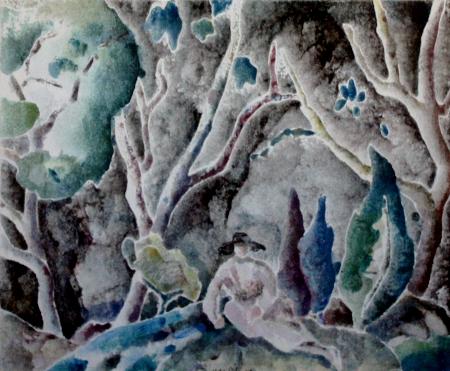 Although her subject matter is focused away from the shoreline, Ada Gilmore took full advantage of Provincetown's light. Her watercolor postcards of homey, everyday scenes of women gardening, doing laundry, and resting, as well as portraits of village cottages and streets, have a bright, light-filled quality that appears totally modern, even though the artist completed them in the summer of 1915.
Gilmore, who was born in Kalamazoo, Michigan, in 1883 and died in Provincetown in 1955, was recognized as both a printmaker and watercolorist. Her first art training took place at the Belfast School of Art in Northern Ireland, where Gilmore lived with an aunt after the death of her father when she was 12 (her mother had died four years earlier). After returning to the United States in 1900, she studied at The School of The Art Institute of Chicago. Gilmore exhibited drawings in the Independent Artists group show in New York City in 1910, and three years later, traveled to Paris. There, she studied woodblock printing with Ethel Mars, an artist who was part of Gertrude Stein's avant-garde circle.
With the outbreak of World War I, Gilmore returned to the United States and settled in Provincetown in 1915.
Many of Gilmore's woodcuts "intentionally replicate the translucent quality of watercolor paintings and were often mistakenly identified as such," according to Barbara Parker, the curator of the 1988 "Ada Gilmore Woodcuts and Watercolors Show," at the Mary Ryan Gallery in New York City. One of the founding members of the Provincetown Printers in 1918, the first woodblock print society in America, Gilmore, writes Parker, "can be appreciated for her role in a grassroots movement which contributed to the flowering of American printmaking in the early 20th century."