Page loaded successfully. Showing biography for Adam Buck.
Adam Buck BIOGRAPHY
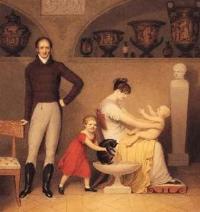
1759 Cork, Ireland - 1833 London, England. Known for: Portrait, figure and genre paintings, miniatures on ivory, neo-classical style.
Adam Buck (1759–1833) was an Irish neo-classical portraitist and miniature painter and engraver (as was his brother Frederick) principally active in London. Buck was born in Castle Street, Cork.... Read full biography
Adam Buck (1759–1833) was an Irish neo-classical portraitist and miniature painter and engraver (as was his brother Frederick) principally active in London. Buck was born in Castle Street, Cork. Becoming an accomplished miniaturist in the 1780s while still in Ireland, he made a permanent move to... Read full biography
Adam Buck (1759–1833) was an Irish neo-classical portraitist and miniature painter and engraver (as was his brother Frederick) principally active in London. Buck was born in Castle Street, Cork. Becoming an accomplished miniaturist in the 1780s while still in Ireland, he made a permanent move to London in 1795 – his residences there included 174 Piccadilly (1795–8), Frith Street, Soho (1799–1802) and Bentinck Street (1813–20). His patrons included Angelica Catalani (an opera singer), JP Kemble,... Read full biography
Adam Buck (1759–1833) was an Irish neo-classical portraitist and miniature painter and engraver (as was his brother Frederick) principally active in London. Buck was born in Castle Street, Cork. Becoming an accomplished miniaturist in the 1780s while still in Ireland, he made a permanent move to London in 1795 – his residences there included 174 Piccadilly (1795–8), Frith Street, Soho (1799–1802) and Bentinck Street (1813–20). His patrons included Angelica Catalani (an opera singer), JP Kemble, Sir Francis Burdett, Thomas Hope, George IV, the Duke of York and his mistress Mary Anne Clarke. A major influence on Regency culture (producing plates of contemporary costume as well as genre pictures of family and classical scenes and... Read full biography
Adam Buck (1759–1833) was an Irish neo-classical portraitist and miniature painter and engraver (as was his brother Frederick) principally active in London. Buck was born in Castle Street, Cork. Becoming an accomplished miniaturist in the 1780s while still in Ireland, he made a permanent move to London in 1795 – his residences there included 174 Piccadilly (1795–8), Frith Street, Soho (1799–1802) and Bentinck Street (1813–20). His patrons included Angelica Catalani (an opera singer), JP Kemble, Sir Francis Burdett, Thomas Hope, George IV, the Duke of York and his mistress Mary Anne Clarke. A major influence on Regency culture (producing plates of contemporary costume as well as genre pictures of family and classical scenes and illustrations for Laurence Sterne's Sentimental Journey), he was himself much influenced by the Greek Revival (the furniture, vases - which... Read full biography
Artist Biography
Biography page for Adam Buck ((1759 - 1833)), known for Portrait, figure and genre paintings, miniatures on ivory, neo-classical style. Showing 1 biographical entries and 0 sample artworks.
Adam Buck - Artist Info
About Adam Buck
Biography from the Archives of askART
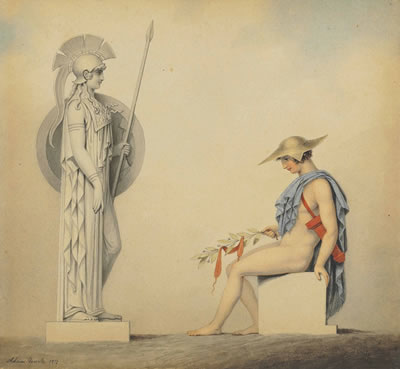 Adam Buck (1759–1833) was an Irish neo-classical portraitist and miniature painter and engraver (as was his brother Frederick) principally active in London.
Buck was born in Castle Street, Cork. Becoming an accomplished miniaturist in the 1780s while still in Ireland, he made a permanent move to London in 1795 – his residences there included 174 Piccadilly (1795–8), Frith Street, Soho (1799–1802) and Bentinck Street (1813–20).
His patrons included Angelica Catalani (an opera singer), JP Kemble, Sir Francis Burdett, Thomas Hope, George IV, the Duke of York and his mistress Mary Anne Clarke.
A major influence on Regency culture (producing plates of contemporary costume as well as genre pictures of family and classical scenes and illustrations for Laurence Sterne's Sentimental Journey), he was himself much influenced by the Greek Revival (the furniture, vases - which he collected -, sculptures, costumes and even hairstyles in his works are all ancient Greek).
He also acted as a painting teacher, as well as exhibiting more than 170 miniatures and small full-length portraits at the Royal Academy between 1795 and 1833. He died at 15 Upper Seymour Street, London.
SOURCE
Wikipedia, 2020