Page loaded successfully. Showing biography for Adam Marczynski.
Adam Marczynski BIOGRAPHY
1908 - 1985. Known for: Painting, sculpture, cubic painting, assembly, collage.
Adam Marczynski was born in 1908. Marczynski studied painting at the Academy of Fine Arts in Krakow in the years 1930-1936 under the guidance of professor Wladyslaw Jarocki and Stanislaw Pienkowski.... Read full biography
Adam Marczynski was born in 1908. Marczynski studied painting at the Academy of Fine Arts in Krakow in the years 1930-1936 under the guidance of professor Wladyslaw Jarocki and Stanislaw Pienkowski. He received his diploma in 1936. During his studies Marczynski traveled to France and Spain (1930),... Read full biography
Adam Marczynski was born in 1908. Marczynski studied painting at the Academy of Fine Arts in Krakow in the years 1930-1936 under the guidance of professor Wladyslaw Jarocki and Stanislaw Pienkowski. He received his diploma in 1936. During his studies Marczynski traveled to France and Spain (1930), and after graduation to France (1936). In the years 1933-1934 he was associated with the "Krakow Group" (the so-called first), with which he exhibited twice. He also performed the set design for the... Read full biography
Adam Marczynski was born in 1908. Marczynski studied painting at the Academy of Fine Arts in Krakow in the years 1930-1936 under the guidance of professor Wladyslaw Jarocki and Stanislaw Pienkowski. He received his diploma in 1936. During his studies Marczynski traveled to France and Spain (1930), and after graduation to France (1936). In the years 1933-1934 he was associated with the "Krakow Group" (the so-called first), with which he exhibited twice. He also performed the set design for the "Cricot" theater. He spent the first years of World War II in Lviv. He returned to Krakow in 1941. After the war, he started teaching in the Academy of Fine Arts (from 1945, professor in 1951, dean of the Faculty of Painting 1970-1972, retired in... Read full biography
Adam Marczynski was born in 1908. Marczynski studied painting at the Academy of Fine Arts in Krakow in the years 1930-1936 under the guidance of professor Wladyslaw Jarocki and Stanislaw Pienkowski. He received his diploma in 1936. During his studies Marczynski traveled to France and Spain (1930), and after graduation to France (1936). In the years 1933-1934 he was associated with the "Krakow Group" (the so-called first), with which he exhibited twice. He also performed the set design for the "Cricot" theater. He spent the first years of World War II in Lviv. He returned to Krakow in 1941. After the war, he started teaching in the Academy of Fine Arts (from 1945, professor in 1951, dean of the Faculty of Painting 1970-1972, retired in 1979). At the same time, Adam Marczynski returned to the circle of artists gathered around Tadeusz Kantor and Maria Jarema, who in 1957 called the... Read full biography
Artist Biography
Biography page for Adam Marczynski ((1908 - 1985)), known for Painting, sculpture, cubic painting, assembly, collage. Showing 2 biographical entries and 0 sample artworks.
Adam Marczynski - Artist Info
About Adam Marczynski
Biography from Agra Art S.A.
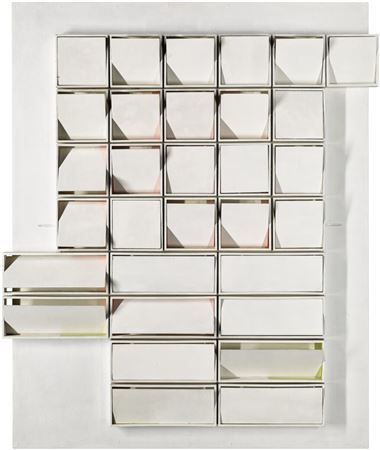
Adam Marczynski was born in 1908. Marczynski studied painting at the Academy of Fine Arts in Krakow in the years 1930-1936 under the guidance of professor Wladyslaw Jarocki and Stanislaw Pienkowski. He received his diploma in 1936. During his studies Marczynski traveled to France and Spain (1930), and after graduation to France (1936). In the years 1933-1934 he was associated with the "Krakow Group" (the so-called first), with which he exhibited twice. He also performed the set design for the "Cricot" theater. He spent the first years of World War II in Lviv. He returned to Krakow in 1941. After the war, he started teaching in the Academy of Fine Arts (from 1945, professor in 1951, dean of the Faculty of Painting 1970-1972, retired in 1979). At the same time, Adam Marczynski returned to the circle of artists gathered around Tadeusz Kantor and Maria Jarema, who in 1957 called the so-called the second "Krakow Group". Marczynski remained its member and exhibited with it for the rest of his life. Marczynski dealt with painting, drawing, scenography, workshop graphics and book illustrations. He also performed polychromes in churches. In the 1950s, he created cubic painting compositions with a bright color, suggesting neither landscapes nor views of underwater worlds, characterized by a poetic, surreal mood, evoking the art of Paul Klee and Joan Miró. The drawings, drawn with a delicate line, harmonized with the expression of his paintings. From around 1960, Adam Marczynski made a series of objects entitled Konkrety, referring to the painting of matter, in which he used as a material patches of wooden plywood or veneer, tar paper, less often sheet, subjected to various treatments, such as burnt, destruction of surfaces, etc. Since the mid-1960s he created objects with variable elements - built from sets arranged arbitrarily "Boxes" with hinged lids. Different configurations of their inclination caused variable rhythms of the whole composition. The artist exhibited a lot, including at the Olympic Exhibition, London 1948 (distinction and diploma), Biennale of Art in Venice in 1956, Second and Third Exhibition of Modern Art, Warsaw 1957 and 1959, Second International Graphic Biennale, Ljubljana 1957 (honorary prize), Art Biennale in Sao Paulo 1959 and Documenta in Kassel 1959, Symposia of the "Golden Circle", Zielona Góra 1963 and 1965, 1st Biennale of Spatial Forms, Elblag 1965.Biography from Desa Unicum
The artist's name is Adam Marczynski. He studied at the Academy of Fine Arts in Kraków from 1929-36 and was associated with the Krakow Group in the 1930s and its reactivation in 1957. He worked at the Academy of Fine Arts from 1945 until his retirement and was a professor from 1950. He practiced painting, drawing, graphics, and set design, and was the author of valued church polychromes. He also created book illustrations and lyrical compositions inspired by the art of Paul Klee and Joan Miro. In the 1960s, he joined the mainstream of matter painting, creating collages made of various materials. In the 1970s, he made compositions from small coffers with hinged, movable walls.