Page loaded successfully. Showing biography for Adolf Holzel.
Adolf Holzel BIOGRAPHY
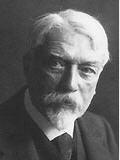
1853 Olmutz, Germany - 1934 Stuttgart, Germany. Known for: Landscape painting.
Adolf Hölzel (1853-1934). Born in the Moravian town of Ohlmütz on May 13, 1853 as the son of publisher Eduard Hölzel, he was raised to participate in his father's business when he was still very... Read full biography
Adolf Hölzel (1853-1934). Born in the Moravian town of Ohlmütz on May 13, 1853 as the son of publisher Eduard Hölzel, he was raised to participate in his father's business when he was still very young. In 1868 he began an apprenticeship as a typesetter in Gotha and regularly took lessons in drawing... Read full biography
Adolf Hölzel (1853-1934). Born in the Moravian town of Ohlmütz on May 13, 1853 as the son of publisher Eduard Hölzel, he was raised to participate in his father's business when he was still very young. In 1868 he began an apprenticeship as a typesetter in Gotha and regularly took lessons in drawing and painting on the side. From 1872 to 1873 he attended the academy of Vienna. He then completed a one-year military service as a volunteer and it said to have considered a career as an officer after... Read full biography
Adolf Hölzel (1853-1934). Born in the Moravian town of Ohlmütz on May 13, 1853 as the son of publisher Eduard Hölzel, he was raised to participate in his father's business when he was still very young. In 1868 he began an apprenticeship as a typesetter in Gotha and regularly took lessons in drawing and painting on the side. From 1872 to 1873 he attended the academy of Vienna. He then completed a one-year military service as a volunteer and it said to have considered a career as an officer after passing the officer's exam. When he finally decided in favor of painting, though against his father's will, Hölzel went to Munich in order to continue his art studies at the local academy. In 1888 he moved from Munich to Dachau, where he became the... Read full biography
Adolf Hölzel (1853-1934). Born in the Moravian town of Ohlmütz on May 13, 1853 as the son of publisher Eduard Hölzel, he was raised to participate in his father's business when he was still very young. In 1868 he began an apprenticeship as a typesetter in Gotha and regularly took lessons in drawing and painting on the side. From 1872 to 1873 he attended the academy of Vienna. He then completed a one-year military service as a volunteer and it said to have considered a career as an officer after passing the officer's exam. When he finally decided in favor of painting, though against his father's will, Hölzel went to Munich in order to continue his art studies at the local academy. In 1888 he moved from Munich to Dachau, where he became the head of the artistic community "Neu-Dachau", the school for painters around Fritz von Uhde.... Read full biography
Artist Biography
Biography page for Adolf Holzel ((1853 - 1934)), known for Landscape painting. Showing 2 biographical entries and 0 sample artworks.
Adolf Holzel - Artist Info
About Adolf Holzel
Name variants
Adolf Hoelzel, Richard Adolf Holzel
Biography from the Archives of askART
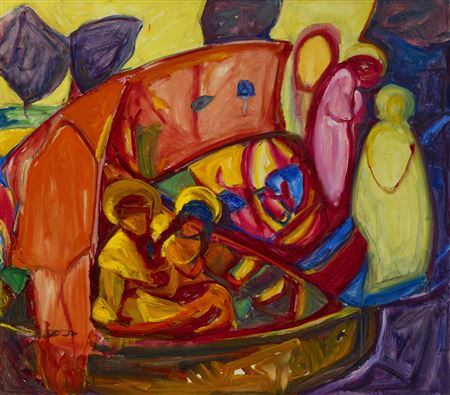 Adolf Hölzel (1853-1934)
Born in the Moravian town of Ohlmütz on May 13, 1853 as the son of publisher Eduard Hölzel, he was raised to participate in his father's business when he was still very young. In 1868 he began an apprenticeship as a typesetter in Gotha and regularly took lessons in drawing and painting on the side. From 1872 to 1873 he attended the academy of Vienna. He then completed a one-year military service as a volunteer and it said to have considered a career as an officer after passing the officer's exam. When he finally decided in favor of painting, though against his father's will, Hölzel went to Munich in order to continue his art studies at the local academy.
In 1888 he moved from Munich to Dachau, where he became the head of the artistic community "Neu-Dachau", the school for painters around Fritz von Uhde. In Dachau, Hölzel taught the future German Expressionist Emil Nolde for a short period of time. In 1906, Hölzel was called to the Art Academy of Stuttgart where he held a professor's chair for painting until 1918.
While he painted in an impressionist style in his early work, during his time in Dachau, already, his work began moving toward abstraction, reflecting his interest in such principles as the golden section and Goethe's Theory of Colors. Four years before Wassily Kandinsky, he painted an abstract painting (Composition in Red, 1905).
Among his students, the so-called "Hölzel circle" developed, including Oskar Schlemmer, Willi Baumeister, Max Ackermann and Johannes Itten. In 1919 Adolf Hölzel left the Stuttgart Academy and went into retirement.
He died in Stuttgart in 1934.
Sources include:
wikipedia.org
Ketterer KunstBiography from Auctionata
A son of a bookseller and lithographer, Adolf Hölzel (1853-1934) began his artistic training at his father's business. In 1868, Hölzel was able to continue his apprenticeship at a typesetter’s workshop in Gotha, whereas he also took drawing and painting lessons. From 1872 to 1873, Hölzel studied at the Art Academy in Vienna. Contrary to his father's wish, Hölzel decided to become a painter and therefore enrolled at the Academy in Munich in 1876.
In 1888, he finally settled in Dachau, where he soon became the leader of the artists group ‘Neu-Dachau’ that mainly referred to the Impressionist style. Besides, it is also known that Hölzel temporarily taught the young German expressionist Emil Nolde. In 1906 he was appointed to the Stuttgart Academy, where he held a professorship for painting until 1918. Hölzel also published a number of theoretical papers, which would deeply inspire the young painters of the next generation: For example, Hölzel was presented alongside artists like Johannes Itten, Oskar Schlemmer, Willi Baumeister and Ida Kerkovius in an exhibition entitled ‘Hölzel and his Circle’ in Stuttgart in 1817/18.
In the 1920s, Hölzel painted numerous pastel series that became his main focus, as well as the production of glass windows for sacral and secular architecture. Today, the Kunstmuseum Stuttgart preserves the main collection of his works and the Staatsgalerie Stuttgart keeps his art-theoretical estate.