Page loaded successfully. Showing biography for Adrian Zingg.
Adrian Zingg BIOGRAPHY
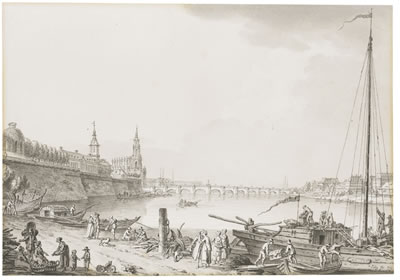
1734 St. Gallern, Switzerland - 1816 Leipzig, Germany. Known for: Romantic river and rocky landsclape painting, pen and ink, engraving.
Adrian Zingg (April 15, 1734, St.Gallen – May 26, 1816, Leipzig) was a Swiss painter. Adrian Zingg received his professional training from his father, the steel cutter Bartolomäus Zingg, then became... Read full biography
Adrian Zingg (April 15, 1734, St.Gallen – May 26, 1816, Leipzig) was a Swiss painter. Adrian Zingg received his professional training from his father, the steel cutter Bartolomäus Zingg, then became an apprentice with the engraver Johann Rudolf Holzhalb [de]. In 1757, he worked in Bern, painting... Read full biography
Adrian Zingg (April 15, 1734, St.Gallen – May 26, 1816, Leipzig) was a Swiss painter. Adrian Zingg received his professional training from his father, the steel cutter Bartolomäus Zingg, then became an apprentice with the engraver Johann Rudolf Holzhalb [de]. In 1757, he worked in Bern, painting vedute with Johann Ludwig Aberli. Together with the medalist Johann Caspar Mörikofer (1732–1790), he traveled to Paris in 1759, where Zingg worked for seven years with the engraver Johann Georg Wille.... Read full biography
Adrian Zingg (April 15, 1734, St.Gallen – May 26, 1816, Leipzig) was a Swiss painter. Adrian Zingg received his professional training from his father, the steel cutter Bartolomäus Zingg, then became an apprentice with the engraver Johann Rudolf Holzhalb [de]. In 1757, he worked in Bern, painting vedute with Johann Ludwig Aberli. Together with the medalist Johann Caspar Mörikofer (1732–1790), he traveled to Paris in 1759, where Zingg worked for seven years with the engraver Johann Georg Wille. In 1764, he was supported by Christian Ludwig von Hagedorn as an engraver at the newly founded Dresden Academy of Fine Arts, where he worked as a teacher from 1766. He had an intensive relationship with professor Christian Wilhelm Ernst Dietrich, who... Read full biography
Adrian Zingg (April 15, 1734, St.Gallen – May 26, 1816, Leipzig) was a Swiss painter. Adrian Zingg received his professional training from his father, the steel cutter Bartolomäus Zingg, then became an apprentice with the engraver Johann Rudolf Holzhalb [de]. In 1757, he worked in Bern, painting vedute with Johann Ludwig Aberli. Together with the medalist Johann Caspar Mörikofer (1732–1790), he traveled to Paris in 1759, where Zingg worked for seven years with the engraver Johann Georg Wille. In 1764, he was supported by Christian Ludwig von Hagedorn as an engraver at the newly founded Dresden Academy of Fine Arts, where he worked as a teacher from 1766. He had an intensive relationship with professor Christian Wilhelm Ernst Dietrich, who acted as a mentor for Zingg. In 1774, after the death of Dietrich, Zingg began to... Read full biography
Artist Biography
Biography page for Adrian Zingg ((1734 - 1816)), known for Romantic river and rocky landsclape painting, pen and ink, engraving. Showing 3 biographical entries and 0 sample artworks.
Adrian Zingg - Artist Info
About Adrian Zingg
Biography from the Archives of askART
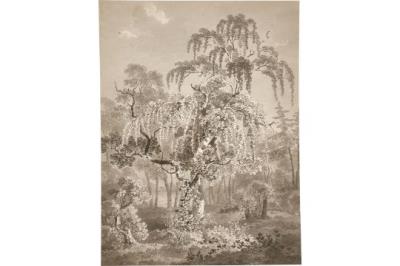 Adrian Zingg (April 15, 1734, St.Gallen – May 26, 1816, Leipzig) was a Swiss painter.Adrian Zingg received his professional training from his father, the steel cutter Bartolomäus Zingg, then became an apprentice with the engraver Johann Rudolf Holzhalb [de].In 1757, he worked in Bern, painting vedute with Johann Ludwig Aberli. Together with the medalist Johann Caspar Mörikofer (1732–1790), he traveled to Paris in 1759, where Zingg worked for seven years with the engraver Johann Georg Wille.In 1764, he was supported by Christian Ludwig von Hagedorn as an engraver at the newly founded Dresden Academy of Fine Arts, where he worked as a teacher from 1766. He had an intensive relationship with professor Christian Wilhelm Ernst Dietrich, who acted as a mentor for Zingg. In 1774, after the death of Dietrich, Zingg began to complete his late work and published a total of 87 sheets.In 1769, he also became a member of the Vienna Academy and, in 1787, a member of the Prussian Academy of Arts. In 1803 he was appointed professor of copper etching at the Dresden Academy. Some of Zingg's famous students included Carl August Richter [de] and his son Adrian Ludwig Richter, Heinrich Theodor Wehle and Christoph Nathe.
Biography from Schmidt Kunstauktionen Dresden
Zingg trained under his father, Bartolomäus Zingg, a steel cutter, and later apprenticed with the engraver Johann Rudolf Holzhalb. In 1757, he collaborated with Johann Ludwig Aberli in Bern, producing vedute that reflected early interest in landscape representation.
From 1759 to 1766, Adrian Zingg lived in Paris, where he worked as an engraver for Johann Georg Wille. His time in France helped refine his technique and introduced him to the broader European art scene.
In 1764, Zingg was appointed by Christian Ludwig von Hagedorn as an engraver at the newly founded Dresden Academy of Fine Arts. He began teaching there in 1766 and was later named professor of copper etching in 1803. That same year, he received the title of royal court engraver.
Zingg was a foreign member of the art academies in Vienna and Berlin. He undertook numerous journeys through Saxony, Bohemia, Thuringia, and Brandenburg, producing finely detailed etchings that blended Enlightenment clarity with early Romantic sensibility.
Among Adrian Zingg’s most important students were Adrian Ludwig Richter and Christoph Nathe, both of whom carried forward his legacy in German Romanticism.Biography from Kunsthaus Lempertz
Adrian Zingg was a teacher at the newly founded art academy in Dresden from 1766. On study trips in the 1780s and 90s, he visited the most important places in Saxony and executed a large number of finely executed pen-and-ink drawings.
They are topographically faithful landscapes such as this view of Nöthnitz Castle, the seat of Count Heinrich von Bünau. Johann Joachim Winckelmann lived there from 1748 to 1754 as librarian to the count, who owned one of the largest collections of books in Germany.